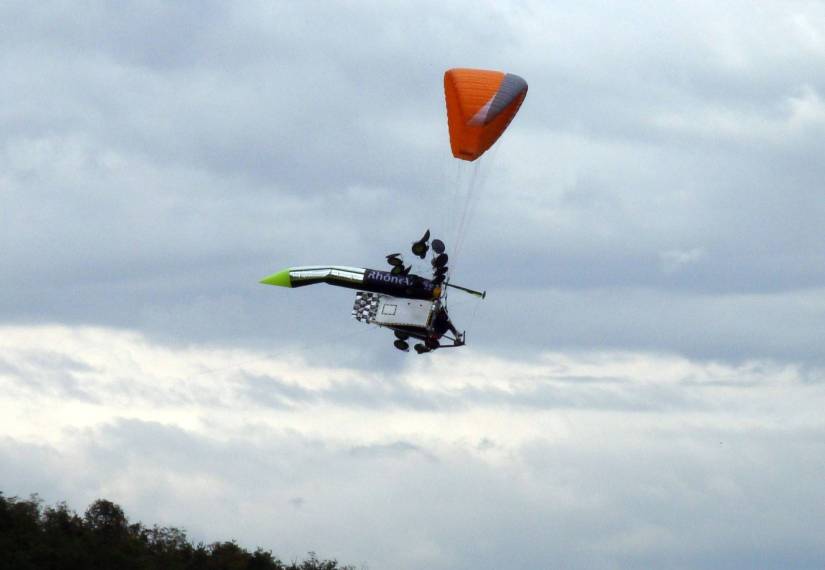
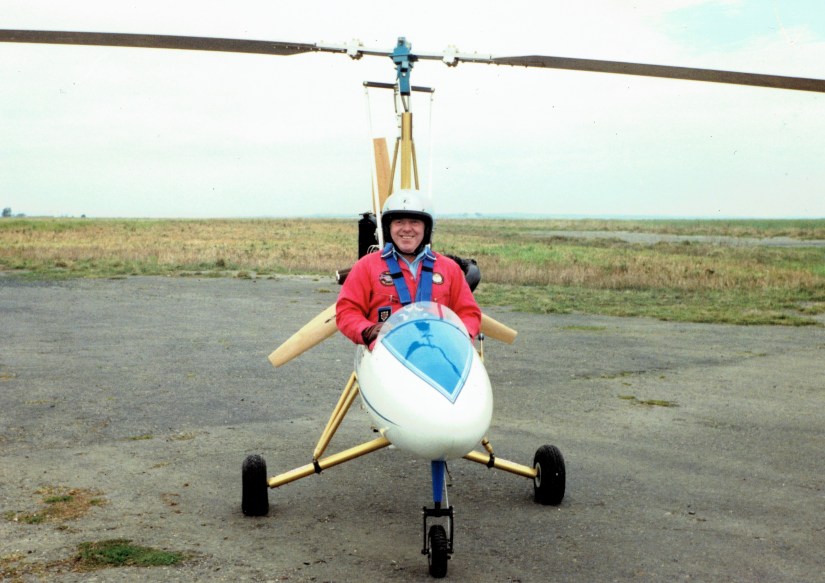
French gyroplanes, Gyroplanes of yesteryear, My books

This Way Up pictorial

Despite managing to squeeze a few photos into the new book, I would’ve liked to include a lot more had publishing constraints been able to accommodate them. However, thanks the wonders of the World Wide Web, I can stick ’em all on here!

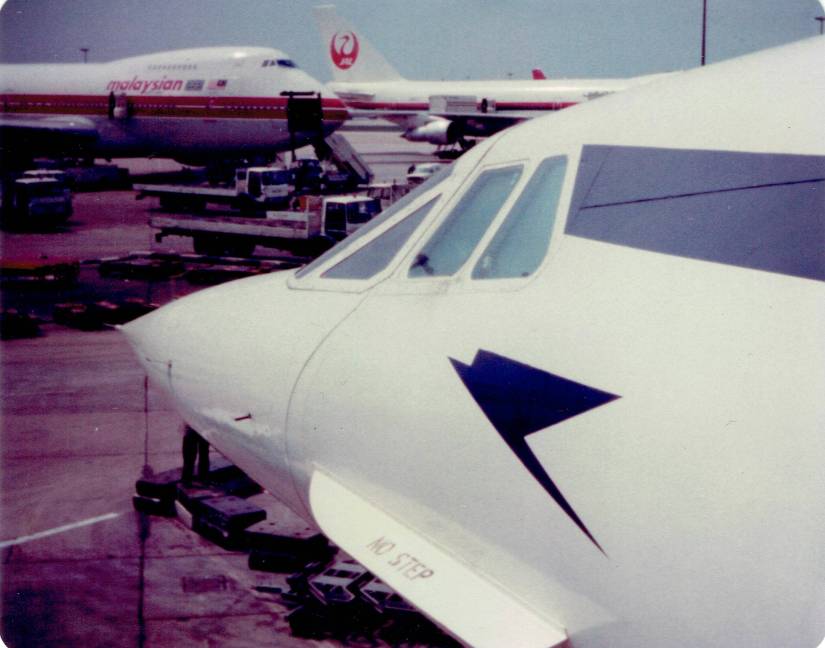
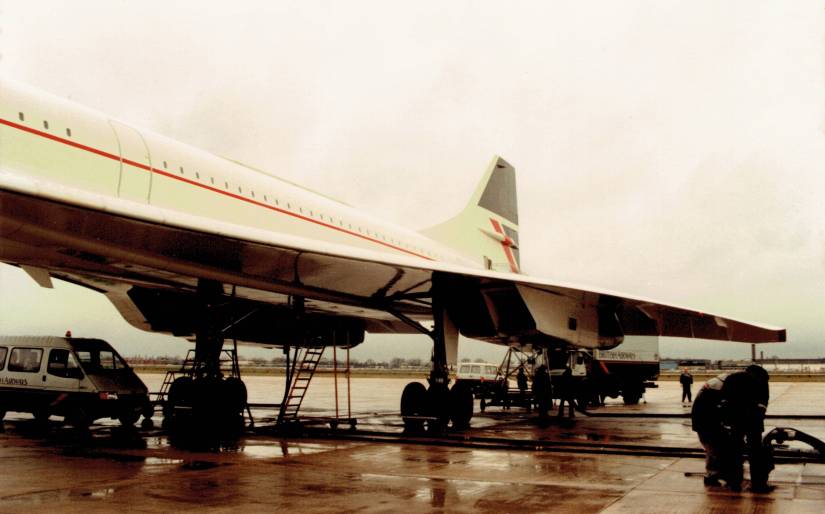
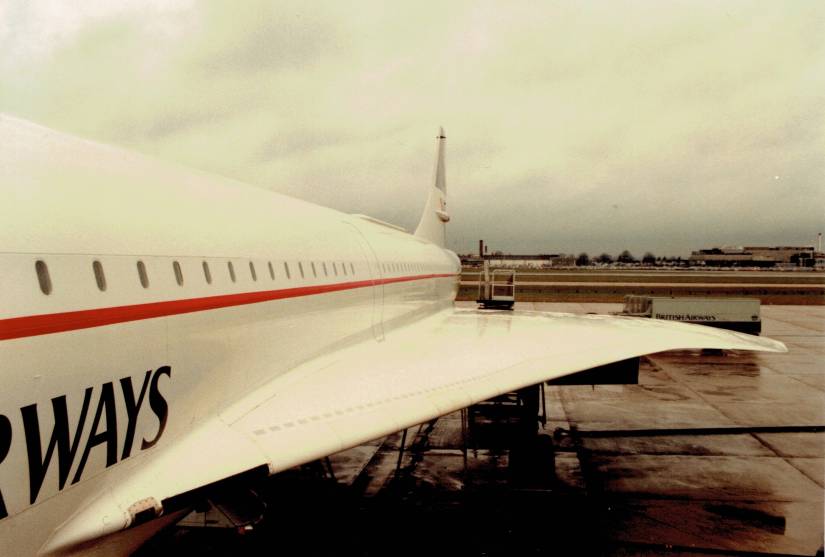
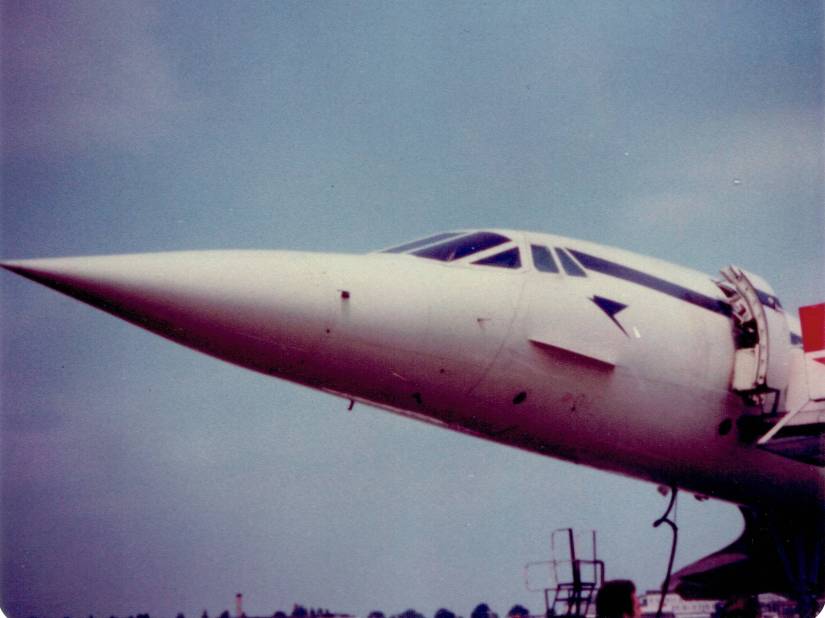
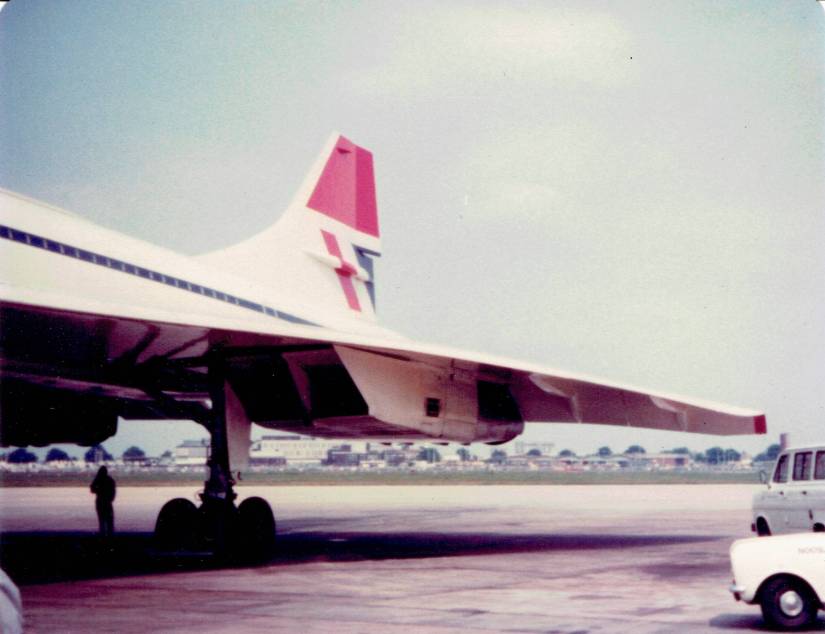
Déjà vu. Not once but twice – with huge thanks to my parents and my ever-generous boss, Paul Mitchell – they gave me the most beautiful aircraft ever designed! How lucky can anyone get. What a monumental shame that the French attempted to cover up the chain of errors on their part, and used the Paris tragedy as an excuse to put an end to her. The greater tragedy is that it should never have happened at all. Concorde will always be iconic.

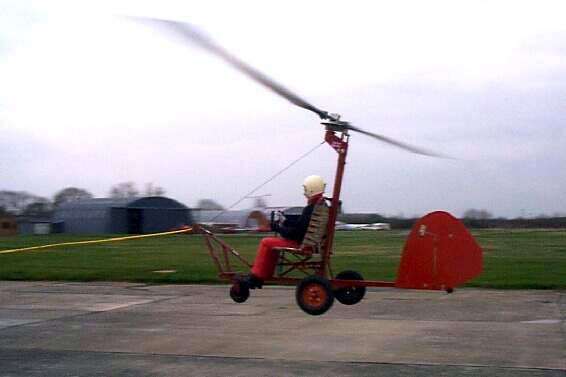
May 1985: a considerably more modest first flight

My favourite light aircraft: some of the Grumman Cheetahs at Blackbushe during the mid-eighties. My log book entries record G-MELD, FANG, PAWS, HASL, PURR, BGFG, JULY, BHSF, IFLI, BGVW, and OPPL. No one warned me that flying is addictive…

Somewhere there’s an old photo album containing evidence of my defection to Piper aircraft at White Waltham – the operative word being ‘somewhere.’ I’ll catch up dreckly. Meanwhile, my Cherokees were G-AVWA, AXTH, AWBS, AVSI, AXIO, BBIX, ATVL, and my favourite PA28-140, G-AVLF. Of the 161’s, I logged time in G-BOYH, BOYI, BNNS, BRDG, BRDF, BRDM, but the heavy Warriors didn’t really wag my tail.

This is all I can find on the Gat-1 sim. The cockpit looks the same but I don’t remember Gatty having the wings and tail. It was a brilliant little gadget, I hope it still survives somewhere.

In that same missing photo album is G-BNKX, the rattling little Robinson R22, and Chevvron motor-glider G-MVIP, both of which opened my eyes to new possibilities. And then, this happened…

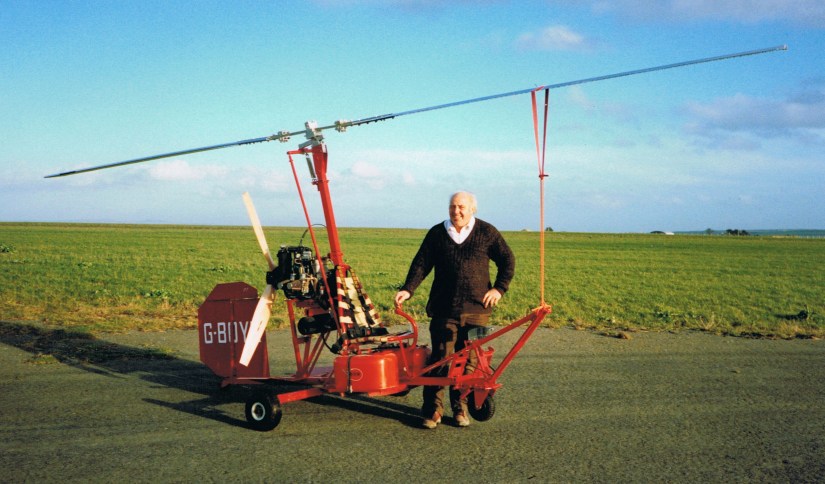
Ken and Little Nellie: it was all their fault!

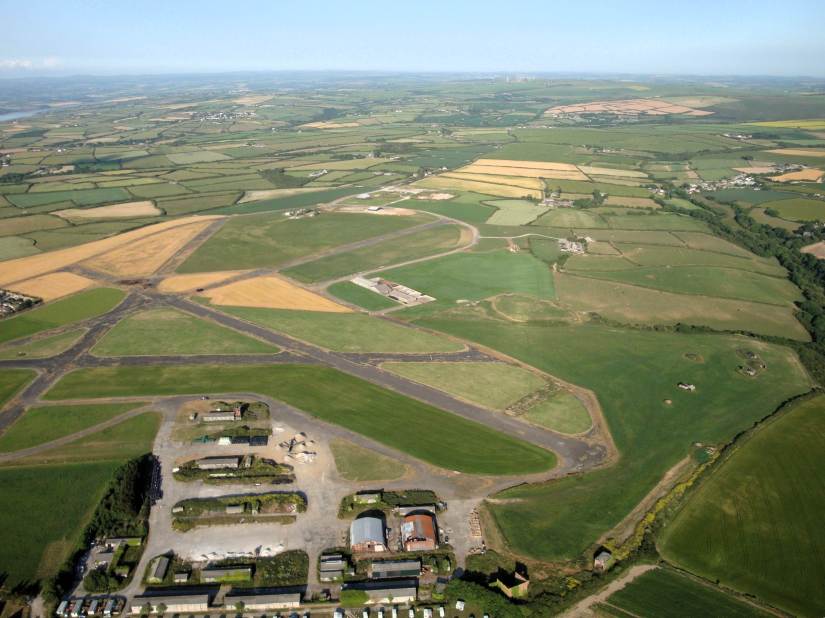
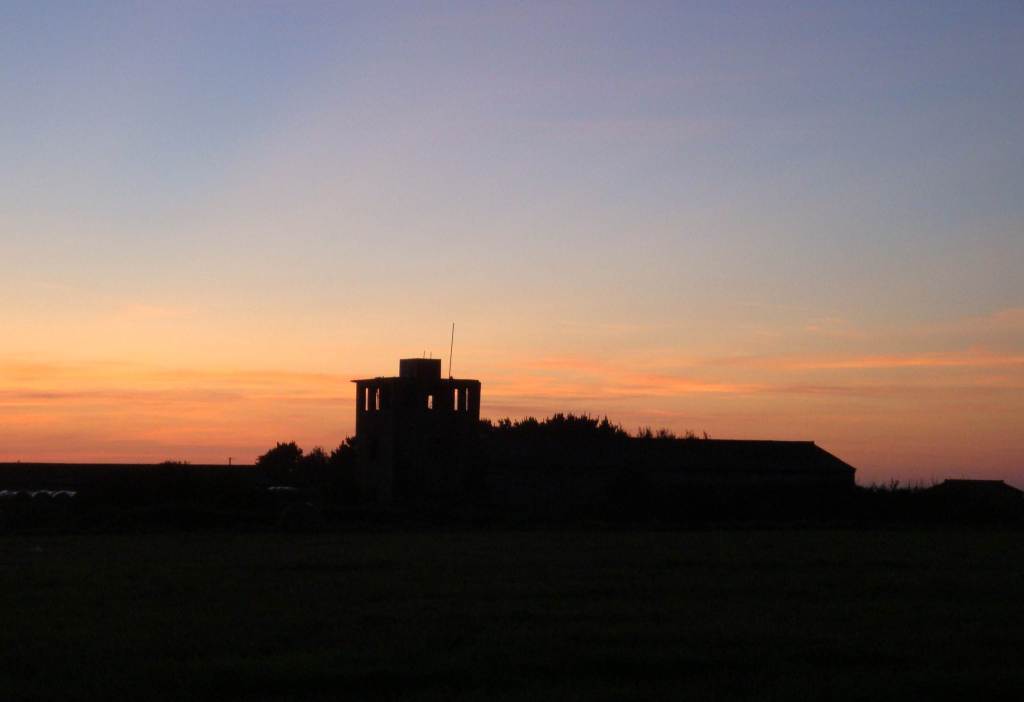
And so on to the wonderful utopia that was St. Merryn…

My mum with Jon Erskine at St. Merryn. This same machine was my first experience of minimalist flying.
Cheers Jon!

I used to have some super photos of Chris flying the Wombat. Bob Bond was only with us for about six weeks. A talented craftsman and natural pilot, he wanted to surprise Chris by carving him a model of the Wombat, and asked if he could borrow my photos to work from. Two weeks later, Bob was killed alongside Chris on the Kemble glider.

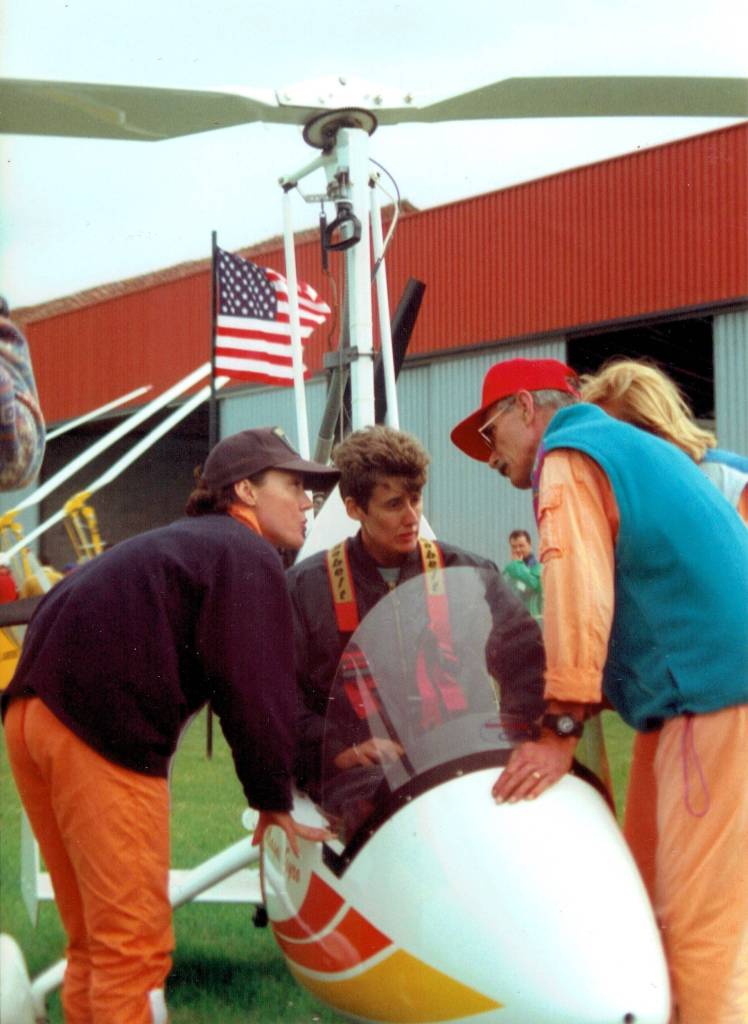
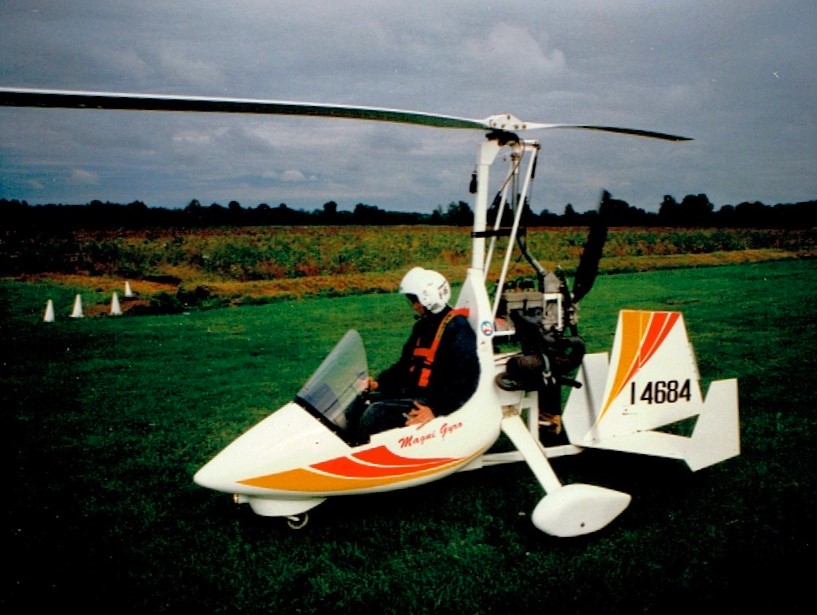
Magni Days 1997. First new type, courtesy of Lisa’s M18

My mate Keith, practising using the wind.

St. Merryn moments…

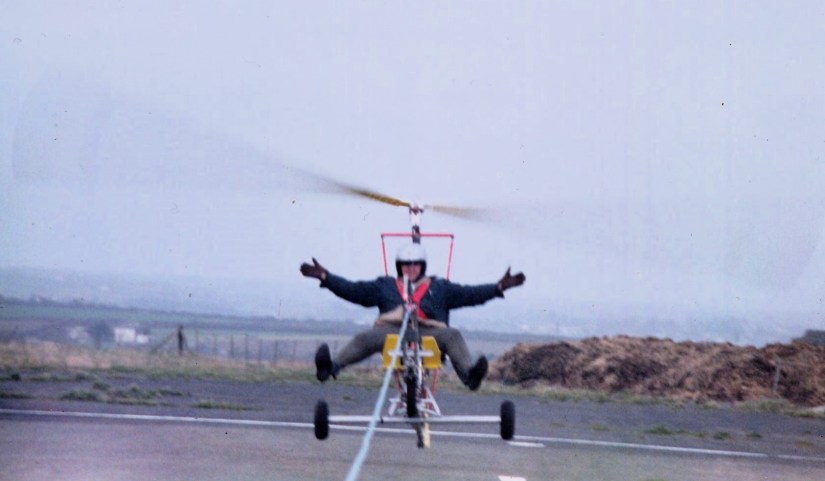
Don’t try this at home. The photographer thought that by laying on his back amid the trampling crowds, it would make it look like we were airborne – that’s why I was laughing. We were still tied to the trailer!

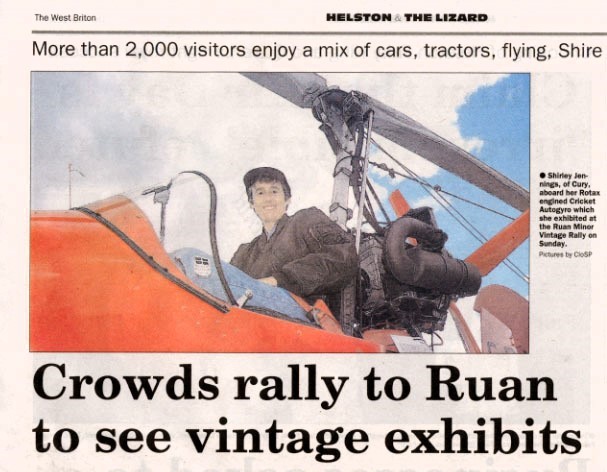
Not sure about that headline

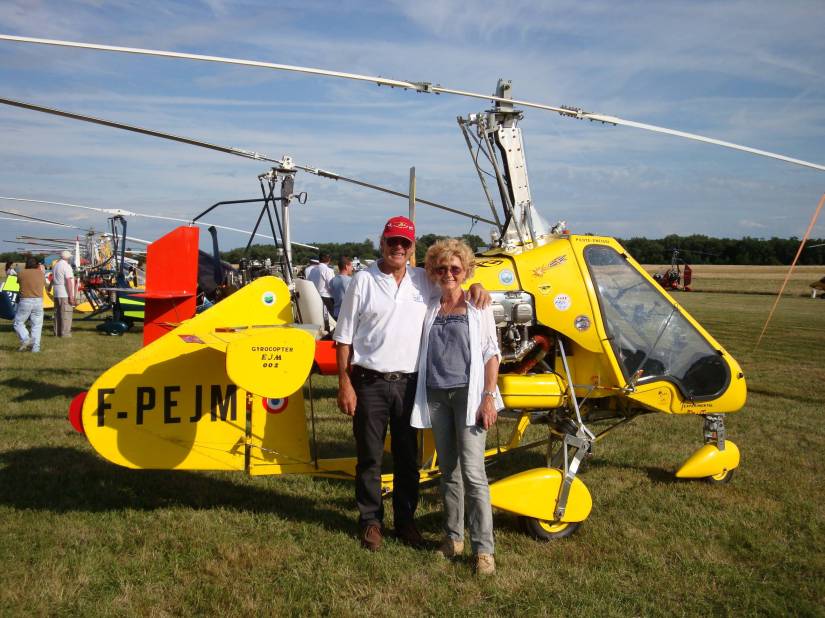
Bois de la Pierre 2005: we could not believe our eyes! Never did I dream that one day, Delta-J and me would be a part of it too.

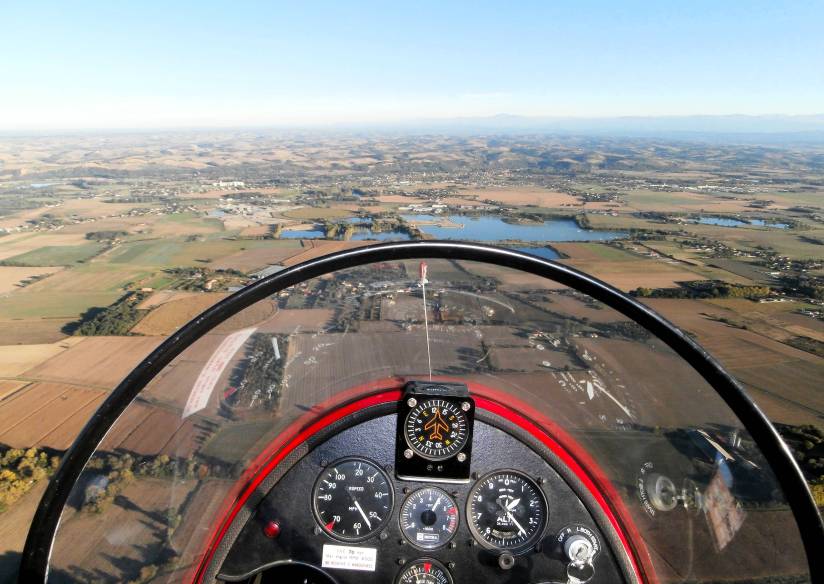
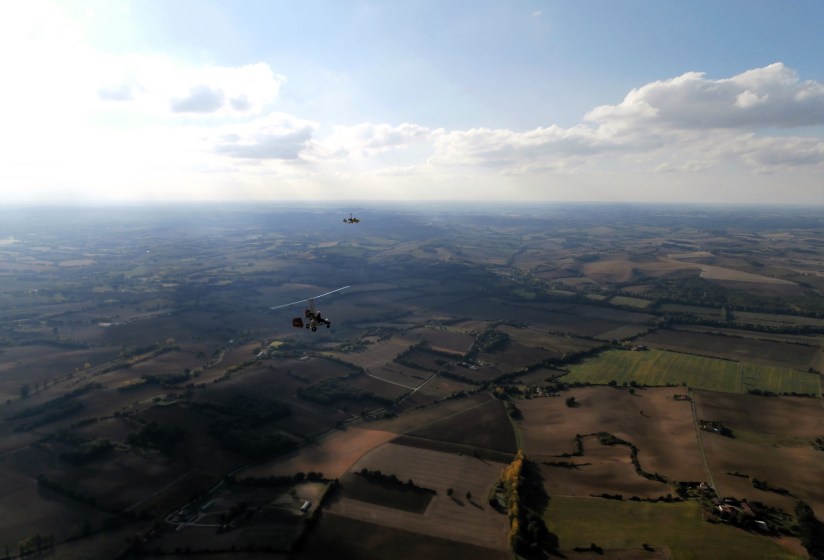
2009. 600 Miles on the wrong side of the road, towing my precious cargo: it scared the hell out of me but it was so worth it.

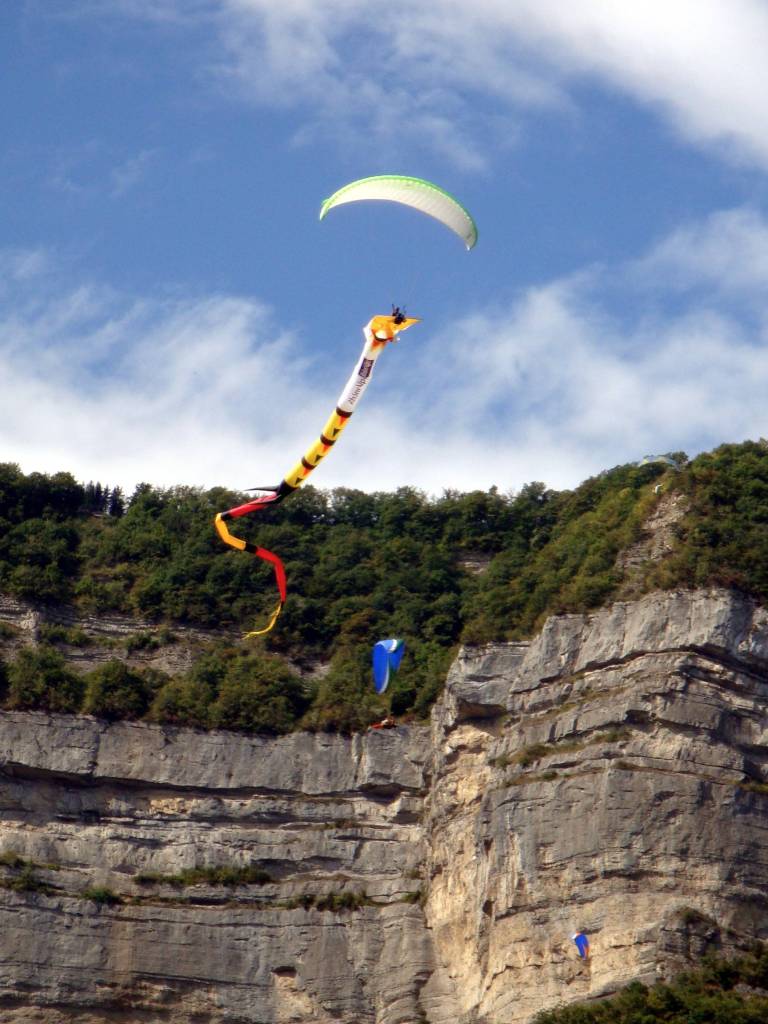
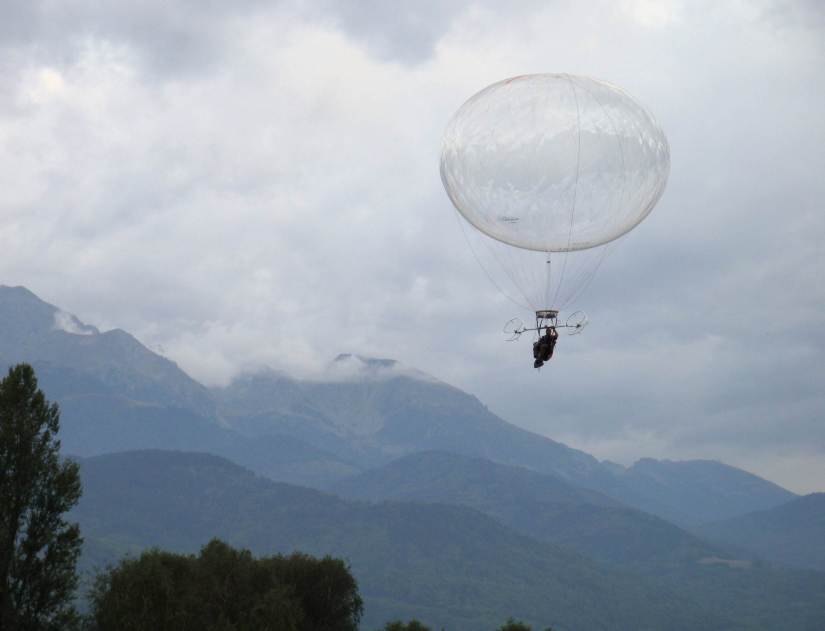
Le Coupe Icare: what a marvellously bonkers experience!

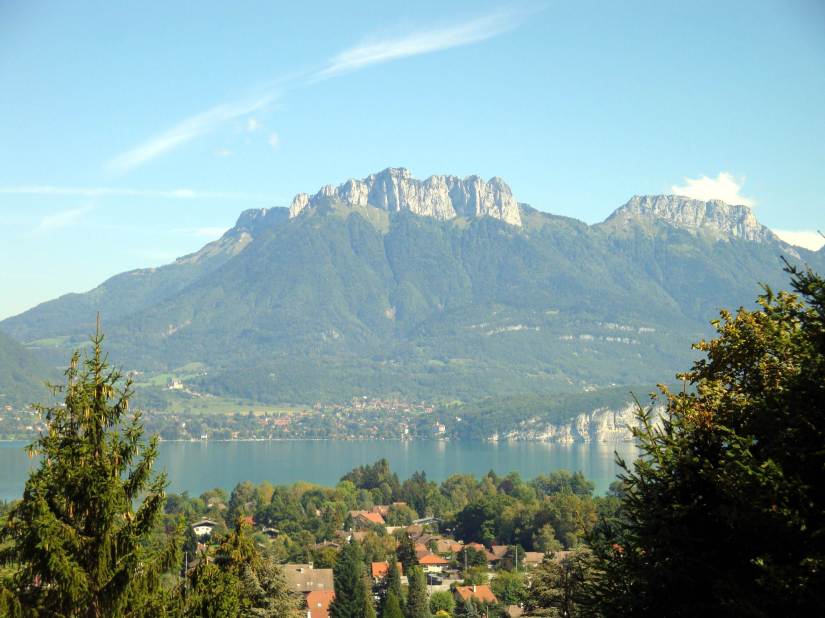
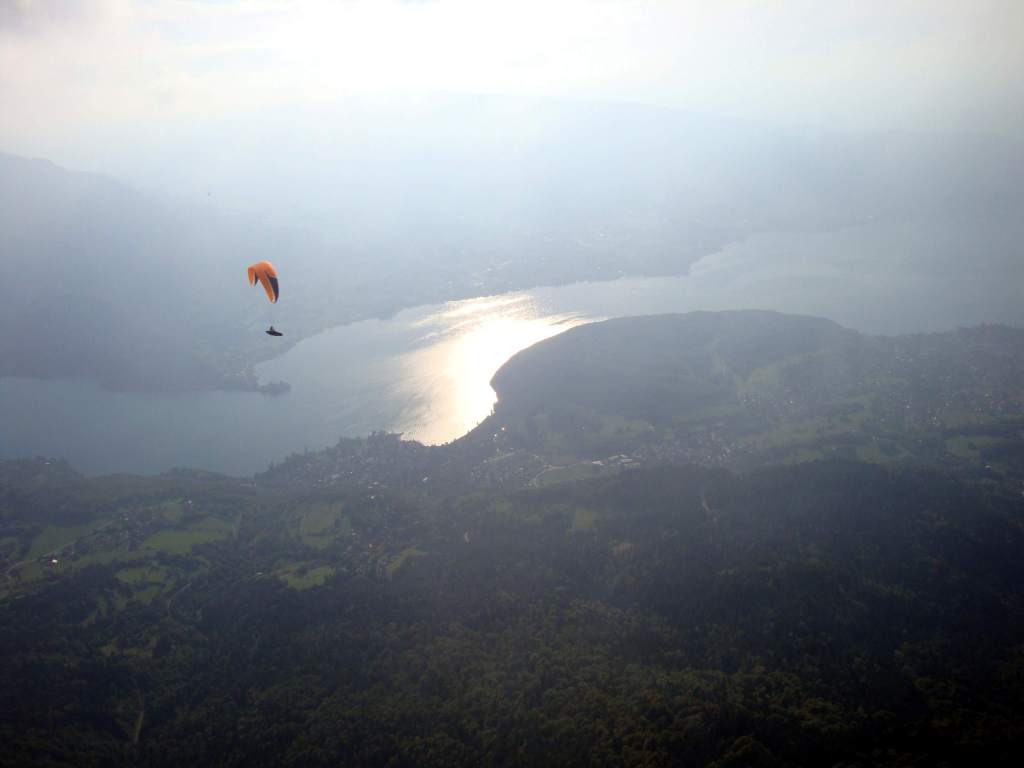
Followed by the stunning panorama of Lac d’Annecy

My good friend and occasional travel companion: John, with the paraplane

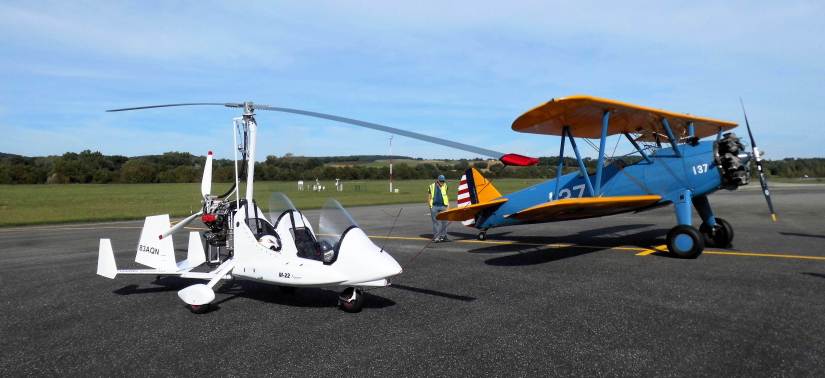
2014. The transition begins.

She’ll always be Delta-J to me

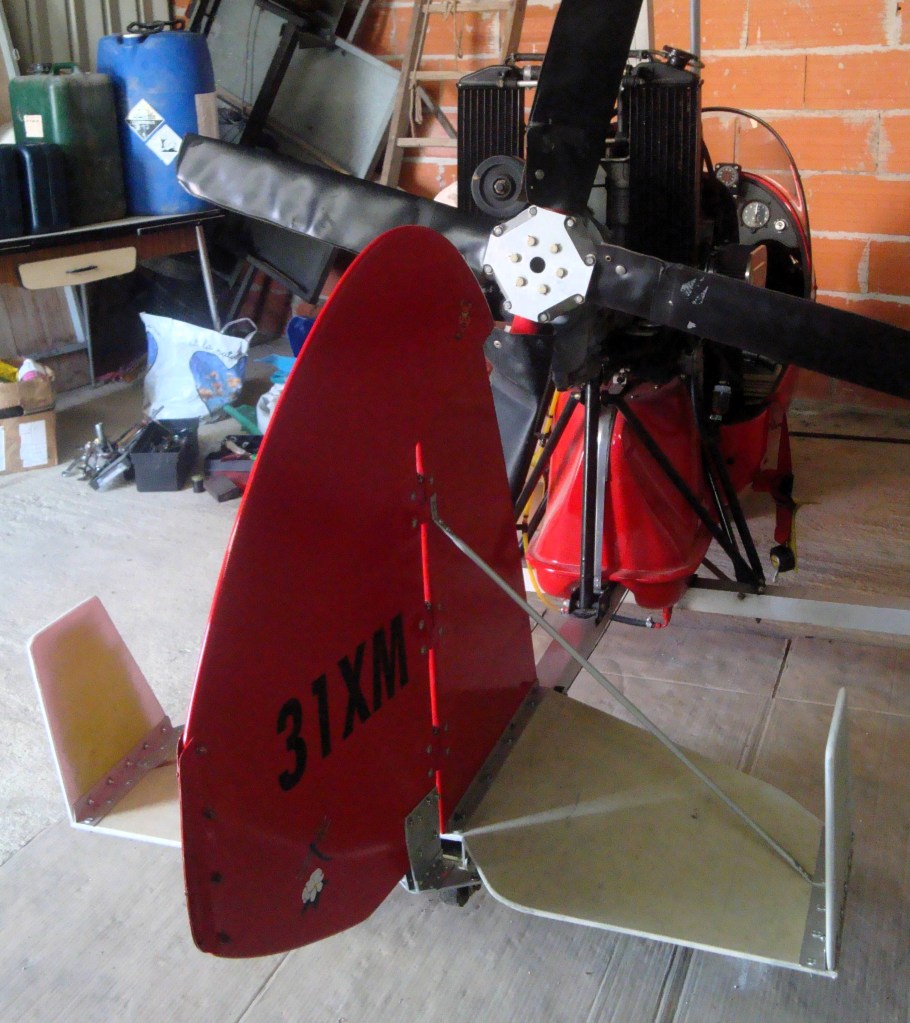
Our minimally restrained prototype tailplane. Looking back at the inflight videos with the winglets clearly fluttering – how the heck did they persuade me to fly her like this! But what a difference it made in handling.

3 Months later: slightly reshaped, beefed up, bonded and double bracketed. Damn, she pretty.

Never surrender. Our little feline fighter – she would not give in!

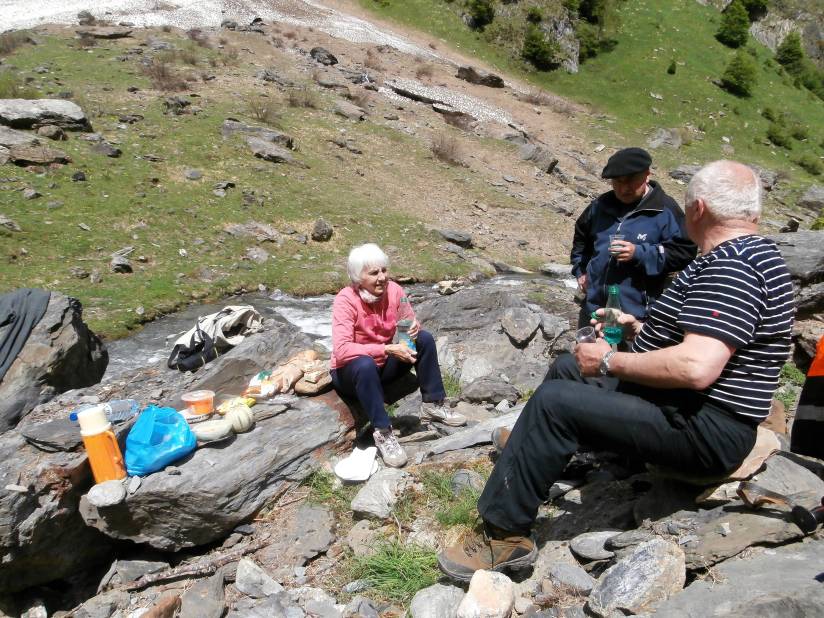
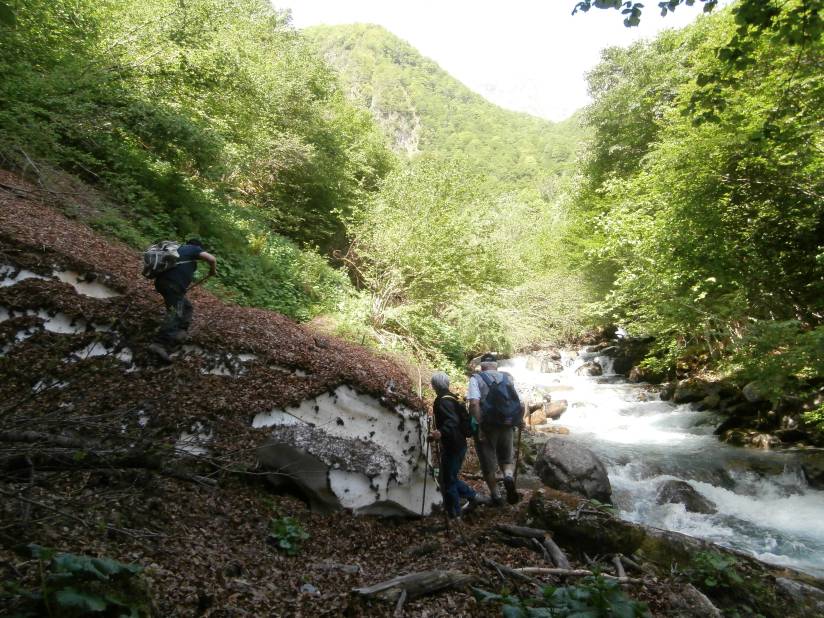
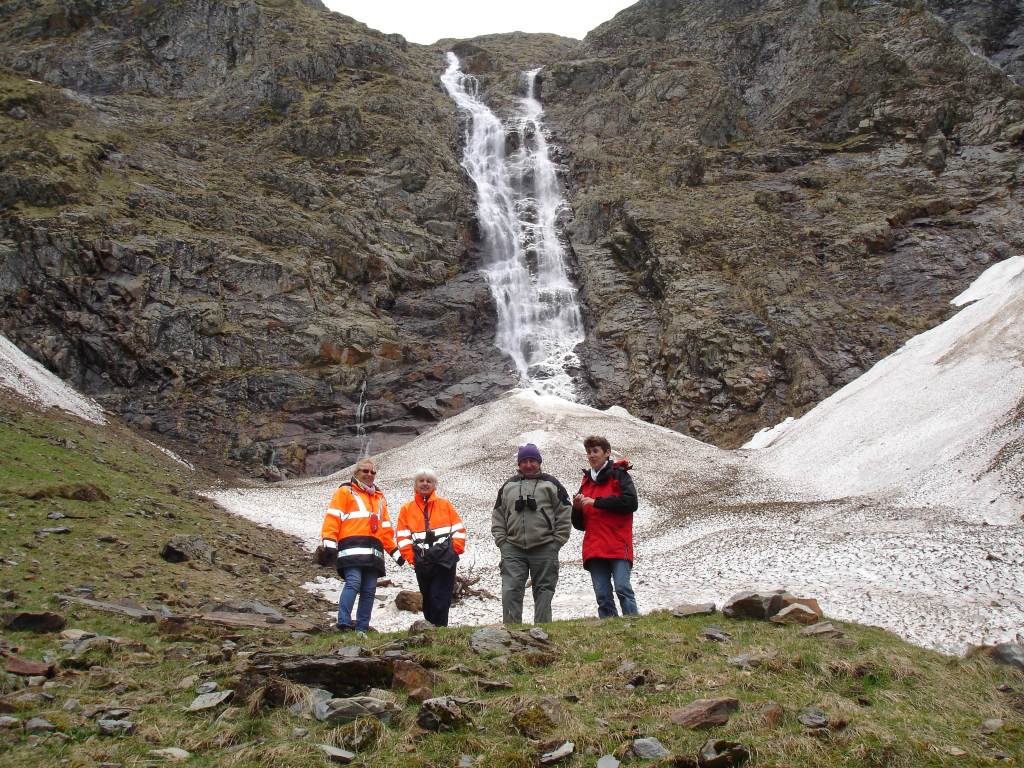
Pyrenean pique-niques

Good friends, wonderful memories

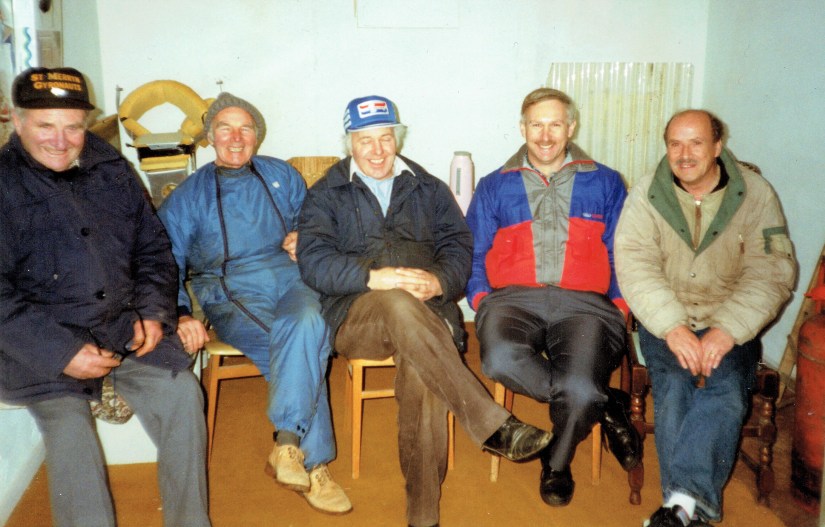
And all because of a chance encounter with Ken Wallis. Thanks to dilligence of the St. Merryn Gyronauts – I truly stand on the shoulders of giants.

Autorotational musings

Living the dream

From 2008: I wrote this after an idyllic flight one gem of a winter’s day, when Nature was in a benevolent frame of mind – an improbable attempt to capture the elation of autorotation and transfer it to the page. Join Delta-J and me for a wander up the north coast of Cornwall…

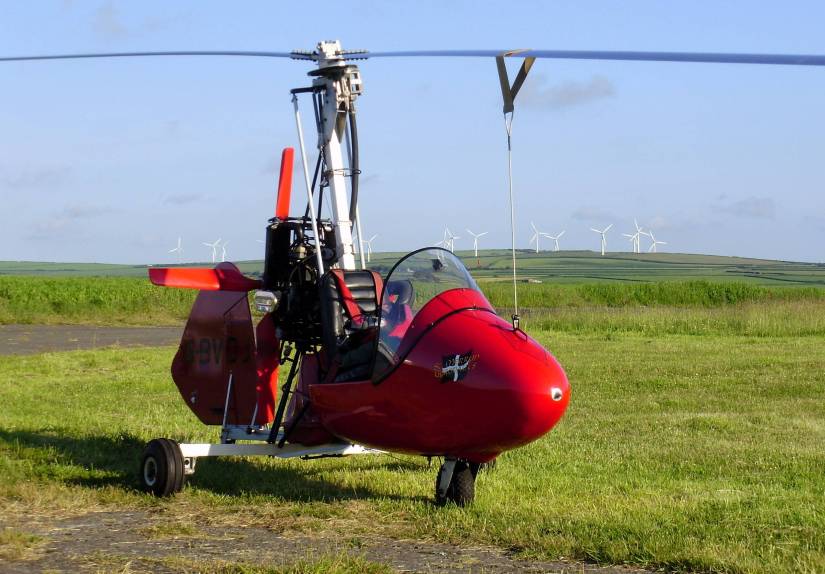
It’s a beautiful timeless afternoon at St. Merryn. Pale golden sunshine bathes the familiar scene with a soothing mellow glow, and this old airfield that I love so much seems to be almost smiling. The air is crisp and chill with a freshness like clean laundry, a palpable sense of vitality flowing across the countryside on a lively wind that hints of a buoyant tide aloft. Delta-J sits ready on the tarmac, rotor blades twitching gently as if savouring the breeze in anticipation. She’s all checked out and good to go, so lets do it.

We have a brisk south-westerly blowing about 15-20 mph, a nice steady wind so the rotors can pick up speed by purely natural means. Wind direction dictates that we use the Gyro runway today, slightly downhill, it has the least damaged surface of all four runways (the Long, the Short, and Wendy’s being the other three). To get there we taxi down the Short and across the intersection with Wendy’s, the roughest and most overgrown of them all, so named because it heads directly towards Wendy’s bungalow on the other side of the fence. Jolting slowly over the clumps of vegetation that are doggedly reclaiming the aged tarmac, we reach the relatively smooth threshold of the Gyro runway and stop for a final systems check. Engine temperature normal; test the ignition circuits; zero the altimeter and make a mental note of the time. The rotors are thriving in this excellent wind so after a quick look around for other traffic, we’re all set. Power up to 4000 rpm but we barely crawl forward against the drag of the rotor disc and Delta-J lifts her nose as if to sniff the breeze. Dip the stick forward to reduce the drag and balance briefly on the main wheels as I open the throttle and we leap into the air with minimal ground roll. Almost a vertical take off!

Climb out tracking over the runway just in case of hiccups, but the engine behaves impeccably and we sail across the airfield boundary in fine style. No conflicting traffic, everything doing what it should be doing, so a suggestion of left stick and rudder points us lazily towards the Camel estuary. The wind has lifted us to 1000 feet already, which is as high as we can go until clear of St. Mawgan’s zone. It really is a day to savour; pale blue sky dotted with fair weather cumulus, a pallid sun veiled by wisps of high stratus paints the scene in pastel shades. Even the ocean is peaceful today, an infinite sheet of glistening steel.

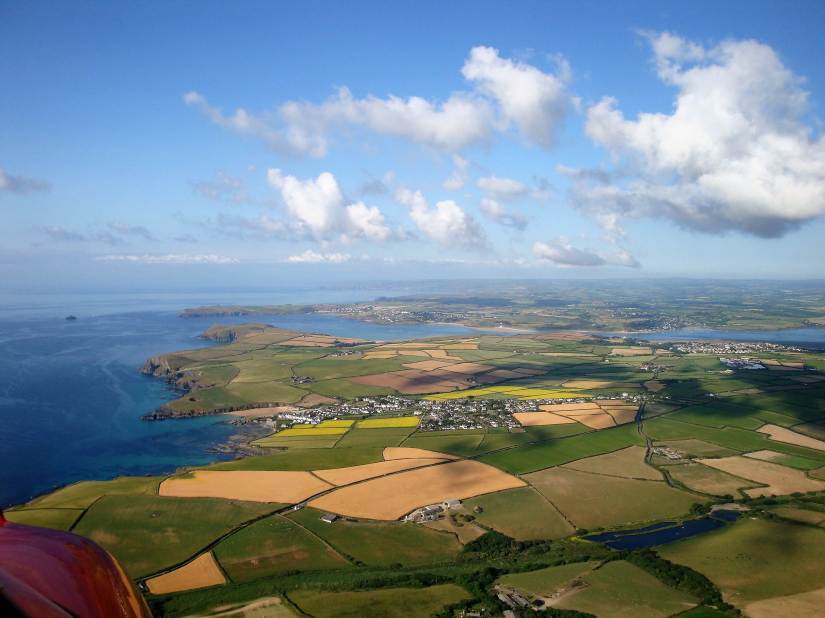
There’s nothing like a gyroplane for getting the full panoramic view, so as we have the sky to ourselves – 360 coming up. A desolate moonscape of china clay works dominates the skyline around St. Austell, beyond which the south Cornish coast is silhouetted against the bay. Tracing the coastline down towards the south-west I can just see the dark smudge of the Lizard peninsula merging with the horizon, the most southerly tip of the British mainland. Sometimes the when the air is exceptionally clear, the Isles of Scilly reveal themselves twenty-eight miles off the coast of Lands End, but we’re out of luck today and the very last corner of this green and pleasant land remains shrouded in a misty haze. The distant wind farms of Truro and Carland Cross make excellent landmarks as we pivot our gaze up towards the north coast, we can’t get lost down here.

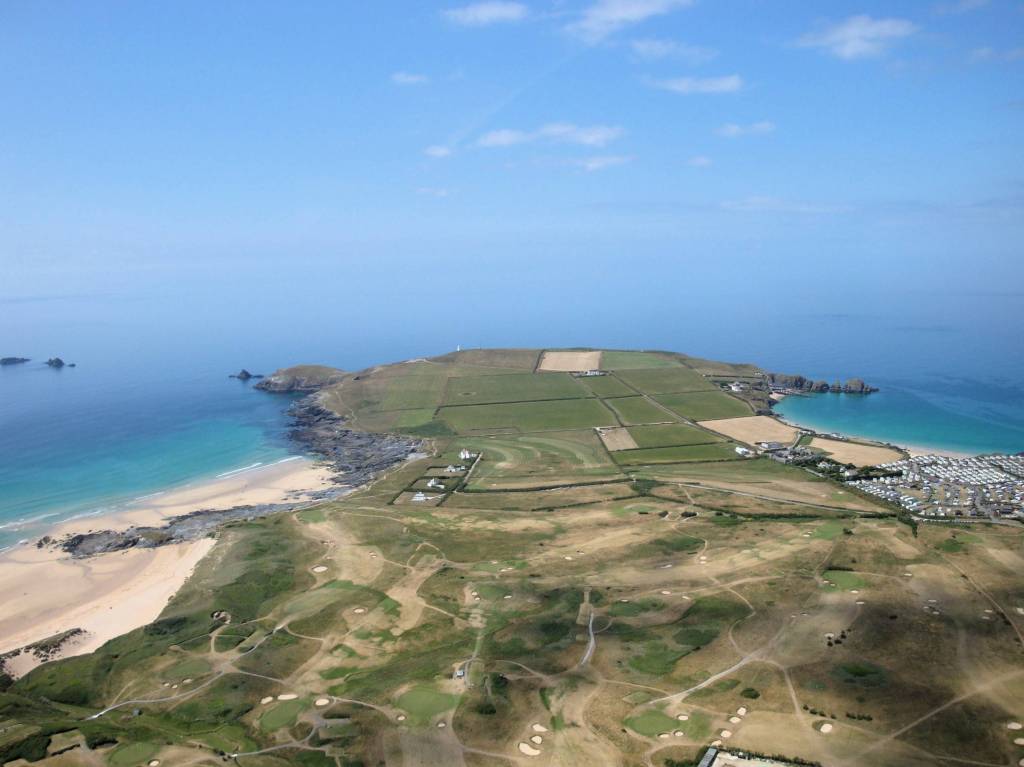
Tracking along the coast past the popular tourist towns of Perranporth and Newquay, a range of rocky headlands reach out to sea edged in foaming white, they spread like fingers webbed with stretches of golden sand. Follow those pointing fingers and far beyond the western horizon lies America, with nothing but ocean in between, a flight of fantasy for a tiny gyroplane with 30 litres of fuel on board. Instead we continue on the home straight, passing the village of St. Merryn and over the lighthouse perched on the shoulder of Trevose Head, sweeping across the sheltered coves nestling between the cliffs, seven bays for seven days. All that rugged Cornish beauty encompassed in less than a minute, as we swing down the mouth of the estuary to Padstow and complete the circle.

More wind farms lie far ahead at Delabole and Davidstow, a diminutive cluster of matchsticks from here. We’ll go take a closer look after gaining altitude to cross the river Camel, just in case I have to test our gliding proficiency part way across. Gyroplanes have many virtues but unfortunately gliding isn’t one of them! Later in the year the speedboats will be out, cutting swathes through the estuary with helpless tourists dragging behind on unsteady skis. It’s fun to chase them and mimic their patterns in the air above, but all is quiet today and the waters flow undisturbed towards the waiting sea. Safely across the river leaving the deserted beaches of the posh peoples’ playground behind, and cruise on up to the wilds of North Cornwall, happy as a lark as we sail alone through the fresh winter sky.

We’ll swing over to the right a bit and scoot inland as I intend to fly back down the coast later on. Heading vaguely north-east towards the wind farms, the town of Wadebridge straddles the river away to our right and beyond that among the hills lies Bodmin with its homely grass airfield. We’re in their patch now yet it’s strangely quiet for such a flyable day, no other traffic around so perhaps the wind is too strong. Never mind, all the more for us. The ground rises up beneath our wheels to culminate at the high peaks of Rough Tor and Brown Willy, their familiar bulks squat ahead, towering over North Cornwall as we ascend the flank of the county’s rugged spine like a fly on a crocodile’s back. The air is so marvellously buoyant today, the rotors are lapping it up, harvesting free energy that takes us to 2100 feet with only a minimal increase in power.

It’s too nice a day to go tearing around. Drifting cumulus cast shadows over the patchwork of hills and valleys in an ever-changing pattern of hues, and the air grows chilly in their shade. A dark smudge far out in the Bristol Channel hints at the presence of Lundy Island, sometimes clearly seen from St. Merryn, but like the Scillys, it’s hiding today. Beyond Delabole is the bleak wartime airfield of Davidstow, the birthplace of Cornish autorotation back in the early 1960s. It looks quite pleasant at the moment but inclement weather paints a very different scene, lashing the exposed heights with the full force of Atlantic fury. There’s a super wind bowling down off the open moors, tumbling over hills and vales like a mountain stream, it creates a joyful maelstrom of swirling eddies and we bob like a cork in its boisterous tide. Nothing makes me feel so alive!

The slate quarry creeps closer beneath our wheels, distinctive angular ledges cut in to the rock, spiralling down several hundred feet below the surface like a huge grey pudding basin made from Lego bricks. This wind is excellent, a surging flow of vitality that’s perfect for a hover and such an opportunity cannot go to waste. I let it drift us away from the village as not everyone appreciates a noisy gyroplane overhead, so we stop at the edge of the wind farm and turn to face the wind. Airspeed immediately increases to 80 mph, but a glance over the side shows ground speed is barely 20 mph as the wind races down off the open moors. A quick look at the time: the wind has veered, meaning we’ll be more head-on going back which could make the fuel situation interesting if I’m not careful.

First a clearing turn to ensure that no one will sneak up on us while we’re hanging around, and I’m amazed that we still have the sky to ourselves. Why is no one else enjoying this glorious day? All clear, ease back on the stick and watch the airspeed drop as her nose comes up, leaving the engine at 5000 rpm and see how slowly we can go without losing height. It feels like we’re sitting on our tail – lovely playful wind! Airspeed registers 20 mph and still it supports us in a delicious hover, united in harmony with the giant wind turbines busily threshing the air below. What a set of rotor blades they would make. Floating above in my own tiny turbine, holding our equilibrium with just a twitch of controls, I can only describe it like riding on a dandelion seed as I let the wind drift us back towards the coast. I am so lucky to do this.

Much as I’d love to stay and play, fuel burn regretfully dictates that it’s time to leave, so we level out and power up to push through the wind, airspeed rises to 75 mph but the ground passes beneath us at a crawl. Crossing the mythical lands of Arthurian legend, we rejoin the coast at the ancient ruins of Tintagel castle and settle down to fly back along the cliff tops. I like to trace the nooks and crannies of the coastline with our wheels, another jolly game invented by Tony Philpotts. He taught me to line up a main wheel with the cliff edge and snake in and out of the coves and inlets as we ride along, bouncing in the turbulence off the sheer rock below. Slow progress but super fun! A warm glow permeates the western sky like sunlight through a stained glass window. Scattered clouds blush with a hint of pink and copper, and the sea blanches to a pale turquoise of almost luminous quality, flecked with gold and edged with a frothy white lace of foam.

Skirting the harbour village of Port Isaac, the gaping mouth of the estuary lies ahead and it’s time to square up and fly tidy again, as we approach the zone boundary. There’s so much lift in the air that Delta-J doesn’t want to come down and we’re throttled back to 4000 revs before she slips into a modest descent. We cut inland from Pentire Point and level out to cross the river, passing sleepy Padstow snuggled behind the protective arm of the harbour wall. A quick vertical descent drops another 500 feet so as not to worry St. Mawgan, just in case they have the binoculars out in the tower (we’re too small for their radar to identify alone). A familiar pattern of silent runways lie ahead as St. Merryn comes in to view, and I rouse myself to wake up and get with it after such a long and lazy ride.

It’s hard to spot the faded windsock against the gathering dusk, but yes, the wind has veered to the west which means landing on the rough and tumble of the Short runway. We swing round to line up on the heading, keeping the power on just a bit longer as the wind is still quite feisty and I want some height in my pocket should the engine quit. Cross the old perimeter road and in over the parachute club’s portion of the airfield: they’re not active today, grounded by the same glorious wind that has been such a gift for a gyroplane. And now we’re home. 350 feet at the boundary fence with 50 mph on the clock, we drop swiftly, the wind having a last mischievous tug at us as we slip from its clutches back to earth. Gently check back on the stick and hold her there as the speed falls away to settle nicely on the main wheels, the rotors take the load with a jubilant whop! and stop us in our tracks. I wait a few seconds to lose some rotor speed before taxiing back to the hangar, tired, cold and stiff and utterly content. What a fantastic afternoon – happiness is an empty sky and a little red gyroplane!
Gyroplanes of yesteryear

Remembering a legend

Chris Julian was killed on the morning of May 17th 1997.

Sunday the 18th of May 1997 was a beautiful day, bright and sunny with blue sky. As usual, I went outside and sat on the wall to look at the weather and the wonderful view of Cornwall stretching away into the distance, watching the windmills turning through the tears in my eyes. The familiar scene gave no clue to the tragic events of the previous day, the only difference was that Chris Julian didn’t come out to join me as he often did. We would watch his two dogs playing in the field, while waiting for our new friend Bob Bond to arrive on his motorbike from Exeter. After the obligatory cup of tea, we would all pile into Chris’s old car – me in the back buried under three lots of flight gear, tools and crash helmets – and hurtle off to St. Merryn laughing and joking all the way and often completely on the wrong side of the road. It was very quiet on Sunday the 18th of May.

Chris was a legend in the British gyroplane world. Many of us gyronauts survive because he taught us how to do so. It’s sad that so few remember him now, or even know who he was. I’ll add to this in time, but tomorrow is May 17th, a particularly poignant day to remember Chris Julian, and also Bob Bond who died beside him when the rotor assembly detached in flight.

Everyone knew Chris back then, or knew of him. Larger than life and always laughing, he was a proper character – and helluva gyroplane pilot. Partnered by Tony Philpotts in the tow car, Chris tutored many hundreds of student gyronauts in the art of autorotation, patiently hauling back and forth on the gyro-glider over and over again and loving every minute of it. Learn rotor handling first and everything else will fall into place. I wonder what he would make of it all now.

I was watching some of the self-styled ‘new generation’ in action recently: hammering the pre-rotator until the last moment, even though there was a cracking bit of wind right down the runway, then flogging the poor machine to climb out on the back of the power curve. What’s all that about? As for the chap with the navy blue Cavalon, turning the propeller while stood right inside the prop arc with his arms draped around the blades – that doesn’t bear thinking about. Chris would have put them all straight, in no uncertain terms.

Chris: on a diet

The picture above means a lot to me, and Chris loved it too. We made a poster of it which he pinned to the wall in our hut at St. Merryn. By sad coincidence it turned out to be our last flight together. It was a beautiful Easter Monday, a quiet day at the gyro’s nest for once, just the pair of us out to play. We spent a leisurely couple of hours in the sunshine, cleaning and checking over our gyroplanes, happy just to be there doing what we loved. Later we flew across to Bodmin to enjoy an excellent lunch, sat outside the clubhouse chatting about everything and nothing and watching the flying on that lovely grass airfield. It was a lazy sort of day, the colours bold, green grass, blue sky, bright sun. Chris wanted to treat me to an ice cream but I was too full to manage any more, so he bumbled off to order one for himself. Returning to our table, he realised his head was sunburnt: I fished a duster from the pocket of my gyroplane and he fastened it around his head with the two miniature bungees that he used to attach his radio in flight, thus Lawrence of Bodmin was born. When his ‘bocker-nocker-lorry’ arrived (he couldn’t pronounce knickerbocker glory!), the image was complete. I had to get a photo, never dreaming how poignant it would become. As he drove us home later that evening, he looked across at me and said reflectively ‘You some dear little gyrocopter pilot really, Shirley.’ – and reached over to squeeze my hand – after wiping his nose in his palm!

So who was Chris Julian? Rosy of face and cheerful demeanour, his bald head framed by a shock of unruly white hair, this dumpy figure clad in open-necked shirt and corduroy trousers could easily be dismissed as a quintessential yokel – the country bumpkin persona thrice enhanced by his broad Cornish accent. But Chris was a virtuoso of the free-spinning rotor blade: there was nothing he couldn’t do within parameters and even a few things beyond. Back in the 1960s, he learned his skills from the first two gyroplane pilots in Cornwall, Charlie Force and David Bazeley, and for the next three decades he passed those skills on to people like me. The Wombat Gyrocopter was his pièce de résistance, and in the skies above St. Merryn he made her sing. Poetry in motion, they were a joy to watch – from a suitably sheltered vantage point where you couldn’t be dive-bombed! He was a terror for that, the old devil.

But when in instructor mode, student safety was paramount and his concern was absolutely genuine. He taught me everything about rotor handling, and our only instrument was a piece of string. It never lies: the batteries never fail, the readout never goes blank. Learn rotor handling first – proper manual hand-start rotor handling – and everything else will fall into place. 26 Years of flying with a bit of string and yet to ding a rotor blade, thanks to Chris Julian, faithfully assisted on the glider by Tony Philpotts.

Tony Philpotts’ tribute to Chris Julian, quietly left pinned to the wall of our hut.

Postscript. I also pay tribute here to Robin Morton, who sadly succumbed to illness earlier this year: a very clever man who had many an aviation string to his bow, including those of gyroplane inspector and enthusiast. At the 1997 PFA rally, stunned British gyronauts gathered from around the country still reeling in shock, two months after the double fatality at Kemble. We were all in denial. No one could believe it: not Chris – not in a gyro-glider. The latest issue of Rotor Gazette International had been dedicated to him, featuring my unpolished outpouring. I don’t remember much about that weekend, but I’ve never forgotten how an emotional Robin approached me that day and clasped both my hands in his. ‘You must write, my dear’ he implored, eyes bright with tears. Holding me close in mutual sorrow, he repeated softly ‘You must write.’

I did, Robin. Thanks to you. I did.

Gyro-glider & rotor handling

Old fashioned – Never!

In 1993, my transformation from fixed-wing driver to gyronaut began with an old Bensen gyro-glider. For 19 wonderful years we were based at St. Merryn, a beautiful old wartime airfield on the North Cornish coast with 8 tarmac runways to play with – perfect for glider training. This is where I and many others learned about free-spinning rotor flight, courtesy of Chris Julian and Tony Philpotts. It was so much fun! Such painful irony that Chris, along with our friend Bob should’ve been killed flying another glider up-country, thanks to the stupidity of one particular individual who has never had the guts to say sorry.

Gyro-gliding should be mandatory for new gyronauts. Nothing else can match it for pure unadulterated rotor flight: no engine or instruments to worry about, all unnecessary distractions are removed – it’s just you and the rotor blades. Fly a gyro-glider and it will open your eyes to the sheer power of autorotation. You’ll learn to understand the rotors and their behaviour, how to read them without the need for instruments and discover the very heart of gyroplane flying. In the old days before the onset of two-seat machines, nearly every gyronaut began their training on a glider. Sadly, now that two-seat training is readily available, the glider has been largely forgotten by the ‘establishment.’ Considered an out-of-date-has-been by those with no clue, it still gives the best insight into rotor handling that no two-seater can match.

It’s a long time since I wrote the following piece, but what we did that day remains just as relevant to gyroplane training, and rotor handling in particular. In fact it’s even more relevant these days when newly qualified gyro pilots are so reliant on widgets and gizmos to tell them what they should really know by the seat of their pants.

12 Year old Ed: junior gyronaut

The 2nd of September 2007 was quite a special day for a young lad who first flew the glider with me when he was only 12 years old. Now aged 15 and tall enough to reach the steering bar, Ed Weaver returned to St. Merryn to have another go. We had a good strong wind for him, blowing about 15 knots just a few degrees off the nose of the main north/south runway. To recap on what we’d done all that time ago, I parked the glider into wind and after going through the preflight inspection together, Ed started the rotors by himself and spent half an hour practising feeding the wind into them, using the stick to regulate their speed by opening or closing the rotor disc to the airflow. The old RotorHawk blades were relatively tame and docile, but with quite a feisty wind coming in off the sea, Ed had his hands full to settle them down as random gusts blustered through, upsetting the blades and triggering flapping. He did very well and corrected the first kick of blade sail without any prompt from me – instantly shoving the stick fully forward to kill off the wind (a manoeuvre never to be performed in the air, by the way), letting the rotors stabilise before gently bringing the stick back, inch by inch to let them accelerate once more. Excellent handling practice.

Gyro kites…

Later we hitched up the 115 foot tow line and took the glider out to play on the main runway. The wind was slightly from the right, but no real problem. Ed brought the rotors up to speed, then followed through on the stick as we took off and flew down the runway about 10 feet high, settling down nicely at a respectful distance from the giant dung heap sprawled across the end. I showed him how to use the energy in the rotor disc to reverse the glider back and do a three point turn, as the tow car took up the slack in the line. Being towed back downwind is the worst part, bumping over ragged tufts of vegetation at 15 mph with no suspension on the glider – ouch! By the third take off, Ed was handling the stick on his own with only a few minor corrections from me, and 90% of the landings by the end of the first hour. For the second hour I was little more than animated ballast and if the wind had been more on the nose and not so gusty, Ed could have soloed if he wanted.

15 Year old Ed flying the gyro-glider – cool as you like!

As it was we had to wait for the following Sunday, as the wind had gone to the other extreme with Saturday being flat calm. It was also westerly, which meant the shortest runway with more lumps and bumps of foliage breaking through the aged tarmac. The wind was about 8 knots maximum but a steady mild breath this time, so Ed could open the rotors up relatively quickly without setting them flapping. We did another short static session with the glider to recap again, but he’d mastered the starting bit easily, so I set him up with my gyroplane to show him the contrasting behaviour of different blade profiles.

My bird wears Dragon Wing rotor blades which are much lighter in weight and have a more streamlined, efficient aerofoil section than the RotorHawks – and they’re absolute pigs to spin up by hand! With Ed in the seat controlling the stick, I pushed the rotors round as hard as I could to see if he could get them to catch the wind and accelerate. There’s no way I’d even bother attempting it normally, but the wind was docile and steady enough not to seriously upset them, so I thought it’d be a good demonstration – and it was. Try as we might, despite hurling my entire 8 stone bulk behind them, and with Ed’s careful coaxing on the stick – we could not get those rotor blades to show any interest in picking up at all – whereas the tame old RotorHawks had settled easily on the light breeze with little effort. You only get to know a true feeling for the rotors by learning to start them by hand: a machine relying on mechanical drive and tacho’s can’t give you the same insight. It’s like trying to ride a horse without an empathic understanding of the feel of its mouth against the reins.

With another lesson under his belt, we hitched up and took the glider out for Ed to try some tamer conditions. Light winds mean towing at a faster ground speed to compensate the lack of airspeed, which I don’t like doing as we’re forcing the machine to fly. Luckily both Ed and myself are lightweights so we didn’t have to drag the glider along at an excessively fast pace to keep it airborne – which was a good thing as we didn’t have much runway to work with in a westerly direction. With two of us onboard we were lifting off just before the intersection with the main runway (a particularly rough patch to accelerate over), and the car had to begin slowing almost immediately, being some 80 feet ahead of us. Ed flew well, doing everything himself except the three point turn at the end, and after several runs he felt happy enough to attempt it solo.

I strapped him into the middle of the seat and positioned the glider on the threshold, aiming for the smoothest possible take off path between the weeds. I explained what was going to happen and questioned Ed as to exactly what he was going to do, making sure we both understood who was doing what, and no one was going to scare the pants off the other. All he had to do was repeat what he’d been doing all morning (which he’d now find much easier sitting in the middle of the seat) and remember to ‘plant’ the machine firmly on the deck as soon as the main wheels touched down. I gave him the traditional St. Merryn salute, pretending to bite my fist in mock terror (just as Chris had done to me all those years ago) getting a broad grin in return. Perched backwards over the passenger seat of the tow car, I could see the rotors were turning as fast as possible with the glider stationary, and we began the tow with a steady acceleration, increasing by 5 mph at a time. The nosewheel lifted nicely and my youngest student became airborne, flying sedately to the end of the runway and settling down to a text book landing. I ran back to join a relieved fledgling gyronaut on the seat, giving in to the obligatory high-5 (well, he’d earned it!) before reversing the glider round for the run back to the hangar. Ed’s beaming face told me all I needed to know.

What a great feeling it is when someone clicks with the machine like that – be it glider or powered gyroplane – and suddenly realises what it’s all about. Ed can be proud of himself: he has a skill that very few do these days. When new people come in to the sport, no matter what kind of gyro they choose to fly, they need and deserve to be taught the essential basics of rotor handling. And for that, you can’t beat a gyro-glider.

(Thanks to Ben Mullet for the photos)