Bois de la Pierre 2026
Grass roots autogyros, homebuilt gyroplanes, gyro-gliders, gyrocopters, indie author
After reading This Way Up and despite my caution of impending addiction, a couple of people have been inspired to try gyro flight for themselves, which is great news! However, several other people have remarked that while they enjoyed the book and can understand the appeal, gyroplanes are clearly far too dangerous and I must need my head examining (or words to that effect!). This perfectly summarises the exact dilemma I’d struggled with when putting the story together. The last thing I wanted was to add fuel to the fire of negativity surrounding my special way of flying, but to write an honest account of this gyronaut’s journey wouldn’t be possible without referring to the dark side. To that end, I purposely kept quiet about the lost souls encountered that I didn’t mention in the book, hoping the positives would far outshine the negative.
Everything in life has a balance: light and dark, yin and yang, opposite sides of the same coin, and gyroplanes in particular embrace an extreme range of emotion. Waking the rotor blades with nothing but the wind, sensing that marvellous transition as they come to life in your hand. The sheer unadulterated joy of a gyroplane’s eager response to the lightest of touch – and the devastating shock and pain when things go wrong. Sad to say, many of us gyronauts have been there. Humans aren’t meant to leave the ground: it isn’t natural, yet millions do it every day in some form or other. Looking back at the personal fatalities suffered during my three decades of autorotating, gyroplanes are not exceptionally dangerous despite their poor reputation. Seriously, how can they be when a twit like me can do it! Admittedly I’m a little biased, but it would appear that the human element is by far the weakest link.
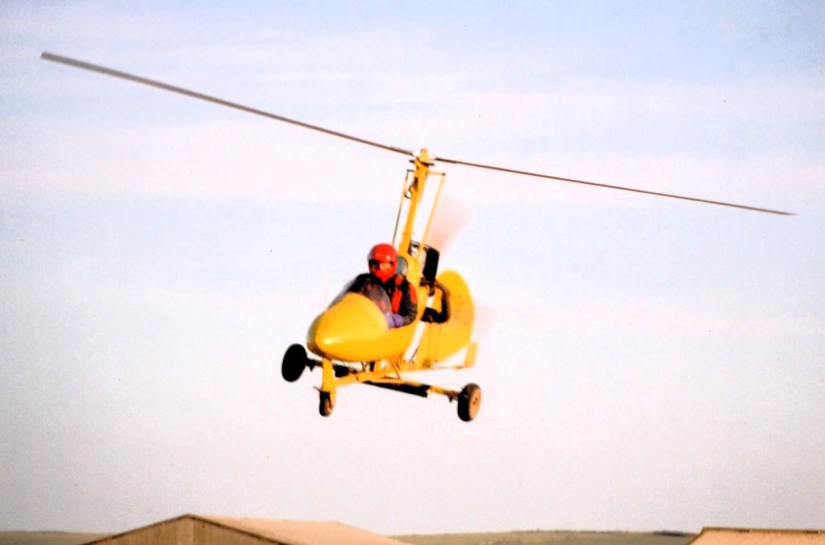
Chris and Bob. The gyro-glider accident that should never have happened. It wasn’t the glider’s fault that a Kemble-based idiot removed 4 critical bolts from the rotorhead and left it there unflagged. It wasn’t the glider’s fault that everyone who used it during that weekend’s public event (including Chris and Bob) failed to spot the lethal omission, until it came apart in the air.
Glauco and Gina (Italy). They drowned after their Dominator hit power lines while flying along the river Po. A terrible waste of life, but it wasn’t the gyroplane’s fault.
Keith. Newly qualified: a simple case of over-enthusiasm, flying an unfamiliar machine and trying to do too much too soon. Tragic, but it wasn’t the gyroplane’s fault.
Brod. We only met a week before his demise. He wanted to come down at very short notice and take instruction on the gyro-glider, which unfortunately I was unable to arrange. Had he been willing to wait another week, I may have been able to give him enough skill to save his neck, but he was too impatient. For the sake of seven days he deprived his young daughter of a lifetime with her father. And guess what…
Brian. A careful and conscientious pilot who had hopes of becoming an instructor, his death rests with the obstinacy of our authorities. A chance remark regarding the stability of the RAF 2000 being slightly improved by removing the doors was taken as gospel, and regulation duly imposed. Brian was flying his RAF back to Henstridge after passing its annual permit inspection – and it’s agonising that he was so close to home. Early October, altitude 2500 feet, flying at 60 mph for 90 minutes without the doors on. Hypothermia. The air ambulance arrived at the crash site within minutes, yet a paramedic in attendance said that Brian’s body was cold enough to have been dead for 2 hours. The stock RAF 2000 at the time was one of the most unstable gyroplane configurations around, but it didn’t kill Brian. British regulation did that.
Gérard (France). A skilled pilot of both fixed and rotary wings. My French isn’t great, so as far as I understand it, a mechanical fault (some think a fracture in the large vertical tail fins) caused a catastrophic inflight failure. Was there a tell-tale sign that could have been spotted during pre-flight checks – we’ll never know. Consequently, this one is fifty/fifty. Sorry, Gégé.
Pierre (France). An exceptionally cruel accident. Our new instructor, flying a perfectly safe manoeuvre that he did regularly: a spontaneous burst of joie de vivre which we’d enjoyed together on his previous flight, only the day before. Did he brief his new student (a microlight pilot on his first ever gyroplane flight), explaining the radically different, yet perfectly safe part of the flight envelope that he was about to demonstrate? Or was it so naturally ingrained, a normal routine bit of fun, that the possibility of it being misconstrued just didn’t occur to him? Again, we’ll never know – but it killed them both.
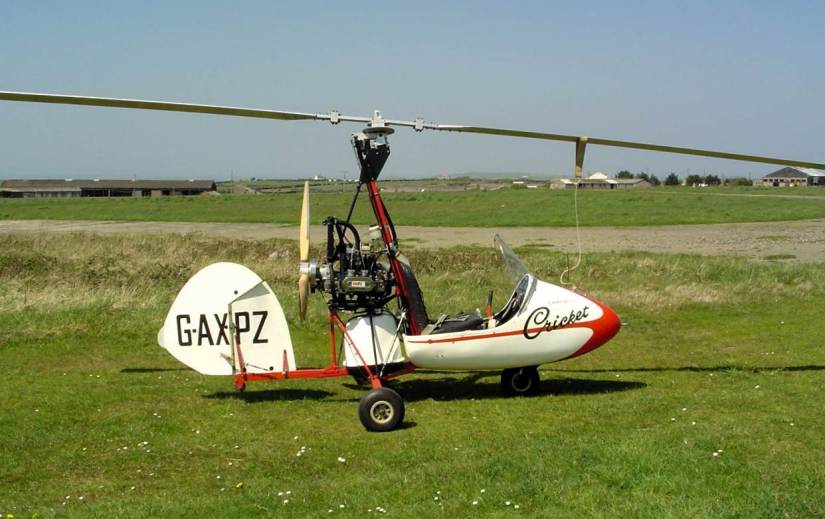
And There but for the Grace of God Award. Special mention must go to Grenfell: a guy who consistently fails to show any self-restraint or sense of responsibility with other peoples’ aircraft. He could easily have become a statistic many times over, yet somehow the Swiss cheeses have failed to align. I taught him rotor handling with the glider, then groundwork on a borrowed Cricket, knowing full well that if I didn’t help he would try to teach himself. Ethics or legalities? What else could I do, with Keith already on my conscience.
After spending an afternoon with Grenfell doing two-wheel-balancing and low hops, it was time to take Delta-J out to play for a while – foolishly trusting him not to do anything stupid. Later, coming back to the airfield, I see him flying borrowed Cricket out over the nearby village towards the coast. No insurance, no authorisation, no licence, and barely adequate skill. Irresponsible and utterly recklesss.
Some weeks later, again flying out around the village in borrowed Cricket, literally seconds after he landed back at St Merryn, the engine screamed as the propeller detached and fell to the ground. Unbelievably lucky. If that had sheared off over the village…
During training at Henstridge: having been warned by a veteran gyronaut not to fly near the high ground as it was prone to strong down draughts, student pilot Grenfell proudly informed me that he’d deliberately flown the same borrowed Cricket into the danger area ‘to see what would happen.’
Landing borrowed Cricket unannounced and uninformed at the microlight training school on Davidstow moor, he narrowly avoided hitting a sheep that ran out in front of him.
Despite my misgivings, he persisted in using a dodgy set of home-made fibreglass rotor blades. They were structurally questionable even before suffering a ground strike, yet Grenfell fitted them to a new Montgomerie Merlin belonging to another student, racking up its engine hours fast taxiing with dodgy rotors at flying rpm. Nor was he authorised to do the first flights of this newly completed gyroplane, but that didn’t stop him repeatedly flying it out over the village (thankfully with proper rotors installed), and has been treating it like his own ever since. Its poor owner doesn’t know the half of it.
And lets not forget the 2007 Yeovilton fiasco that was a whisker away from carnage. Lucky, lucky, lucky! Very few have been so fortunate yet I guarantee there will be more incidents, as he doesn’t learn. Of all the opportunities he’s had to add to the accident statistics, not one would’ve been the fault of the gyroplane.
So, are gyroplanes any more dangerous than any other kind of flying machine? Absolutely not – they’re the best fun in the world! But just like any other kind of flying machine, it’s as dangerous as you let it be. Unless you have the luck of the devil…
Despite managing to squeeze a few photos into the new book, I would’ve liked to include a lot more had publishing constraints been able to accommodate them. However, thanks the wonders of the World Wide Web, I can stick ’em all on here!
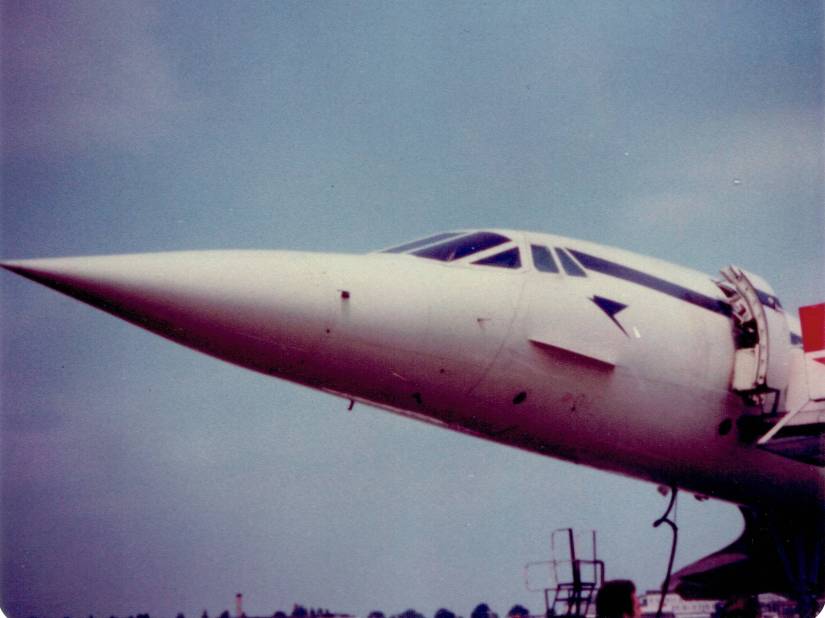
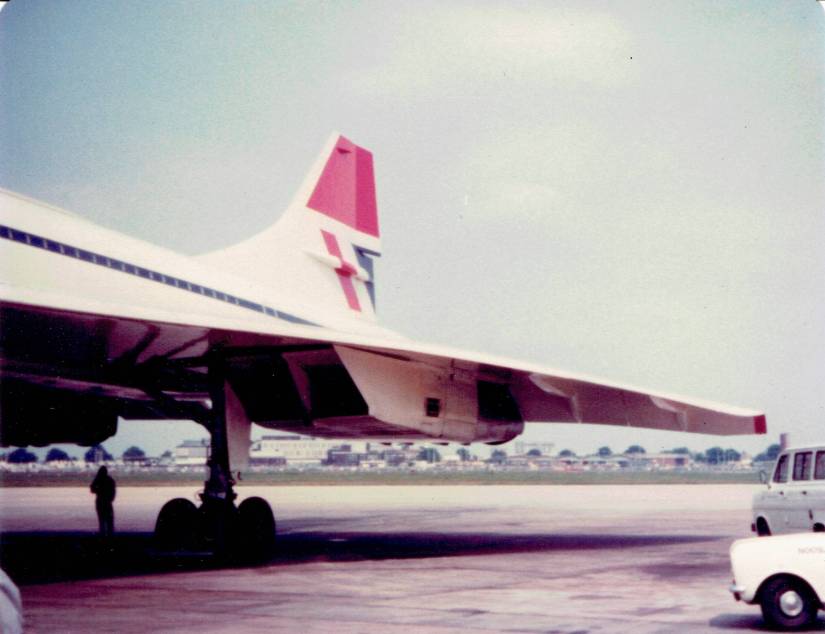
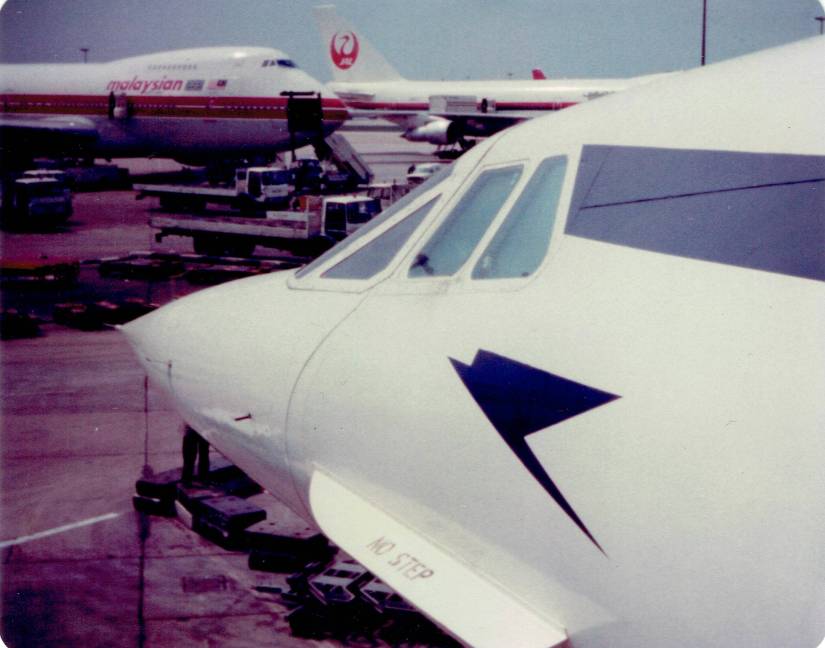
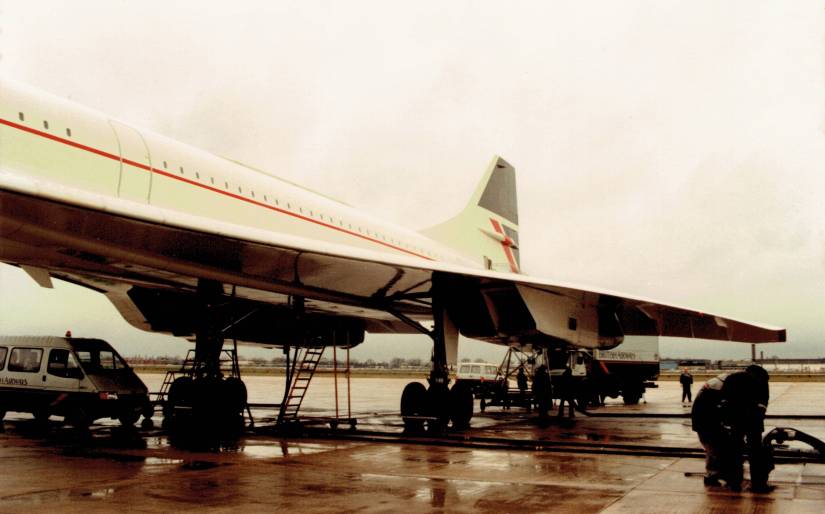
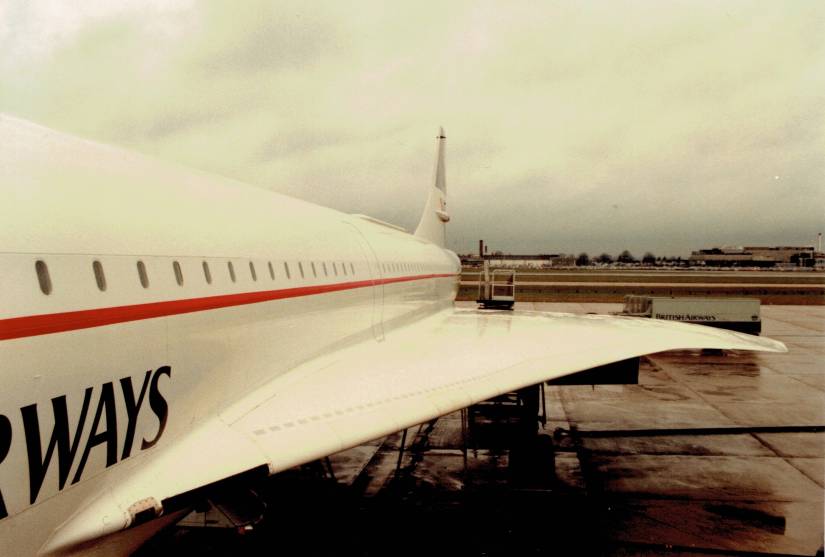
Déjà vu. Not once but twice – with huge thanks to my parents and my ever-generous boss, Paul Mitchell – they gave me the most beautiful aircraft ever designed! How lucky can anyone get. What a monumental shame that the French attempted to cover up the chain of errors on their part, and used the Paris tragedy as an excuse to put an end to her. The greater tragedy is that it should never have happened at all. Concorde will always be iconic.


My favourite light aircraft: some of the Grumman Cheetahs at Blackbushe during the mid-eighties. My log book entries record G-MELD, FANG, PAWS, HASL, PURR, BGFG, JULY, BHSF, IFLI, BGVW, and OPPL. No one warned me that flying is addictive…
Somewhere there’s an old photo album containing evidence of my defection to Piper aircraft at White Waltham – the operative word being ‘somewhere.’ I’ll catch up dreckly. Meanwhile, my Cherokees were G-AVWA, AXTH, AWBS, AVSI, AXIO, BBIX, ATVL, and my favourite PA28-140, G-AVLF. Of the 161’s, I logged time in G-BOYH, BOYI, BNNS, BRDG, BRDF, BRDM, but the heavy Warriors didn’t really wag my tail.

This is all I can find on the Gat-1 sim. The cockpit looks the same but I don’t remember Gatty having the wings and tail. It was a brilliant little gadget, I hope it still survives somewhere.
In that same missing photo album is G-BNKX, the rattling little Robinson R22, and Chevvron motor-glider G-MVIP, both of which opened my eyes to new possibilities. And then, this happened…

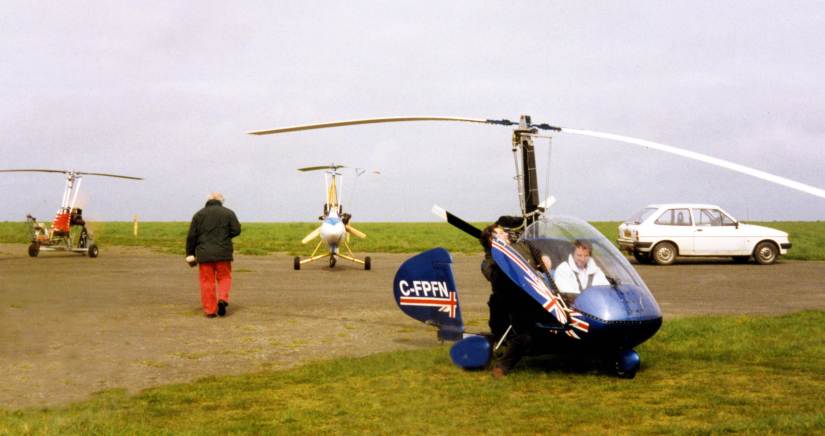
And so on to the wonderful utopia that was St. Merryn…
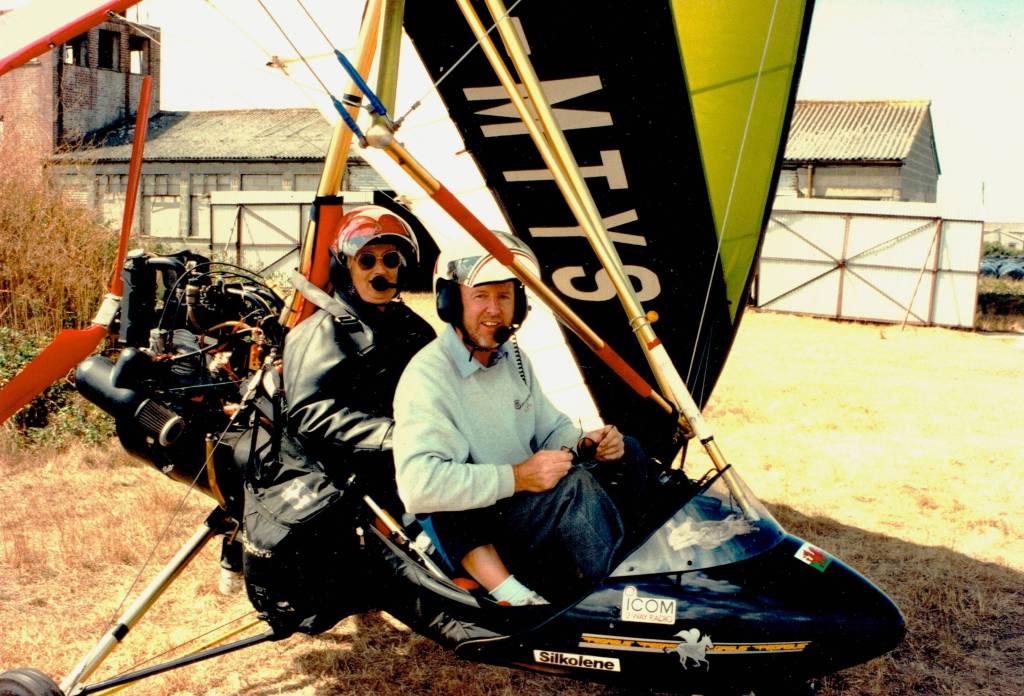
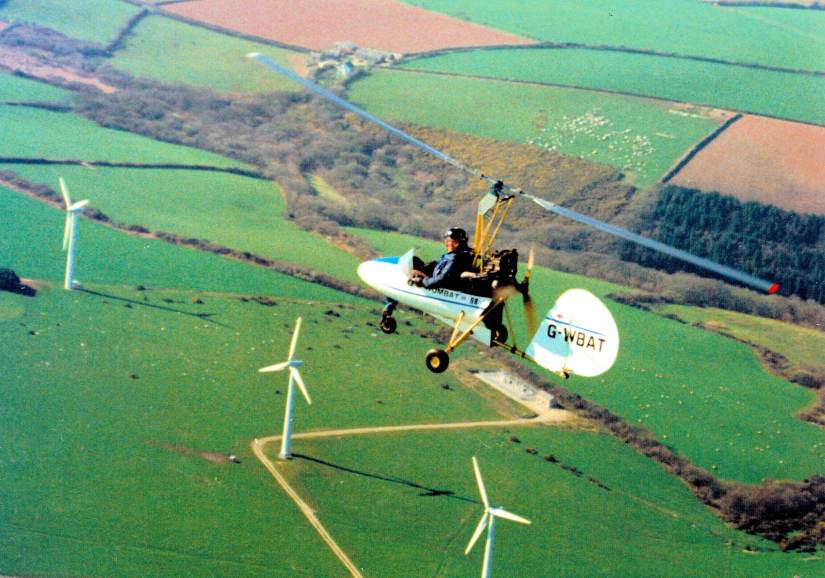
I used to have some super photos of Chris flying the Wombat. Bob Bond was only with us for about six weeks. A talented craftsman and natural pilot, he wanted to surprise Chris by carving him a model of the Wombat, and asked if he could borrow my photos to work from. Two weeks later, Bob was killed alongside Chris on the Kemble glider.
Magni Days 1997. First new type, courtesy of Lisa’s M18
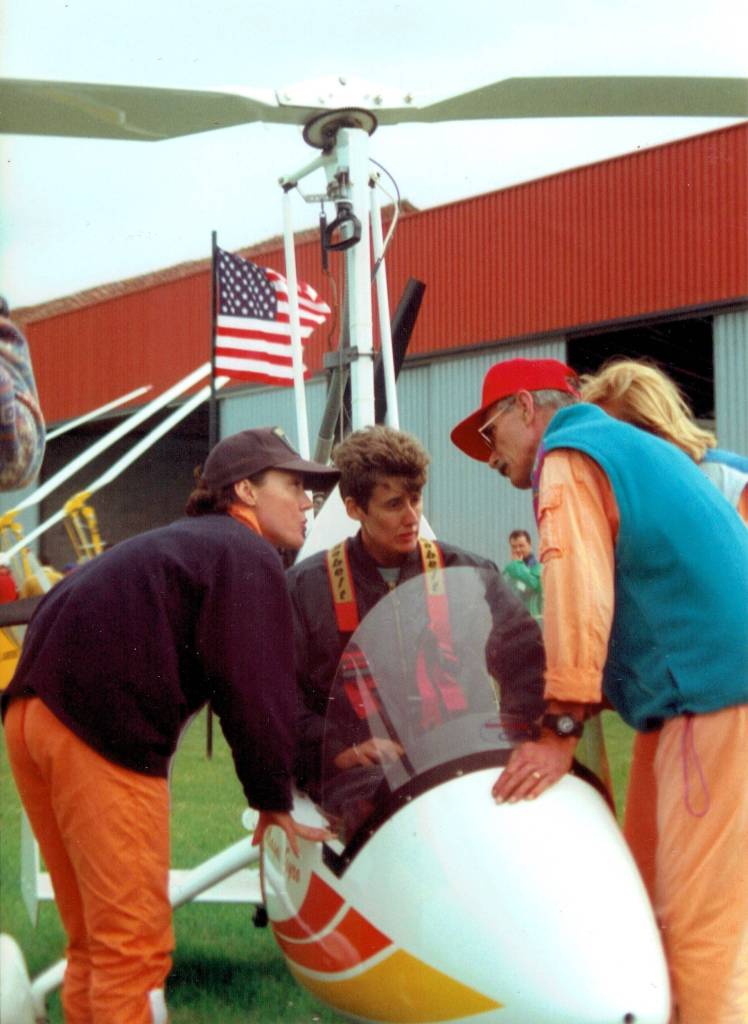
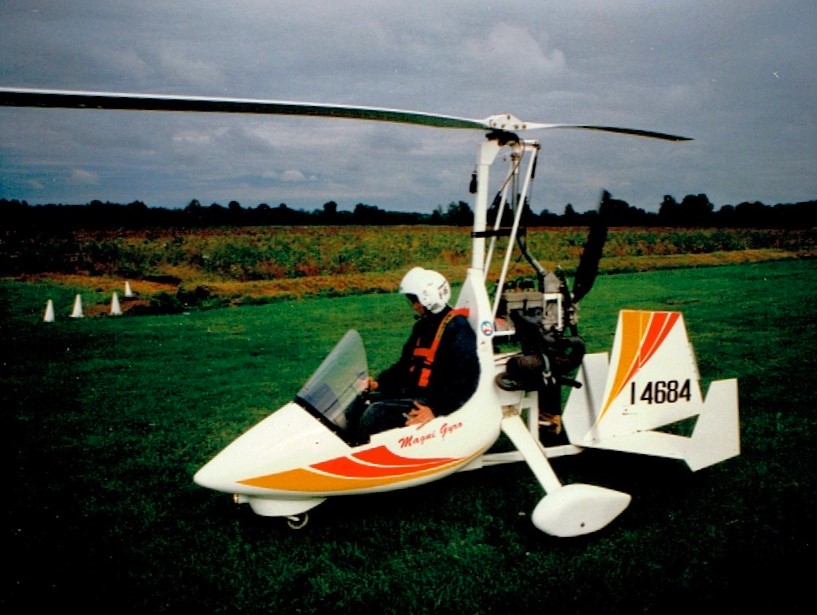


St. Merryn moments…
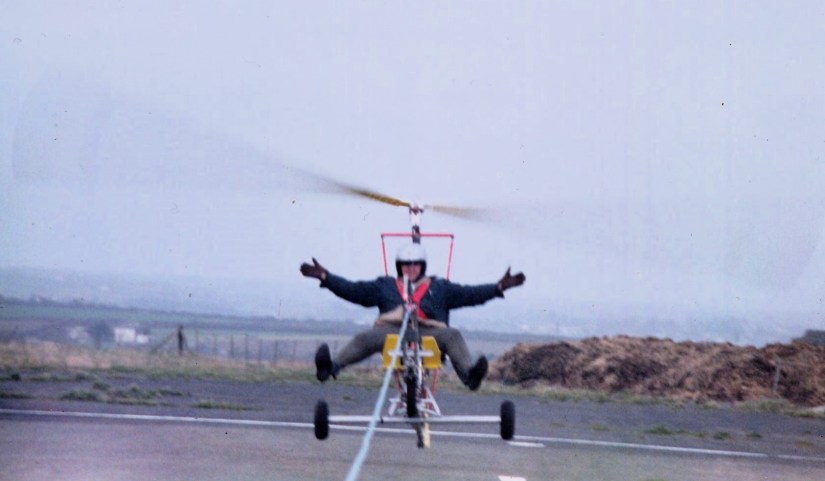
Don’t try this at home. The photographer thought that by laying on his back amid the trampling crowds, it would make it look like we were airborne – that’s why I was laughing. We were still tied to the trailer!
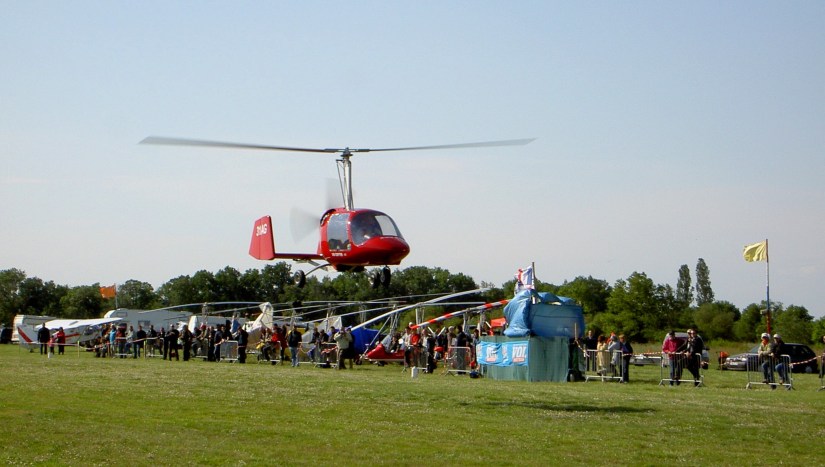
Bois de la Pierre 2005: we could not believe our eyes! Never did I dream that one day, Delta-J and me would be a part of it too.
2009. 600 Miles on the wrong side of the road, towing my precious cargo: it scared the hell out of me but it was so worth it.
Le Coupe Icare: what a marvellously bonkers experience!
Followed by the stunning panorama of Lac d’Annecy
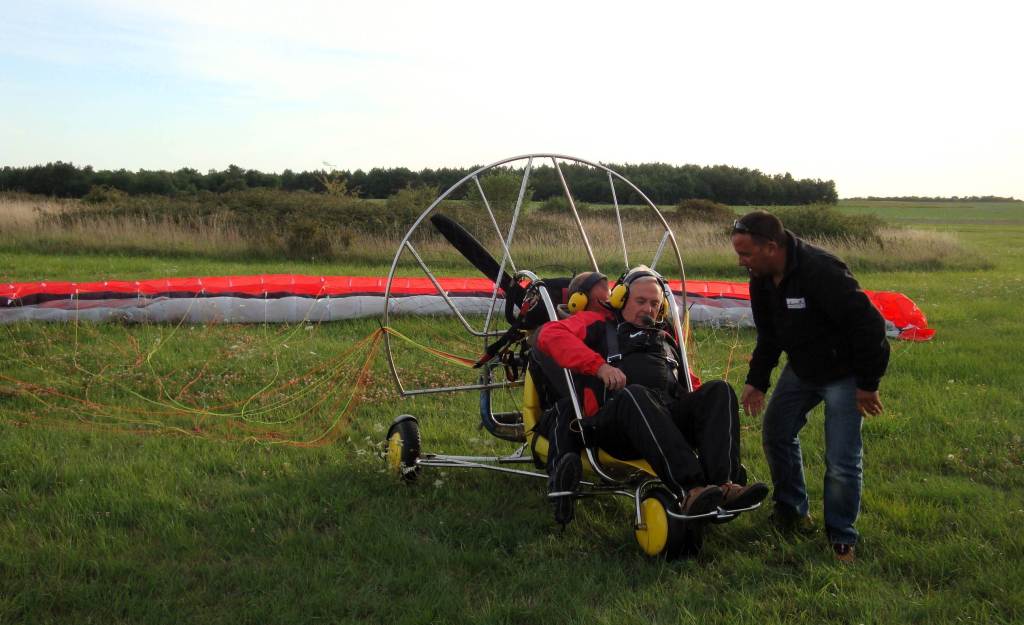


2014. The transition begins.
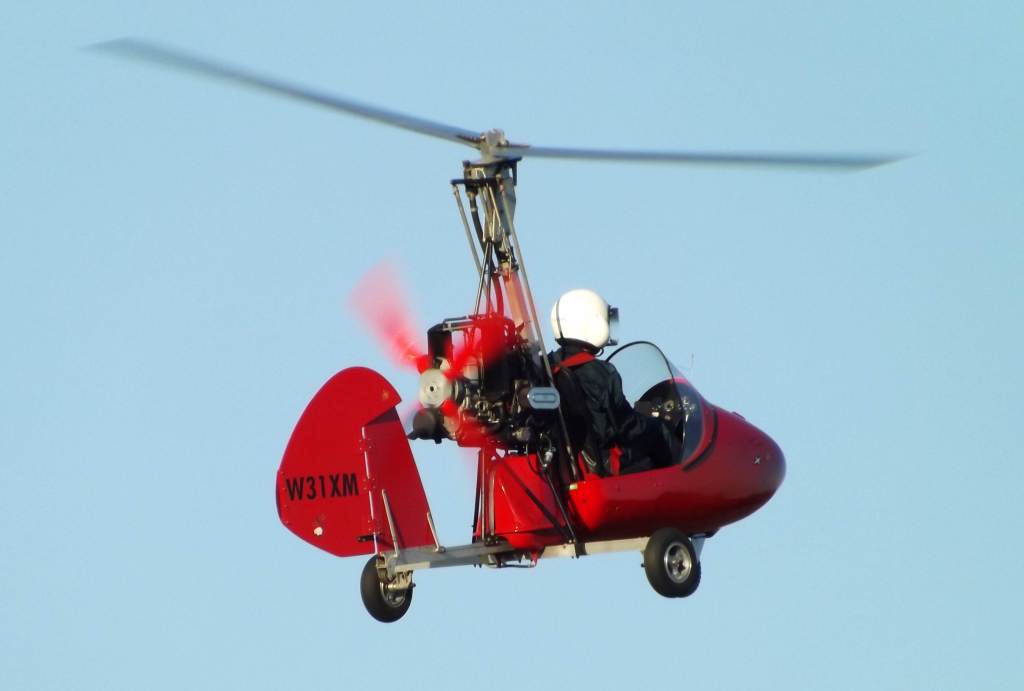
Our minimally restrained prototype tailplane. Looking back at the inflight videos with the winglets clearly fluttering – how the heck did they persuade me to fly her like this! But what a difference it made in handling.
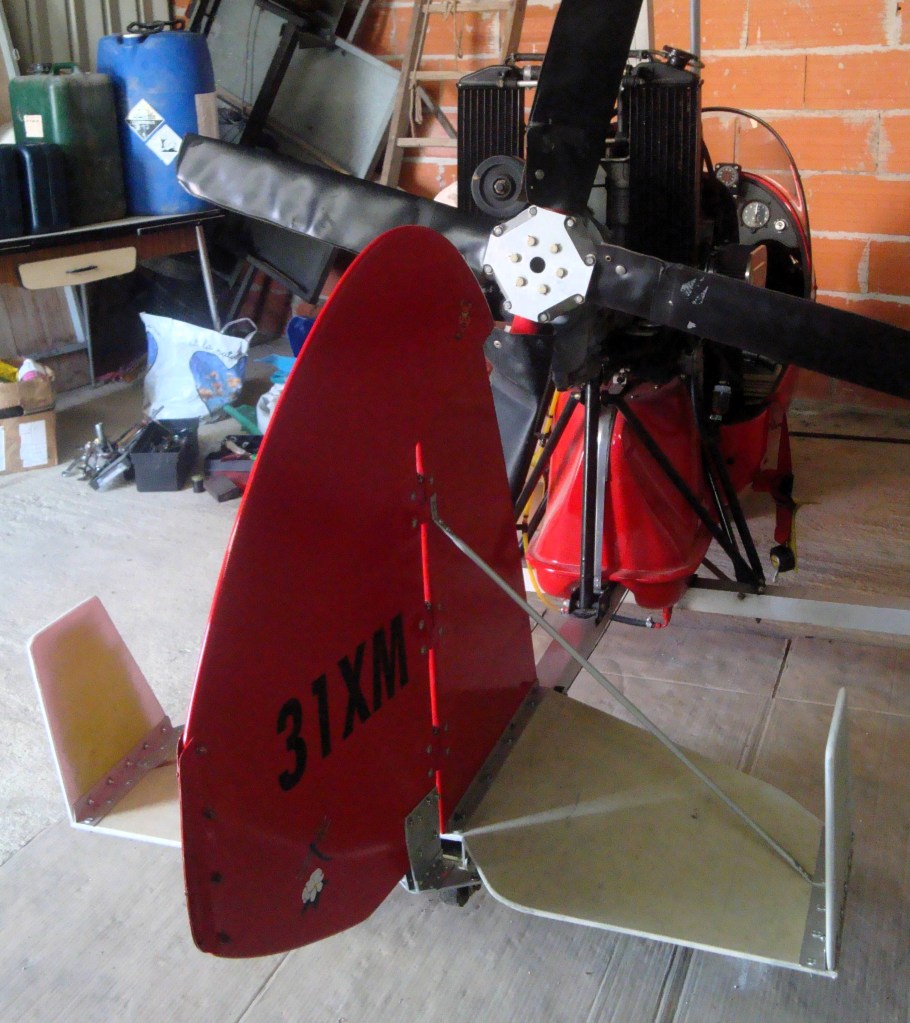
3 Months later: slightly reshaped, beefed up, bonded and double bracketed. Damn, she pretty.
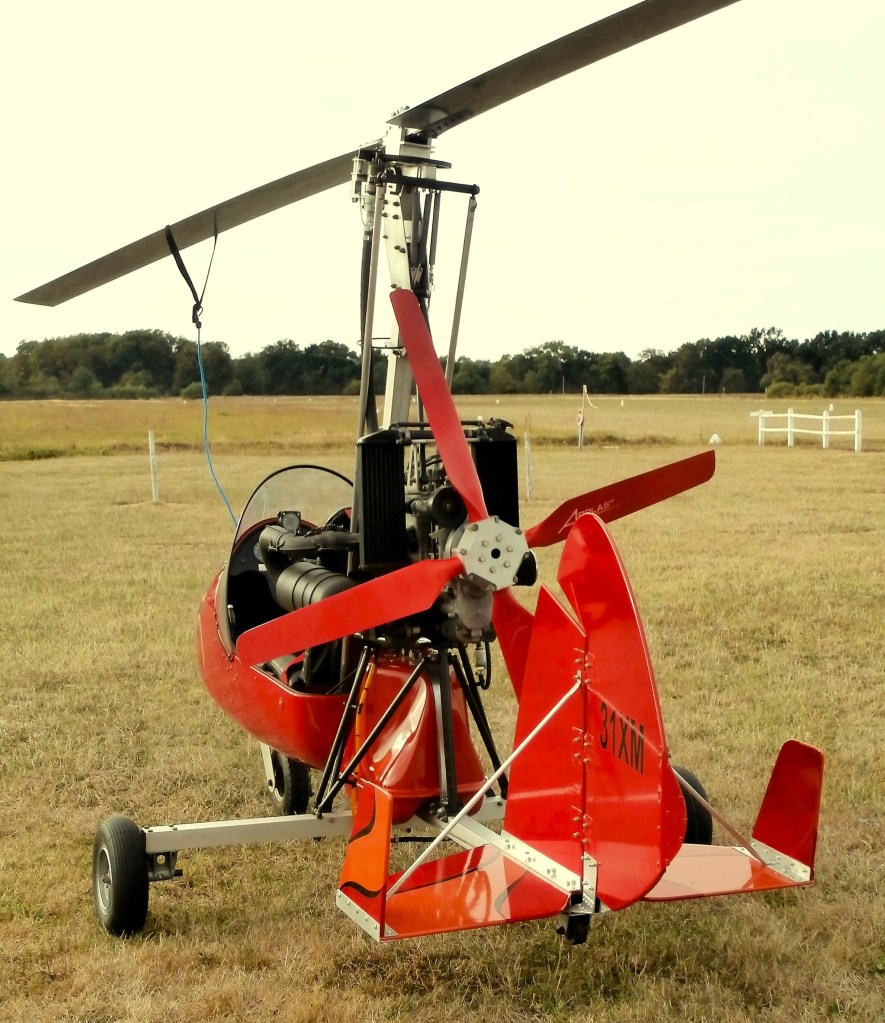
Never surrender. Our little feline fighter – she would not give in!
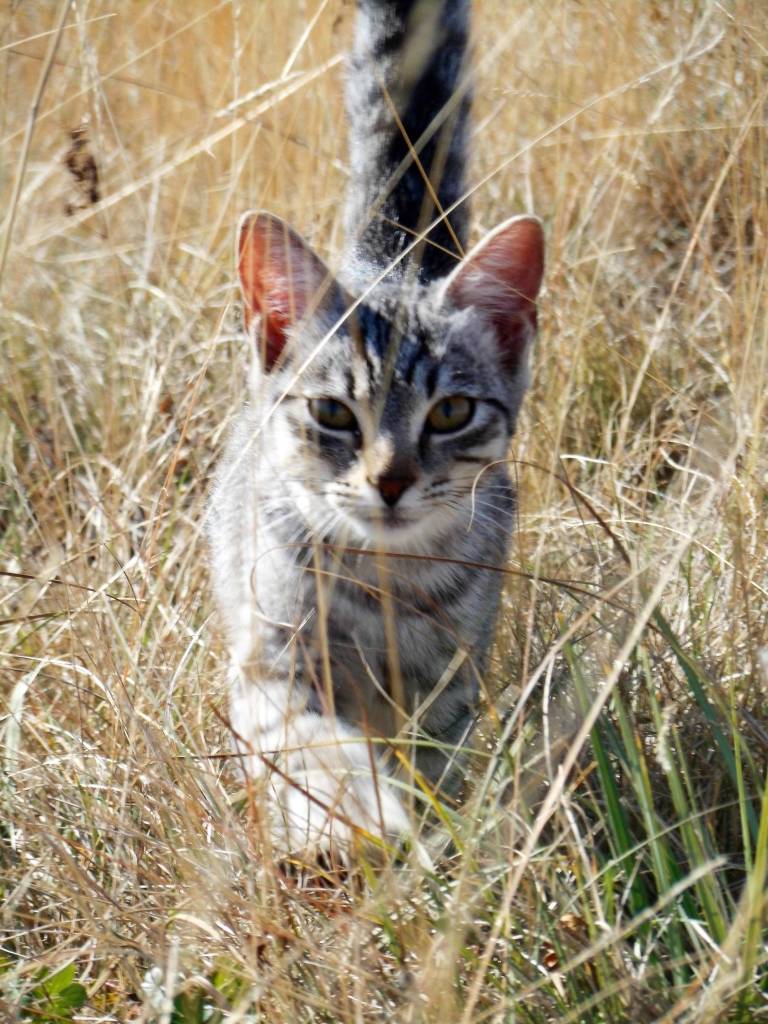

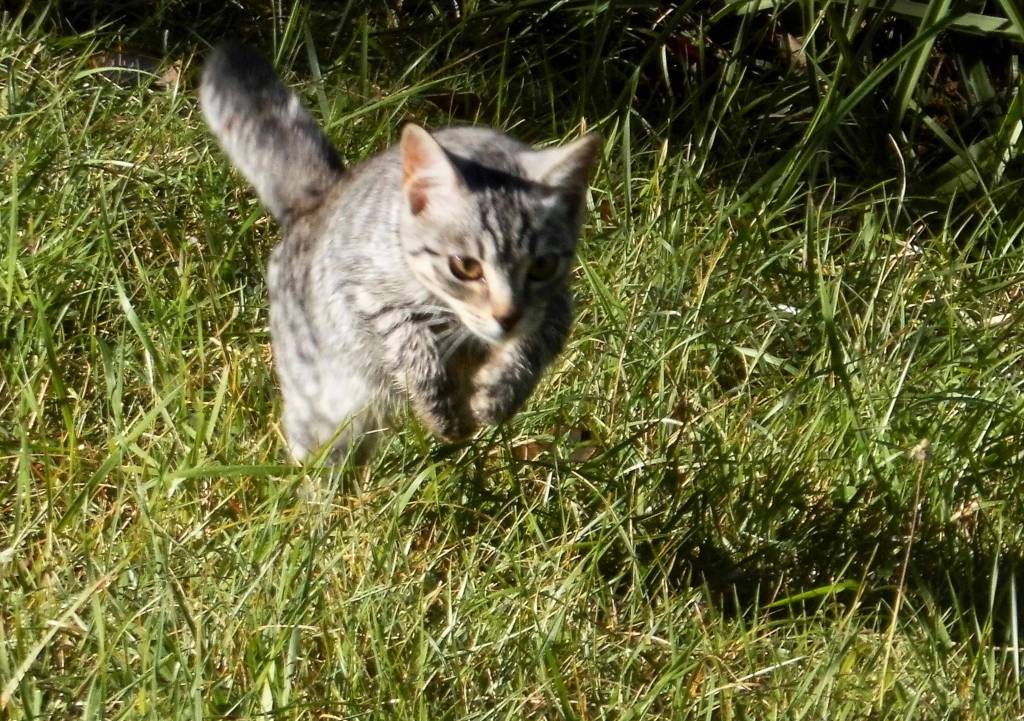
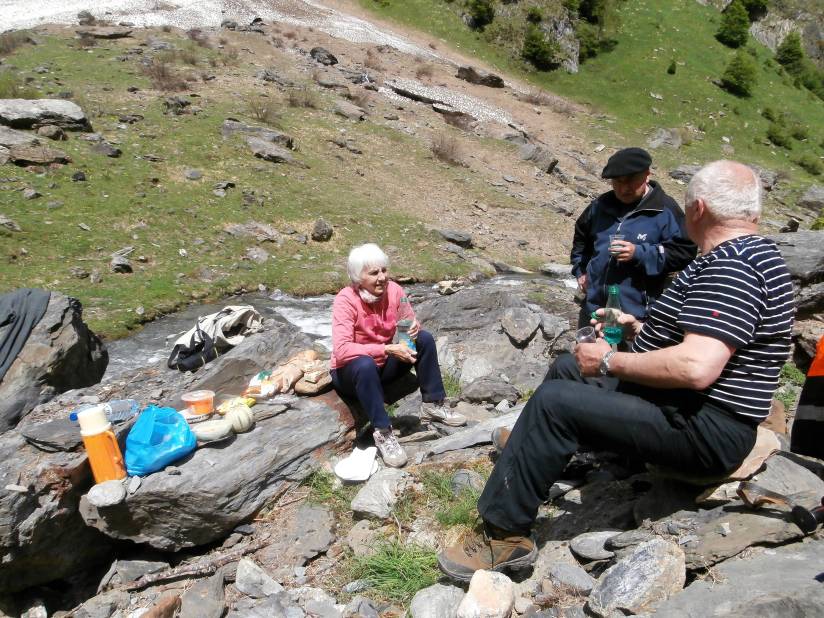
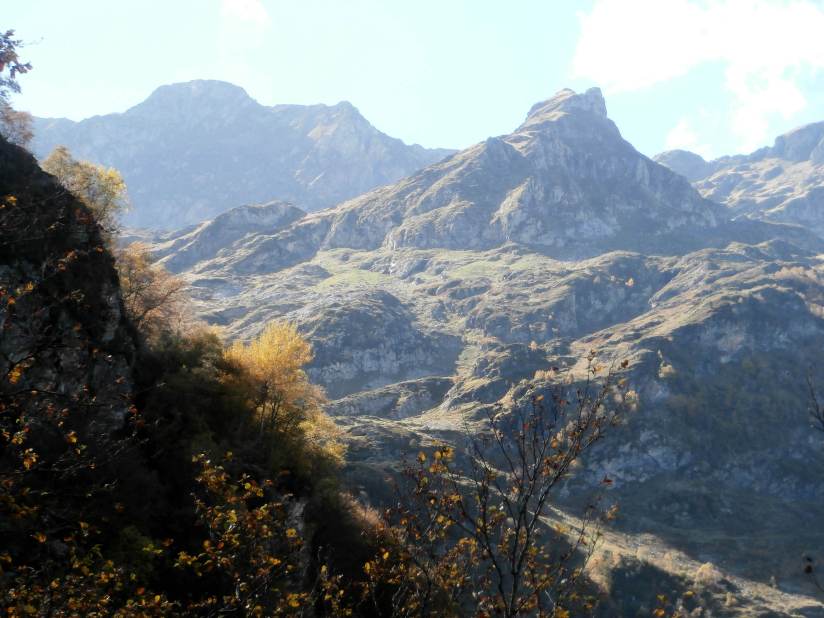
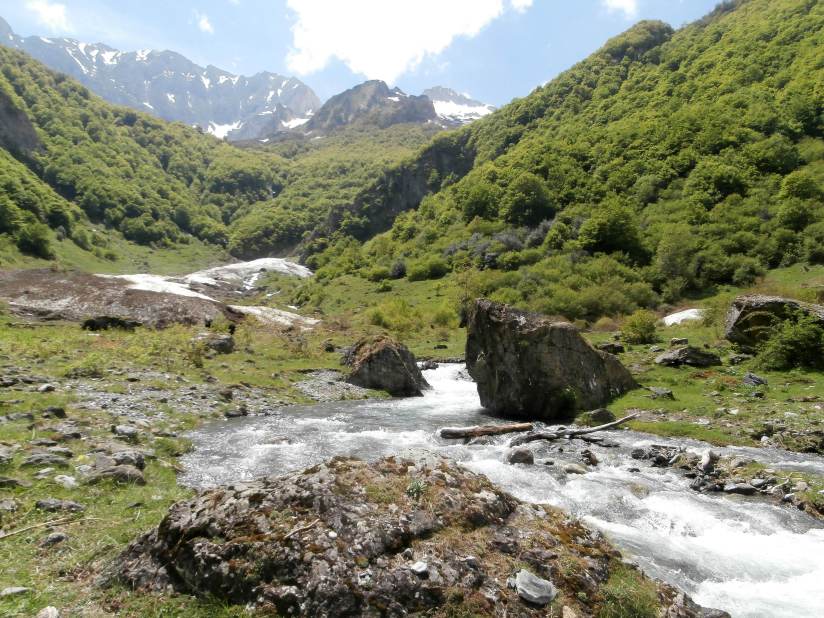
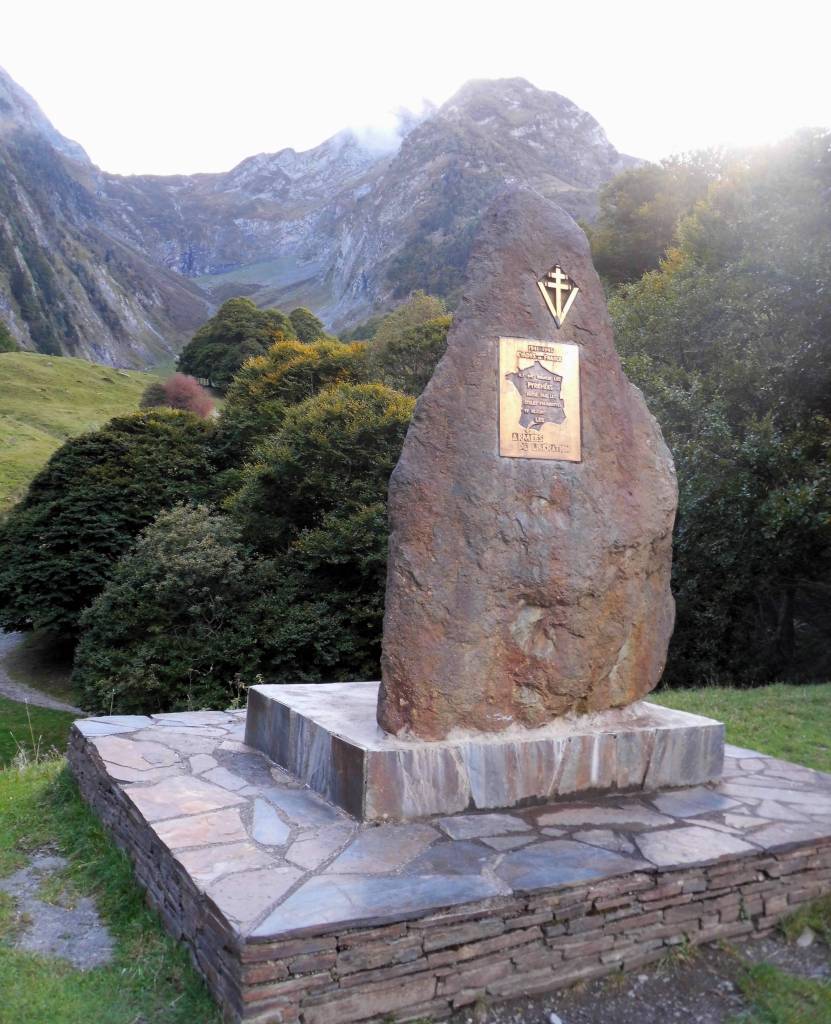
Pyrenean pique-niques
Good friends, wonderful memories
And all because of a chance encounter with Ken Wallis. Thanks to dilligence of the St. Merryn Gyronauts – I truly stand on the shoulders of giants.
A final scribble culled from This Way Up. It’s getting there.
I dodged another bullet during this escapade from October 2021. We had just returned from a squadron fly out to nearby Sabonnères, visiting the resident model club who gave us an impressive demonstration of their not-so-miniature craft. It was a poignant trip as my last flight to Sabo was with Gègè in his ill-fated Air Copter. That big machine was so amazingly light on the controls (even lighter than Delta-J) that I could hardly feel the rotor. It was an enigma to me. This time I was in company with a reduced but no less enthusiastic crew of Eric, Pierre and Gèrard, who had generously offered to burden themselves with my presence.
Being small and slow, they had us take off first. As usual there was little wind on this humid afternoon and what little there was of it drifted lazily towards runway 13, which meant an extended hammering for Delta-J, devoid of suspension with six-inch wheels. Taxiing to 31 is bad enough, but 13 is even further away and it takes an age to jolt down to the end. Thoroughly shaken up, we managed to scramble into the air after rattling along half of the runway, trying to get the rotors to show some interest. It was a relief to get aloft and find some lift, slotting into our alloted position as the bigger boys sailed past with nonchalant ease. Later, a repreat performance saw us unstick from Sabo’s rough downhill strip, having requested that Eric proceed us in order to harvest his prop wash and boost my lazy Dragon Wings. It never fails. We trickled back to the Gyro Club in line astern, Pierre formating nicely on our right axle. There aren’t many I would trust to fly that close – but it’s shame my action cam was fastened on the other side!
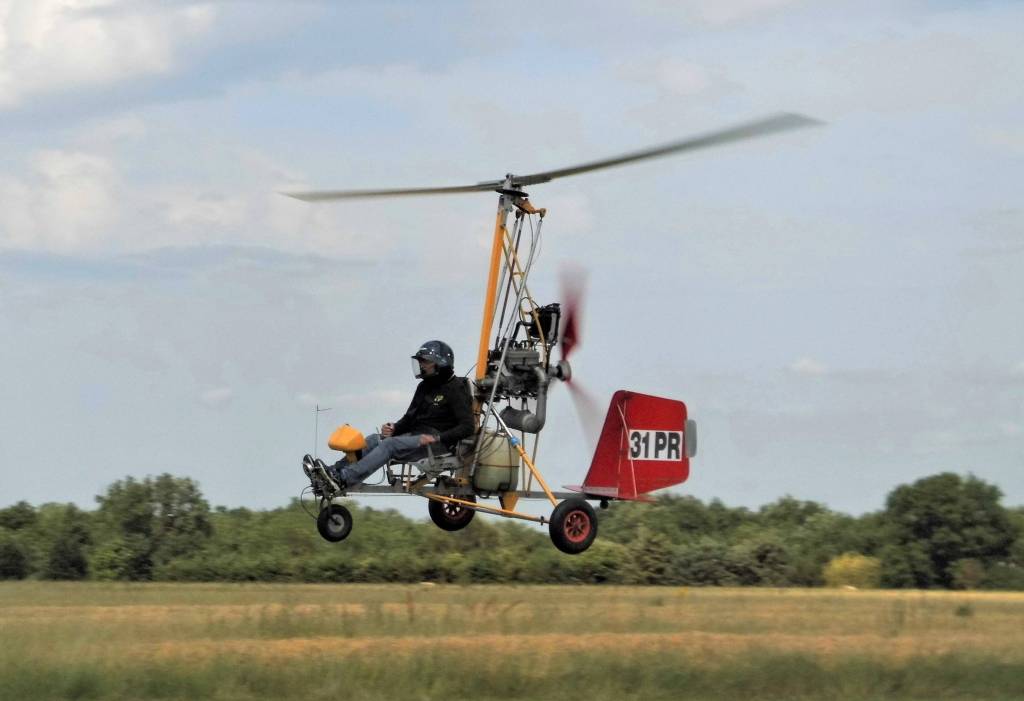
Safely back on the ground, I got the usual ribbing about flying ‘too high.’ Unable to enjoy the same performance and regular practice as my squadron mates, I don’t share their confidence and prefer to leave myself more of a safety margin. They fly too low for my liking – especially when crossing woods, lakes and rivers! Anyway, back at the club we had barely tethered our rotors before Jean Marie began rounding us up for a flight to his house. I felt obliged to join him. Mechanical gremlins had prevented us from flying together, but now we were both serviceable having finally fixed our respective problems the day before I had to leave. Jean Marie is always keen for us to fly together, but once airborne he doesn’t stick around and ‘together’ usually means a mad tail chase for Delta-J and me. It’s not the way I like to fly.
The warm breath that had earlier failed to encourage my rotor blades was by now non-existent, and Jean Marie decided on runway 31, reducing some abuse on my poor airframe. He was already heading for the threshold as I hopped back in after a rapid refuel, and turned the key. Nothing happened. Hardly surprising that the battery connections had shaken loose again, and a few minutes were all it took to fish out the on-board tool kit and tighten them up. Jean Marie can be rather impatient when he gets the bit between his teeth, and today was no exception. Intending to make good use of his prop wash, I thought he would at least wait for us to line up but he was off and away before I’d even strapped myself in. I had my suspicions this wasn’t going to be easy!
Arriving at the threshold, I pointed Delta-J’s nose down the runway and saw Pierre following us out. However, with our leader buzzing testily overhead I thought it best not to keep him waiting any longer. Bad decision. Everything vibrated horribly as I drove the rotors as hard as I could until they had a nice beat going, but I wasn’t fooled for a moment. It takes barely seconds to release pre-rotator and parking brake, and it took barely seconds for the rotors to visibly lose their momentum. Having done all my training by sight, sound and touch, I’m not a fan of relying on rotor tachs, but in times like these when you’re not entirely sure if the battering is due to rough ground or the rotor blades kicking off, I admit that a rotor tach would be very useful. Lacking such an implement means erring on the cautious side and accelerating probably more slowly than I actually could, rather than triggering blade sail which would really ruin the day.
So we rattled and bumped down to the halfway mark, eyes glued to the rotors for any sign of trouble, and still no nearer to flying speed. They were having quite a discussion between themselves: is it worth the effort of lifting the nose wheel before the last quarter of the runway, or more entertaining to wait until the very end and test the pilot’s reactions? At last I felt some lift beginning to gather and not a moment too soon, so I guess they had about much faith in the pilot as I did. Three-quarters of the runway was now behind us. Ride it out, or abort take off and subject Delta-J to another 10 minutes of horrible ground pounding while we taxi back? Seconds to decide or else we’d be going by road. I knew things would (should!) be better once clear of the sheltering influence of the trees on the other side, so with wheels several feet above the grass, I poured on the power. The response was somewhat underwhelming.
This sluggish excuse for a climb out was not to my liking, neither was our close proximity to the road that crosses the end of the strip. I made a rapid left turn across the neighbouring field and flew parallel to the power cables strung along the road, clawing for every inch of altitude. The anticipated improvement beyond the trees failed to materialise and we were really struggling. Pierre had caught up with us (granny on her bike could’ve caught up with us!), shadowing closely alongside and probably wondering why we were hedge hopping. I was wondering that myself. Engine temperature was rising rapidly but to ease its burden by more than a few hundred revs wasn’t an option, and had we been over anything other than the wide open plain ahead, I would have called it quits and gone back. Jean Marie was a distant speck – so much for taking a last flight together! Hoping for a bit of wind or a patch of lift to cross our path at some point, I settled uneasily into a delicate balancing act, trying to maintain what little height we had without cooking the engine. Pierre’s heavy rotors and huge propeller gave him plenty of lift and he could have easily gone on ahead, but my loyal wingman remained at our side. I miss Pierre.
By this time Jean Marie had completed the bombing run over his village, and I was relieved to spot him steaming back towards us at his usual rate of knots – and even lower than we were. Now we can put an end to this uncomfortable excursion. As soon as he had whizzed by, I checked on Pierre’s proximity and motioned that I was turning for home. We were only 15 minutes away and that was 15 minutes too many as the rotors laboured to produce anything useful from the lifeless air. The poor engine gave all it had, doggedly clinging to the measly 400 feet we had accumulated – ironically I was flying like a Frenchman! Needless to say we staggered home (with a few more grey hairs), and survived another close call. That was not pleasant and I really should know better.
Don’t give in to pressure.

Finalising the next book, it needed thinning out a bit so this one was part of the cull. Great memories of my second time in France – it’s a shame to waste it!
This my second visit to the Gyro Club Toulouse was a real bonus, as up until about ten days before the meeting, it wasn’t possible for me to go. Suddenly the fates came good and everything fell in to place. Thanks to John and some very last minute organising, I was to arrive in Carcassonne on Friday evening, where John would come and find me. Brian then rang to say that he was taking an earlier flight to Carcassonne and would wait for me there, saving John an extra journey. I was therefore startled to find Brian standing behind me in the boarding queue at Stansted! He’d missed his morning flight by ten minutes, leaving him with six hours to kill in a dreary airport instead of a scenic ancient city. So off we went together.
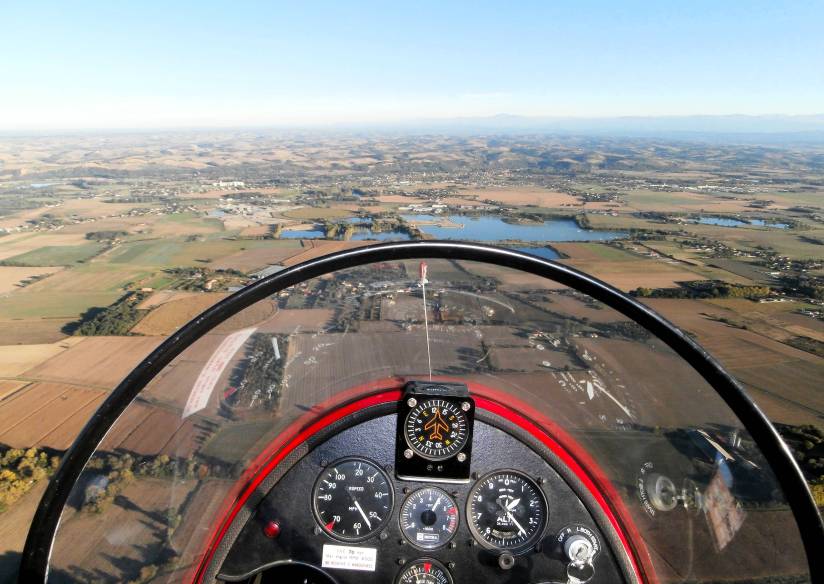
The panoramic view of the French landscape really brought home just how mind-bogglingly big the country is, at least to an unsophisticated islander. Americans and Australians would probably think it’s quaint and compact! We were ahead of schedule thanks to a tail wind, apart from Brian who was still six hours behind. The approach in to Carcassonne is quite spectacular, coming in low along a plateau at the foot of a ridge of mountains, before banking steeply over the city with a tantalising glimpse of the ancient fortress slipping beneath the wing root. We experienced an enthusiastic return to earth, the poor Boeing seemed to buckle at the knees followed by some equally spirited braking, but as it turned to stagger back to the terminal we could see we had stopped just short of the numbers at runway’s end, with not a lot to spare. That was tight enough to be interesting.
Hence we arrived en France, and emerged from our dazed aircraft into a hot golden evening at 17.40 local time, surprised to see the Alpha Jets of the Patrouille de France national display team parked at the far end of the apron. For a small single terminal airport, it was rather like finding the Red Arrows casually parked at Blackbushe. Several light aircraft shared the circuit with our 737, which was swiftly turned around with minimum fuss and catapulted back to Blighty. Brian scuttled off to collect the car while I waited nervously at the carousel to retrieve my camping gear, hoping that it wasn’t winging its way to some distant location. As a novice in the jet-setting world, I found it disorientating to be in a totally foreign environment merely a couple of hours since leaving home. I missed the journey of the previous year when it took three days to cover the same distance by road, with all the new discoveries along the way. Well, I’ve been told I’m dysfunctional. Regardless, here we were, deep in the south of France in half the time it’d taken me to drive to the airport. Brian returned with our wheels and we spent a few minutes exploring the bug-eyed little Renault, trying and failing to coax it to open the boot. Admitting defeat, we slung our bags on the back seat and sallied forth in search of Bois de la Pierre.
It was a gorgeous evening, far too nice to waste on a motorway so we took to the back roads for a scenic ride through classic Monet landscape. Against spectacular backdrops of distant mountains, we travelled narrow roads lined by soldierly ranks of trees, winding through rolling hills of rich greens and golden hues accentuated here and there by random swathes of scarlet poppies. We spiralled though isolated villages painted in warm shades, flowerbeds overflowing with plump blooms of vivid reds, purples and pinks, colours intense in the honeyed evening light. I struggled to believe that only a few hours earlier we’d been in grey and grotty Stansted. What a contrast, it really enhanced the pleasure.
Using manual GPS (me with a map: Global Positioning Shirl), we didn’t do too badly once we got used to the rather haphazard sign posting on the quiet country roads, and when in doubt, kept the sun to the left when our route mysteriously vanished at a junction. We had a couple of unscheduled tours round some sleepy hill top villages before achieving escape velocity, but soon I began to recognise a few landmarks from the previous year. Driving down a single track road between wide open fields, hoping we wouldn’t meet any oncoming traffic as there was absolutely nowhere to go, we suddenly arrived in a deserted village street. I know that bus shelter – turn right! Up the hill, under the tall arch of the redbrick bridge and there across on the left, the words Gyro Club proudly emblazoned on the hangar roof. Several gyroplanes were already in place on the flight line, but all was quiet as we crossed the runway and parked on the grass. Looking around for John, I was spotted by Jean Marie and engulfed in an embarrassingly huge welcome, surprised that he even remembered me.
Brian wasn’t going to get any sleep until he’d unlocked the boot, so we launched another assault on the little Renault which remained silently impervious as we twiddled, poked and pulled various fittings to no avail. Several motor homes were parked around us and the occupants must have thought we were bonkers! Finally something clicked. Set in the roof, hiding in plain sight next to the interior light, an obscure button released the lock and the rear hatch obligingly popped open. What a daft place to put it. Satisfied at last, Brian disappeared to meet with some friends of his who were staying nearby. I continued the evening’s entertainment, trying to coax my tent pegs into the sun-baked earth of southern France while my camping mallet remained some 700 miles away on the other side of the English Channel. I knew I’d forgotten something. Then John arrived – having realised on the way that he had forgotten his sleeping bag! A handy rock solved the tent peg problem, and a fellow camper kindly rescued John with the loan of a quilt, for which he was very grateful as the temperature dropped to minus two later that night. John had brought the dreaded inflatable mattresses again, but this time we had some twilight left to see with, unlike last year when we were wrestling with the monsters at midnight in the rain. The sun slipped away behind the hangars leaving a rosy afterglow over the peaceful airfield. The stillness echoed with the chirp of insects, the asthmatic wheeze of John’s foot pump, and gentle swearing as I caught my finger between the rock and a tent peg.

Saturday dawned bright and clear, heralded by a multitude of feathered friends in full song at 05.00. I awoke cold and stiff from a restless night, having succumbed to gravity as my mattress slowly deflated itself – the darn things are cursed! Seated at a table outside the clubhouse for coffee, we were joined by René, the friendly neighbour whose generosity had saved John from hypothermia. We managed a conversation of sorts, his English being confined to mechanical terms such as nuts and bolts which he’d learned from reading American engineering catalogues, and our collective French being confined to not very much. It didn’t really matter.
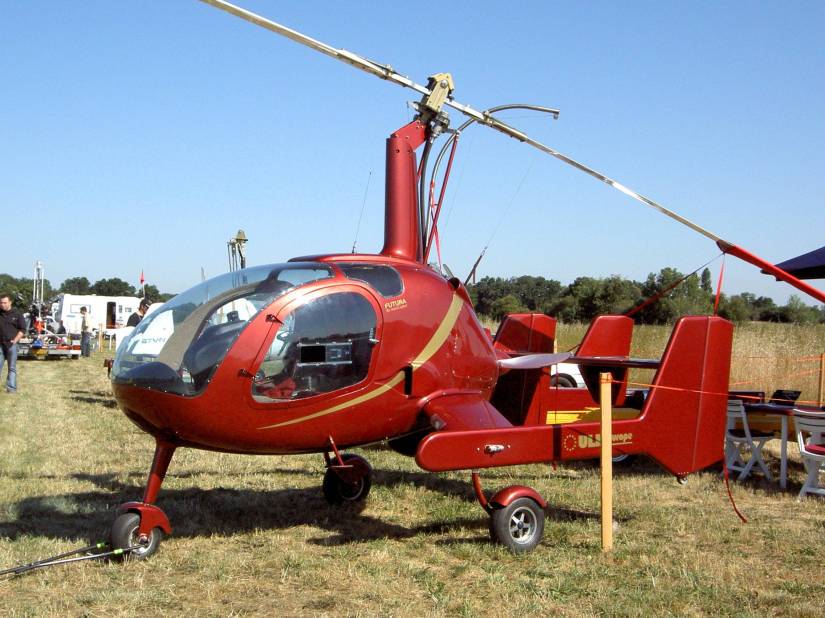
A unique Lycoming-powered tandem gyroplane was already in the air, later to be seen acting as camera ship for a French television company who were filming throughout the day. There was a sudden flurry of interest as the Spanish Futura headed out on to the runway: a big two-seat gyroplane with a bulbous enclosed cockpit, and twin tail booms. On static display the previous year, this was the first time we had seen it move under its own steam, but despite spinning up the rotors it appeared to be just a systems check, as it nosed its way back to the flight line leaving a disappointed audience. It was still early morning but I couldn’t say I fancied being shut in an enclosed cockpit in the already soaring temperatures.

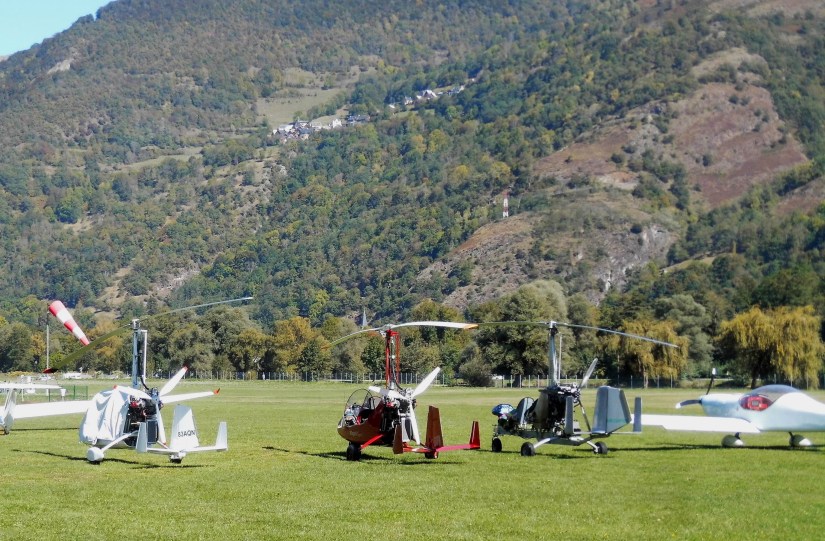
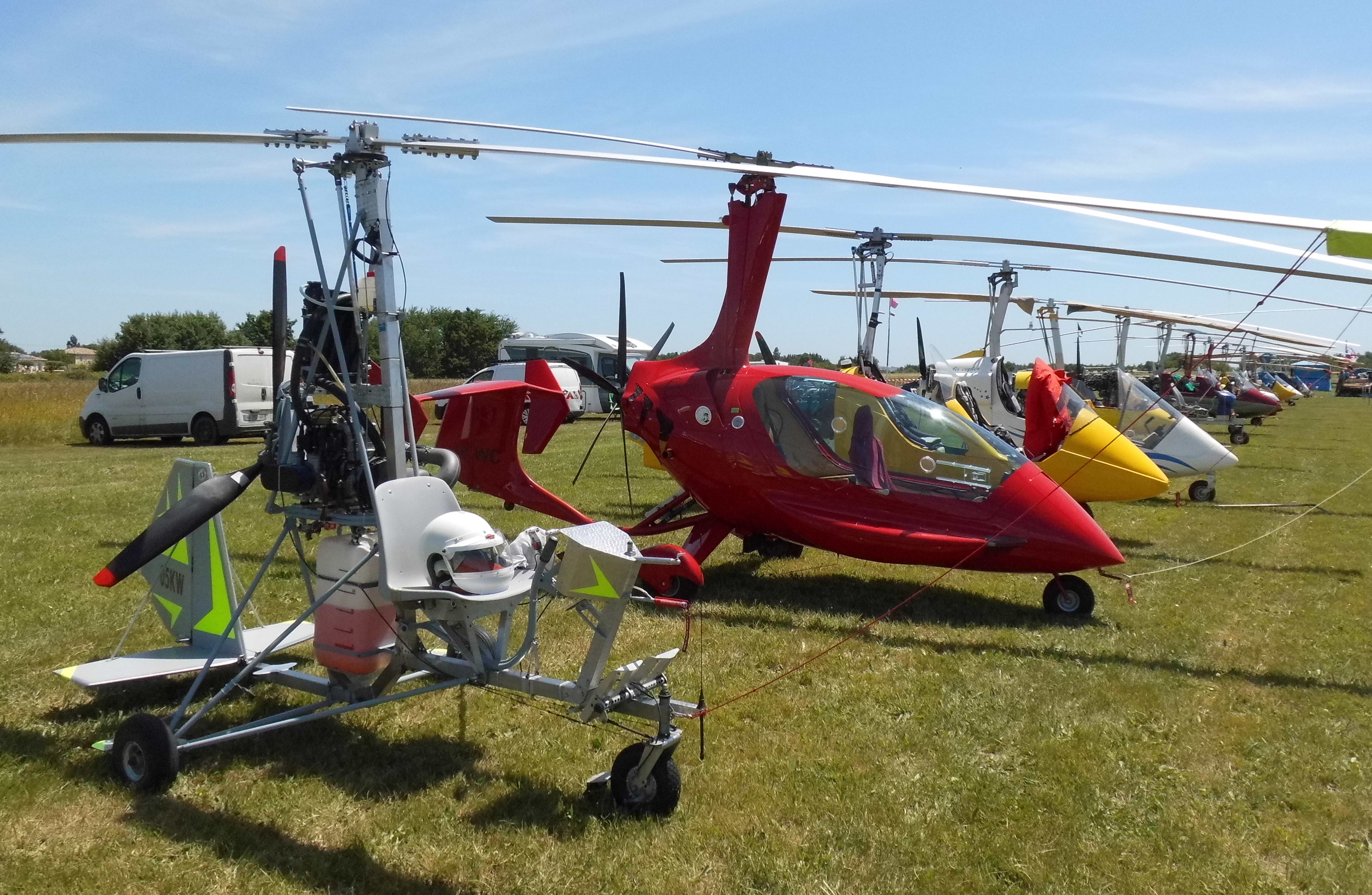
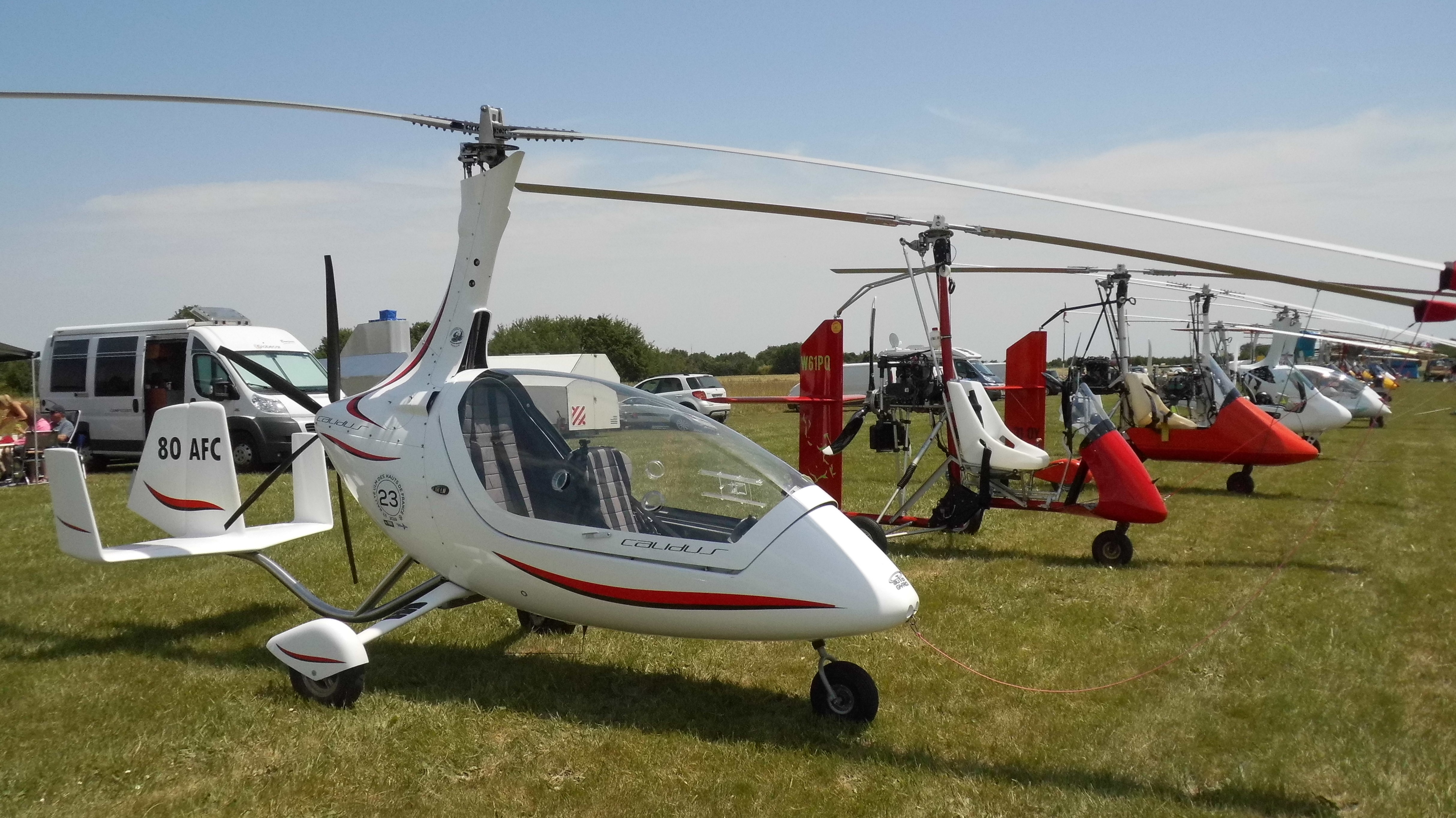
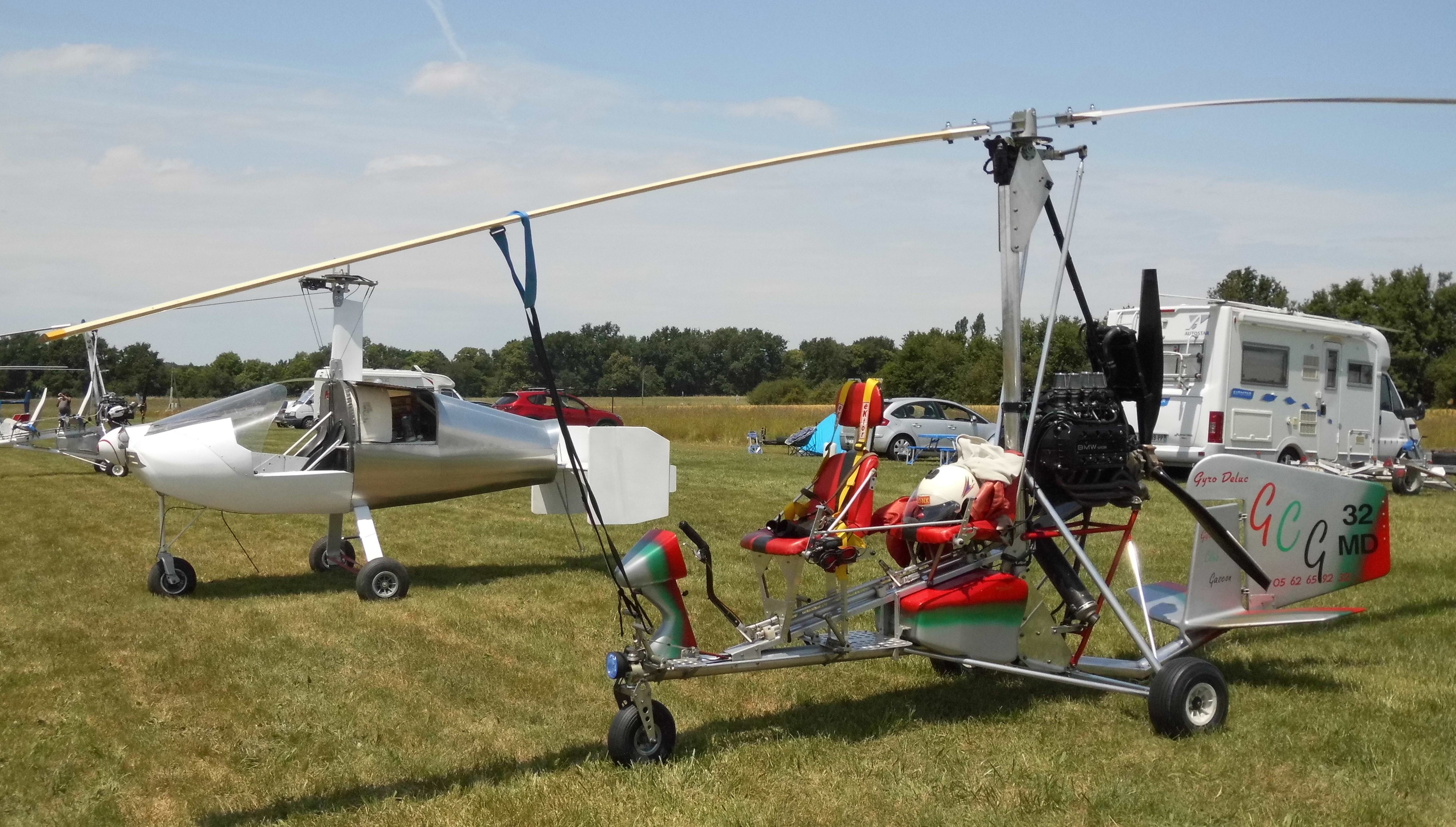
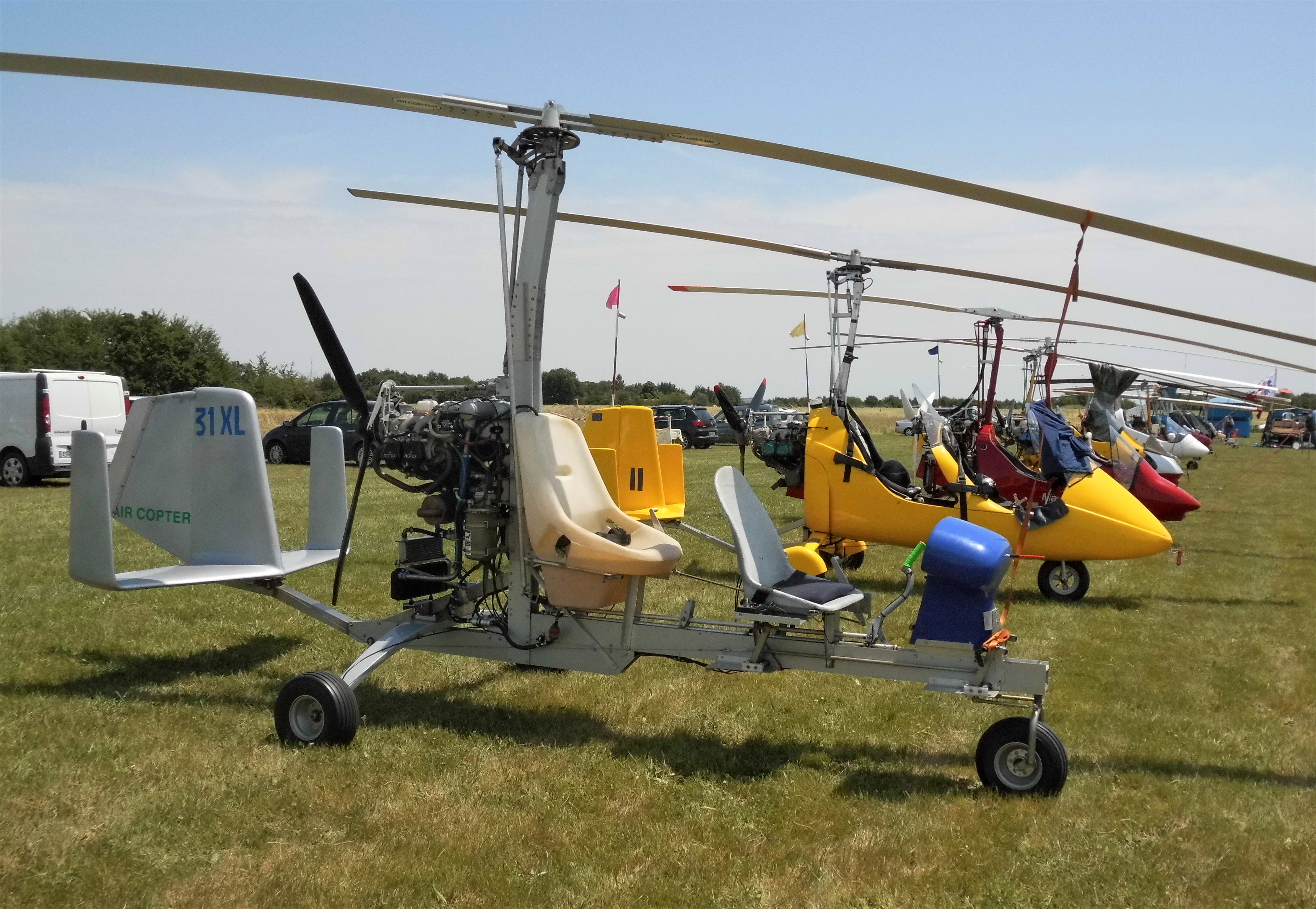
A steady stream of trailers arrived throughout the day, bearing exotic gyroplanes in varying states of construction, adding to the couple of dozen rotorcraft already lined up along the runway’s edge. I counted 39 machines of all shapes and sizes, plus an Alouette helicopter and a group of three high-winged pert-nosed microlights, which for some reason put me in mind of pot-bellied pigs with their upturned snouts and low bellies brushing the grass. Lunchtime was upon us but John and I decided to give it a miss, knowing full well that our stomachs would need all of their spare capacity to cope with the evening feast. The crowds began to disperse, either to dine in the hangar, or to picnic beside commodious motor homes. Some of those vans are so big that I could easily live in one and keep Delta-J in there as well, not that I’d fancy driving such a monster. It was quite funny how everyone vanished as if on cue, so we took the opportunity to photograph the flight line while things were quiet. Spot the foreigners: mad dogs and English gyronauts out in the midday sun. Les anglais sont fou…
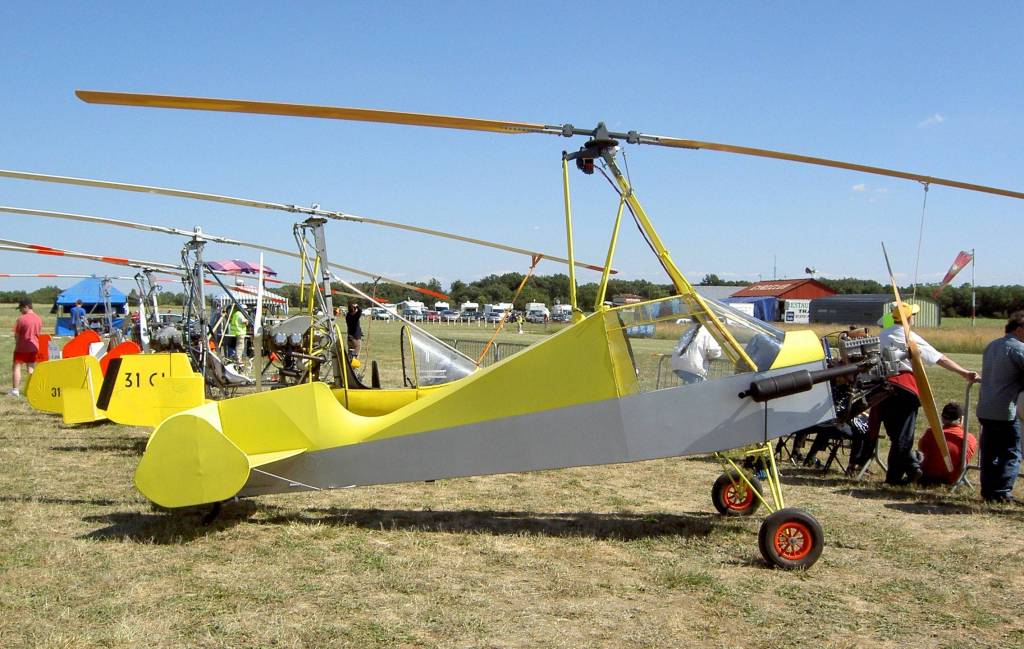
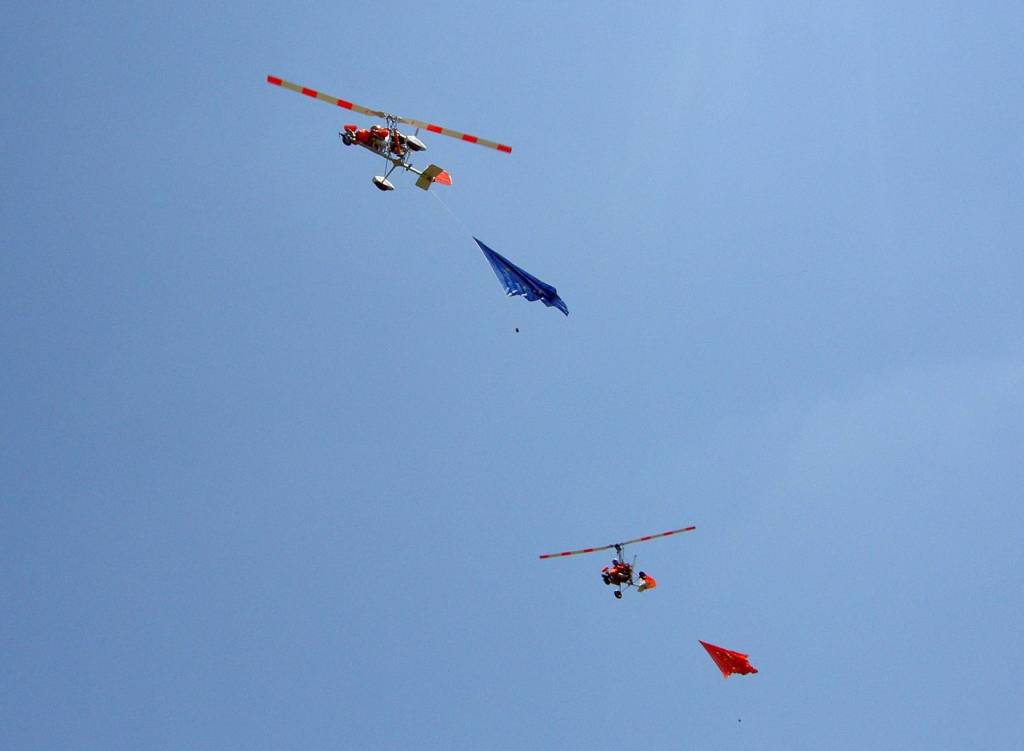
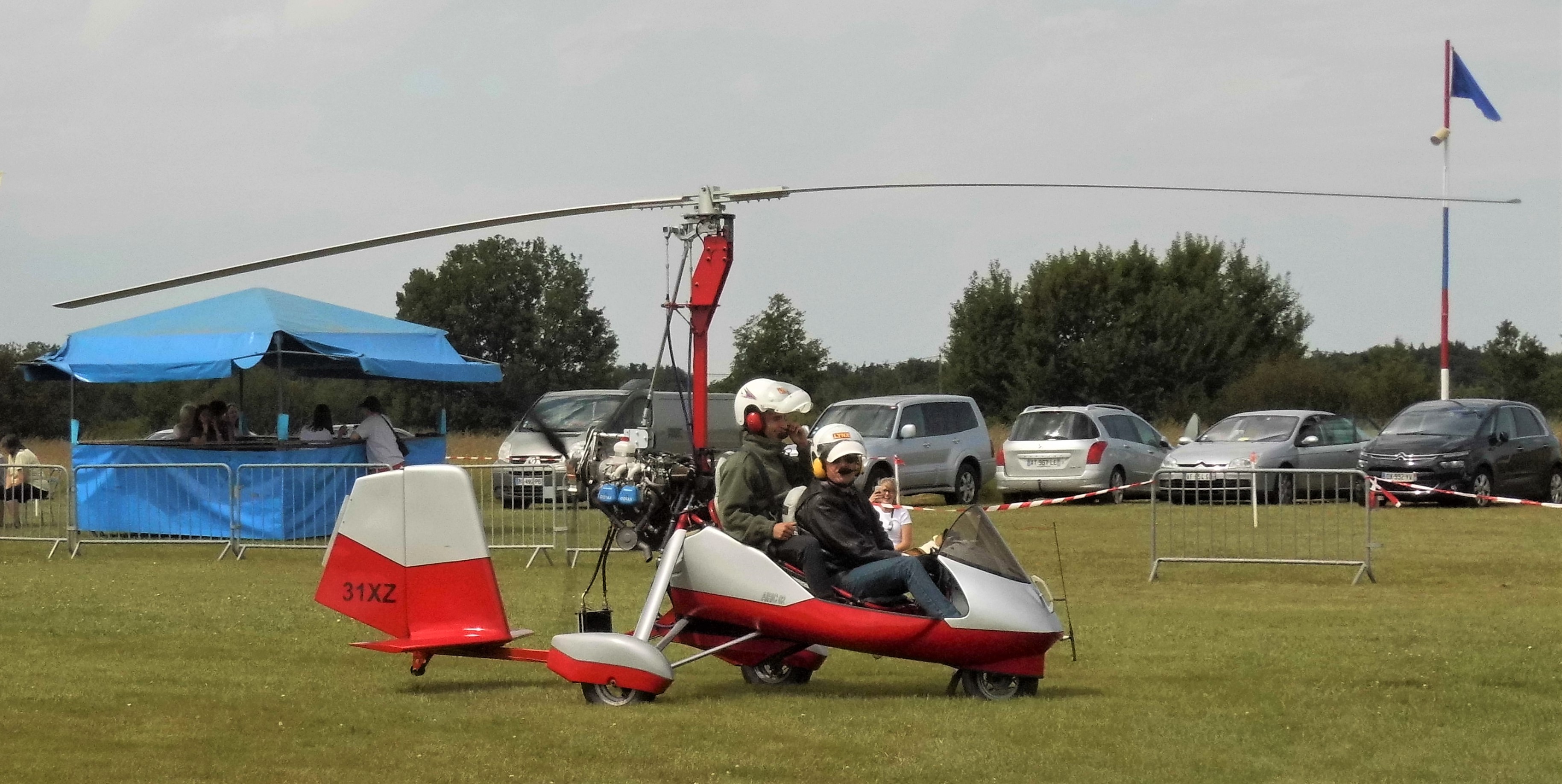
A couple of hours later, people began trickling back to the flight line, refreshed and refuelled ready for an afternoon of rotary-winged action. Having done a lot of air to air filming during the morning, the television crew now set up their hefty camera and tripod on the runway for a different perspective. Imagine the tonnage of risk assessment forms required to do that in Britain! A group of eight machines gathered for a special fly past for the benefit of the camera, lead by Jean Marie, Pierre and Xavier in their orange and silver gyroplanes. After a couple of circuits and low passes in line astern, everyone landed before the trio took off again to do their special formation display, signing off with their famous flag release as they flew along the runway at about 60 feet, weighted flags streaming proudly in the breeze below each machine. The CAA really wouldn’t like it. Dropping the flags at the end of their pass, the Patrouille completed the circuit and landed together to loud applause from the appreciative crowd – magnifique!
Flying continued late in to the evening with everyone enjoying the perfect conditions. A ripple of excitement as once again, the Futura left the flight line and taxied purposefully along the runway, this time with Xavier at the controls. The rotors spun and it began to accelerate quite ponderously, just sniffing the air as Xavier got a feel for the beast. Back it came, this time rising a foot or two above the grass and touching down at runway’s end. A couple more low passes, and the big gyroplane trundled back to the flight line and shut down. Daylight mellowed to a soft peachy glow as the last engines fell silent, the machines covered up and left for the night as everyone gathered around the hangar for aperitifs. Locating Brian amongst the lively hubbub of conversation, we squeezed into the throng to enjoy a night of good food and like-minded company. Five or six courses later (I lost count), the crowd dispersed into the darkness, tired and happy after a wonderful day of autorotational action, and waddled sleepily back to our beds.
Hundreds of tiny throats trilled in welcome as the sun returned next morning, the air almost vibrated with birdsong. Two hours later I was being microwaved inside my tent, and popped out to find a cloudless scorcher of a day and still only 07.00. John wasn’t far behind, so we took a leisurely wander around the silent village until the clubhouse was open for business. Seated outside with our bowls of morning coffee, we were joined by Joe, an Irish pilot who’d flown his Italian registered Magni M16 from Switzerland the previous day. He showed us the route on his map, most impressive coming down through the Alps and the Rhone valley. What a spectacular sight that must be.
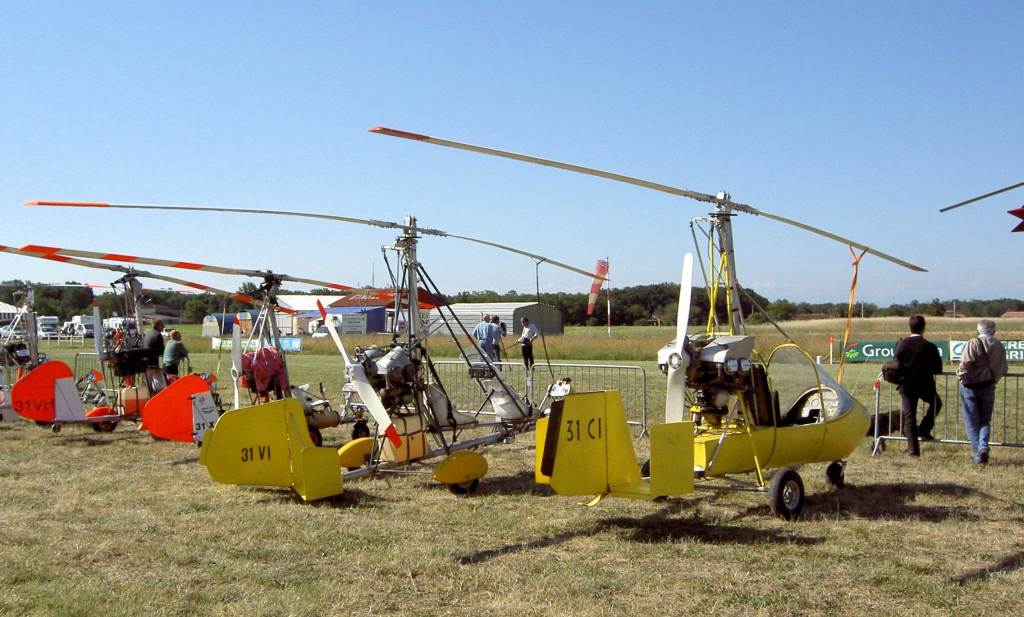
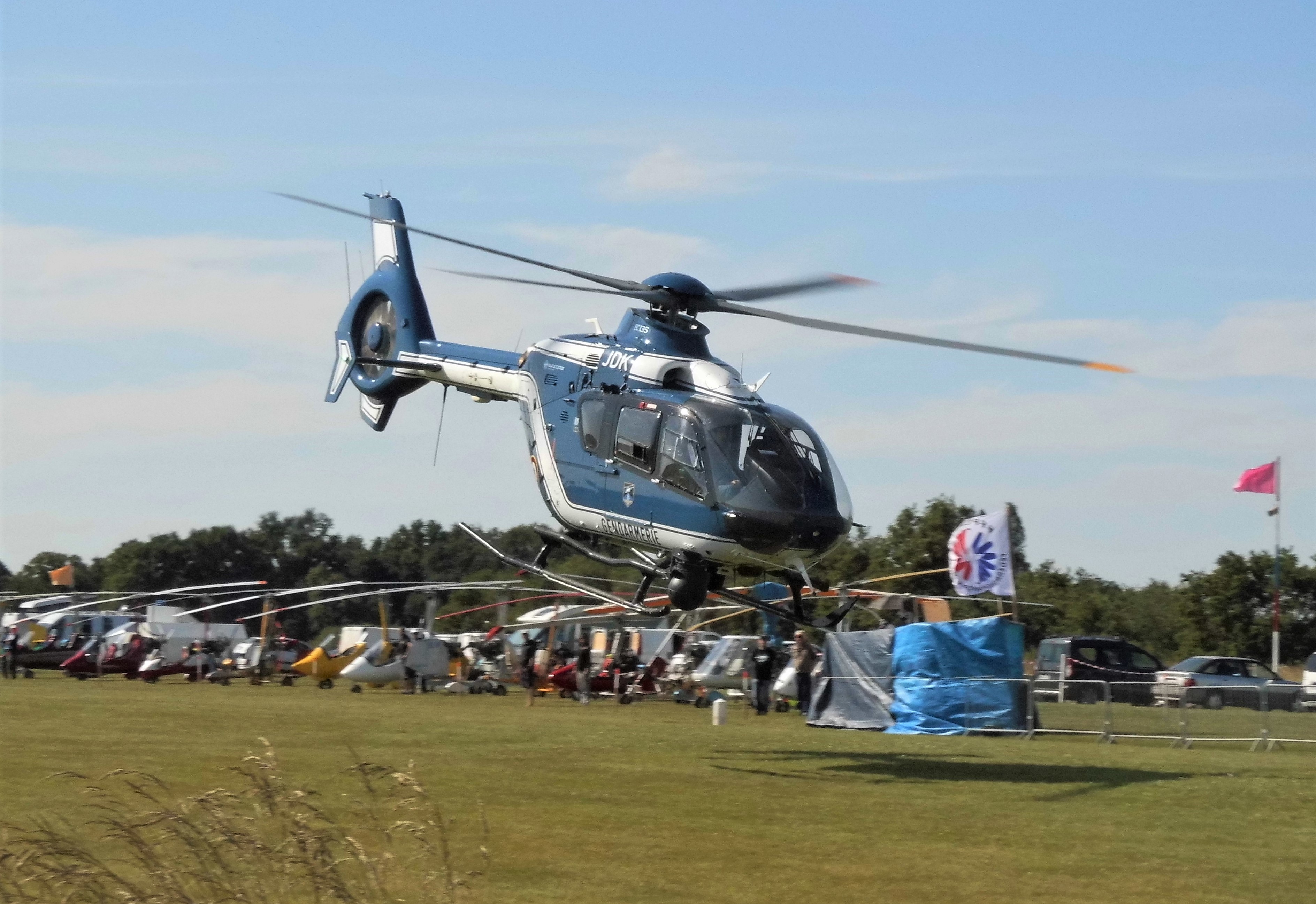
Jeez, it was hot. This is a relative term by the way: I’m English – anything over 18oC is hot! The flags drooped from their staffs like wilted flowers, and the sun was a fierce brilliant white as it climbed high above the shoulders of the Pyrenees. Not a cloud to be seen. After the excitement and anticipation of my first visit, I now knew what to expect, which made it even more enjoyable as I wasn’t wound up like a clock spring. The elderly Alouette had departed yesterday evening and now a Eurocopter Fennec arrived in its place, sandblasting the flight line as it hovered in to position along the runway. Autorotation is far more civilised. A mass flight of gyroplanes departed for the traditional trip to Cazères, a large grass airfield just a short flight away towards the mountains. It’s an incredible sight for British gyronauts. The number of machines in the air, plus the variety and ingenuity of designs, not to mention the sheer unadulterated enthusiasm. It couldn’t be more different from our barren isle. We weren’t jealous at all.

Xavier took out his two-seat AX05 after a spell of ground marshalling, and showed us how to do it with several perfect dead stick landings. The flying continued late into the evening in beautiful conditions. Around a dozen participants gathered for another fly past, lead by the Patrouille: a sky full of gyroplanes, all shapes and sizes stirring the evening air in a symphony of swishing rotor blades. Pierre, Xavier and Jean Marie finished things off in fine style with their formation display, flying a final pass with flags unfurled. The icing on the gateau.

Brian had gone to visit a friend near Andorra, so it was just John and me left eating for Britain at the evening meal. Everyone was in festive mood. Loud cheering and good-natured banter accompanied the prize raffle draw, with Xavier in good form on the microphone. Paper place mats folded into aeroplanes sailed past our ears, and explosive pops echoed round the hangar, firing champagne corks in to the rafters. Trying to communicate on foreign shores is a great ice-breaker: I’ve always found the French to be very accommodating and they appreciate the effort, even if it is unintelligible. Stuffed and sleepy, we staggered back to our starlit camp in the early hours, as frogs and insects trilled their nocturnal song.
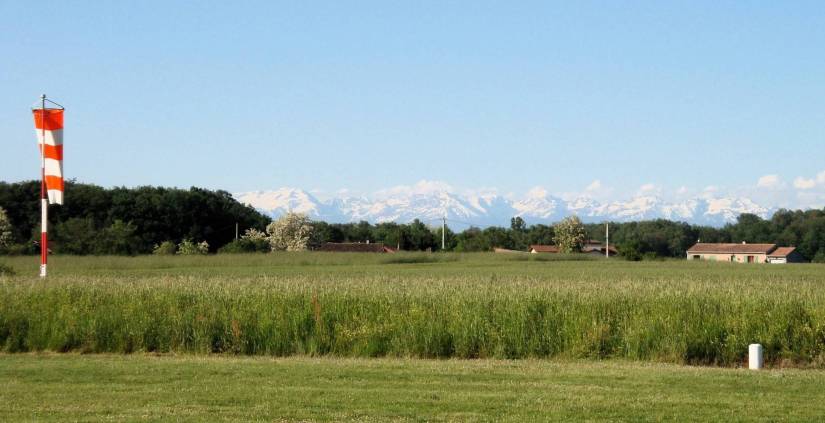
Daybreak arrived as punctual as ever with nature’s alarm clock in full swing at 0.500, and baking nicely inside the tent two hours later. It was with great reluctance that I sorted my stuff ready for packing, but at least I didn’t have to deflate the mattress! My all-up-weight had increased considerably, I hoped the 737 could cope. John surfaced shortly after, so we went for a last wander around the tiny village, leaving the morning dew to dry on the tents in another dazzling dawn. The snow-dusted peaks of the Pyrenees stood tall on the horizon, flanked by a sky of clearest blue. Birds trilled from the trees, and insects chirped in the grass, harmonising with the cheerful twitter of skylarks – what a gorgeous morning. A row of silent gyroplanes stood guard along the runway, dew sparkling on their covers in the early sunlight. Parting is such sweet sorrow and how it hurts to have to leave it all behind. We packed our tents and loaded the car before taking a final coffee in the clubhouse, bidding farewell to Armand and Jean Marie who were out early as usual. I wished I had the words to express how much we’d enjoyed it all, but I hope they understood. John stuffed me kicking and screaming into the boot of the car and took me away.
It was only a short drive to the lakes at Peyssies, but we needed the windows wide open in the early morning heat. It was going to be another scorcher. John dropped me off and we parted company after a marvellous weekend, heading back to Toulouse for his mid-morning flight. And where had that Brian had got to? The buzz of a Rotax engine could be heard across the fields, some lucky gyronaut stirring the morning air, a fantastic view with the mountains so clear. Speaking of Brian… The sound of a rapidly approaching vehicle crunched over the gravel, as a bug-eyed little Renault shot towards me at alarming angle of bank, and slid to an abrupt and dusty halt. Brian’s back! He had another day to enjoy in country, so we decided to go back to Carcassonne and spend the afternoon before catching my evening flight.
It was boiling inside the car, but the views across the rolling hills towards the Pyrenees made it all worthwhile. The light was exquisite, enhancing the boldness of the colours vibrant in every hue, a banquet of visual perfection and I gorged myself shamelessly. Somehow we managed to rejoin the main road passing the airport, and followed signs to the centre ville, roasting in the suburbs. Abandoning the car outside an imposing guildhall, we bailed out in search of the ancient fortifications, hot tarmac sticky beneath our feet. I knew it was on a hill to the east of the airport, so we headed east and up, and more by luck than judgement there it was, a mighty fortress standing above the city. Massive walls of serrated battlements like rows of perfectly square-cut teeth, connected rotund towers capped with conical spires. I wondered if J.R.R. Tolkien had ever visited, as it was exactly as I’d imagined his walled city of Gondor. We continued our ascent to shortly arrive at a wide footbridge crossing the river Aude, the citadel rising above a cluster of trees on the opposite bank. Picturesque doesn’t begin to cover it. The river looked so cool, clean and inviting, gleaming in the sunshine as it flowed beneath our feet.

Panting in the oppressive heat, we climbed steep narrow streets in search of a watering hole, finally reaching an quiet café at the foot of the castle walls. A brief respite in the shade of the trees, but time was against us as always. We set off on the final ascent, the bastion towering above us from the steep slopes of a dry moat. The sense of history was almost palpable, woven deep through the ancient stone – what incredible times these walls had seen! It was impossible to do it justice in little more than an hour, we were almost galloping through the maze of narrow alleyways and cobbled streets, snatching hasty photos. At last we found our way on to the battlements of the outer wall, scrambling up the mighty stonework to look out over the modern city spread below. Squeezed between a gap in walls several feet thick, I felt overwhelmed by the weight of centuries and laid my palm against the stone to touch the past. If only they could talk… It was all too much.
The spell was rudely shattered by the twenty-first century as a Boeing 737 curved in on final approach, barely higher than we were – a brutal reminder of my fate. Tired, hot and dusty, we plodded back down the hill to find the car and go our separate ways. Brian dropped me off at the airport (cheers mate) but where had that weekend gone? It seemed like only minutes since we had cannoned on to the runway from Stansted. I dragged my feet and pack into the relative cool of the terminal building, where most of the population of Essex awaited the return flight. What a weekend. What memories. And how lucky am I.
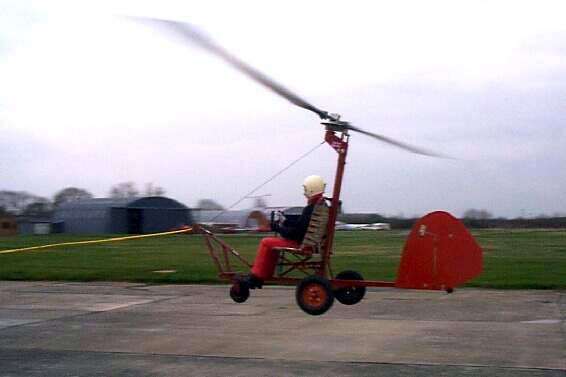
From 2008: I wrote this after an idyllic flight one gem of a winter’s day, when Nature was in a benevolent frame of mind – an improbable attempt to capture the elation of autorotation and transfer it to the page. Join Delta-J and me for a wander up the north coast of Cornwall…
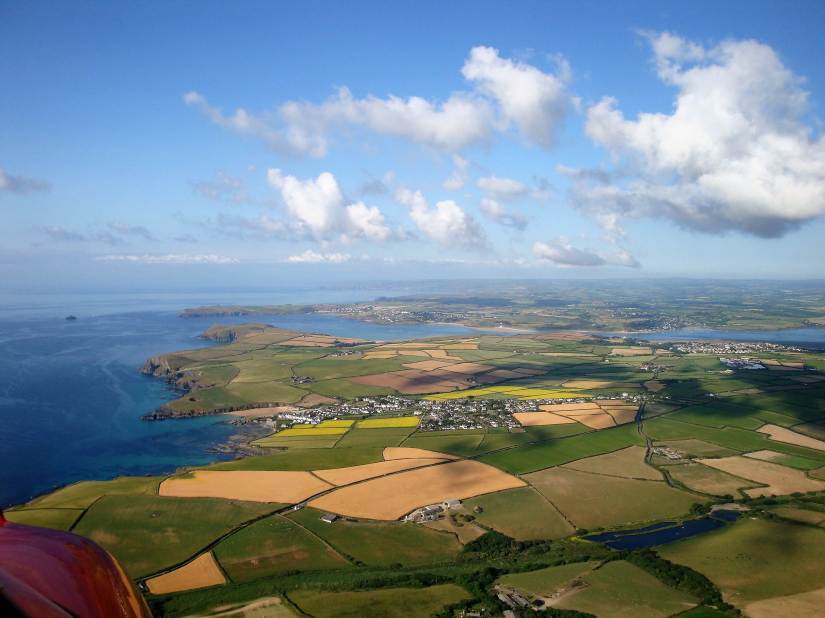
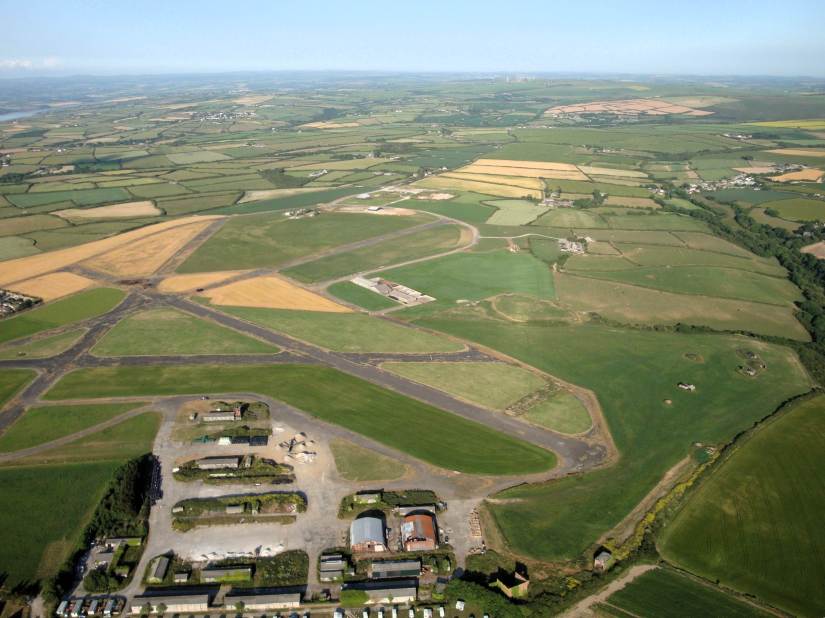
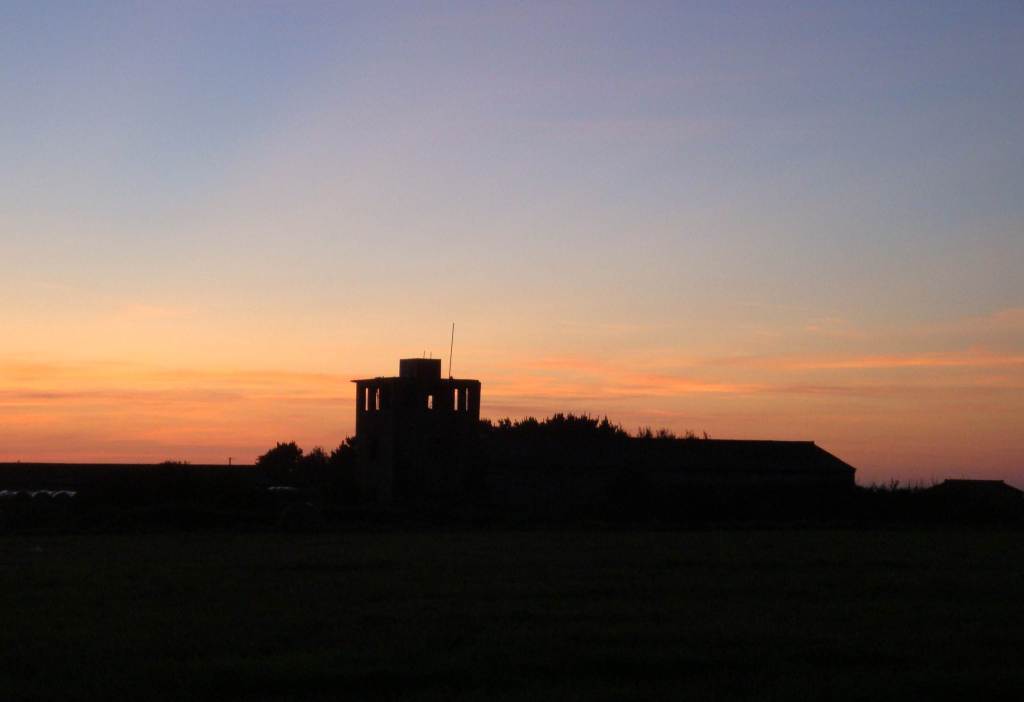
It’s a beautiful timeless afternoon at St. Merryn. Pale golden sunshine bathes the familiar scene with a soothing mellow glow, and this old airfield that I love so much seems to be almost smiling. The air is crisp and chill with a freshness like clean laundry, a palpable sense of vitality flowing across the countryside on a lively wind that hints of a buoyant tide aloft. Delta-J sits ready on the tarmac, rotor blades twitching gently as if savouring the breeze in anticipation. She’s all checked out and good to go, so lets do it.
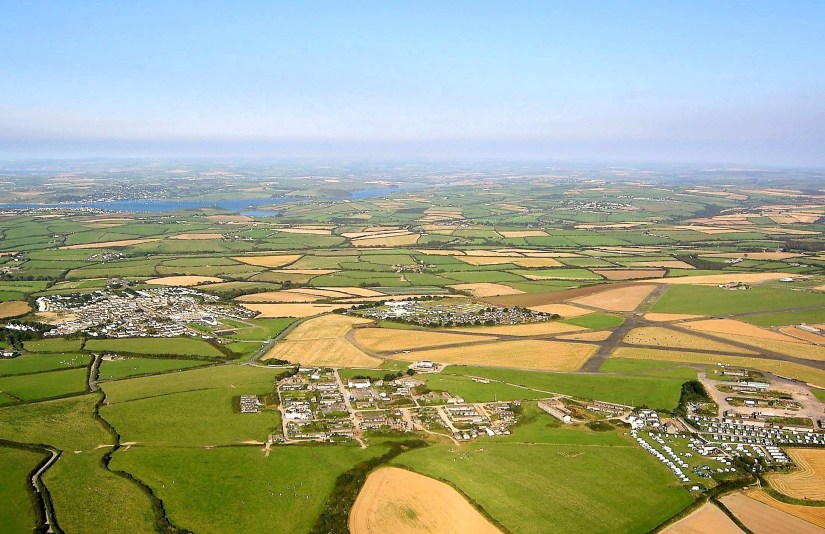
We have a brisk south-westerly blowing about 15-20 mph, a nice steady wind so the rotors can pick up speed by purely natural means. Wind direction dictates that we use the Gyro runway today, slightly downhill, it has the least damaged surface of all four runways (the Long, the Short, and Wendy’s being the other three). To get there we taxi down the Short and across the intersection with Wendy’s, the roughest and most overgrown of them all, so named because it heads directly towards Wendy’s bungalow on the other side of the fence. Jolting slowly over the clumps of vegetation that are doggedly reclaiming the aged tarmac, we reach the relatively smooth threshold of the Gyro runway and stop for a final systems check. Engine temperature normal; test the ignition circuits; zero the altimeter and make a mental note of the time. The rotors are thriving in this excellent wind so after a quick look around for other traffic, we’re all set. Power up to 4000 rpm but we barely crawl forward against the drag of the rotor disc and Delta-J lifts her nose as if to sniff the breeze. Dip the stick forward to reduce the drag and balance briefly on the main wheels as I open the throttle and we leap into the air with minimal ground roll. Almost a vertical take off!
Climb out tracking over the runway just in case of hiccups, but the engine behaves impeccably and we sail across the airfield boundary in fine style. No conflicting traffic, everything doing what it should be doing, so a suggestion of left stick and rudder points us lazily towards the Camel estuary. The wind has lifted us to 1000 feet already, which is as high as we can go until clear of St. Mawgan’s zone. It really is a day to savour; pale blue sky dotted with fair weather cumulus, a pallid sun veiled by wisps of high stratus paints the scene in pastel shades. Even the ocean is peaceful today, an infinite sheet of glistening steel.
There’s nothing like a gyroplane for getting the full panoramic view, so as we have the sky to ourselves – 360 coming up. A desolate moonscape of china clay works dominates the skyline around St. Austell, beyond which the south Cornish coast is silhouetted against the bay. Tracing the coastline down towards the south-west I can just see the dark smudge of the Lizard peninsula merging with the horizon, the most southerly tip of the British mainland. Sometimes the when the air is exceptionally clear, the Isles of Scilly reveal themselves twenty-eight miles off the coast of Lands End, but we’re out of luck today and the very last corner of this green and pleasant land remains shrouded in a misty haze. The distant wind farms of Truro and Carland Cross make excellent landmarks as we pivot our gaze up towards the north coast, we can’t get lost down here.
Tracking along the coast past the popular tourist towns of Perranporth and Newquay, a range of rocky headlands reach out to sea edged in foaming white, they spread like fingers webbed with stretches of golden sand. Follow those pointing fingers and far beyond the western horizon lies America, with nothing but ocean in between, a flight of fantasy for a tiny gyroplane with 30 litres of fuel on board. Instead we continue on the home straight, passing the village of St. Merryn and over the lighthouse perched on the shoulder of Trevose Head, sweeping across the sheltered coves nestling between the cliffs, seven bays for seven days. All that rugged Cornish beauty encompassed in less than a minute, as we swing down the mouth of the estuary to Padstow and complete the circle.
More wind farms lie far ahead at Delabole and Davidstow, a diminutive cluster of matchsticks from here. We’ll go take a closer look after gaining altitude to cross the river Camel, just in case I have to test our gliding proficiency part way across. Gyroplanes have many virtues but unfortunately gliding isn’t one of them! Later in the year the speedboats will be out, cutting swathes through the estuary with helpless tourists dragging behind on unsteady skis. It’s fun to chase them and mimic their patterns in the air above, but all is quiet today and the waters flow undisturbed towards the waiting sea. Safely across the river leaving the deserted beaches of the posh peoples’ playground behind, and cruise on up to the wilds of North Cornwall, happy as a lark as we sail alone through the fresh winter sky.
We’ll swing over to the right a bit and scoot inland as I intend to fly back down the coast later on. Heading vaguely north-east towards the wind farms, the town of Wadebridge straddles the river away to our right and beyond that among the hills lies Bodmin with its homely grass airfield. We’re in their patch now yet it’s strangely quiet for such a flyable day, no other traffic around so perhaps the wind is too strong. Never mind, all the more for us. The ground rises up beneath our wheels to culminate at the high peaks of Rough Tor and Brown Willy, their familiar bulks squat ahead, towering over North Cornwall as we ascend the flank of the county’s rugged spine like a fly on a crocodile’s back. The air is so marvellously buoyant today, the rotors are lapping it up, harvesting free energy that takes us to 2100 feet with only a minimal increase in power.
It’s too nice a day to go tearing around. Drifting cumulus cast shadows over the patchwork of hills and valleys in an ever-changing pattern of hues, and the air grows chilly in their shade. A dark smudge far out in the Bristol Channel hints at the presence of Lundy Island, sometimes clearly seen from St. Merryn, but like the Scillys, it’s hiding today. Beyond Delabole is the bleak wartime airfield of Davidstow, the birthplace of Cornish autorotation back in the early 1960s. It looks quite pleasant at the moment but inclement weather paints a very different scene, lashing the exposed heights with the full force of Atlantic fury. There’s a super wind bowling down off the open moors, tumbling over hills and vales like a mountain stream, it creates a joyful maelstrom of swirling eddies and we bob like a cork in its boisterous tide. Nothing makes me feel so alive!
The slate quarry creeps closer beneath our wheels, distinctive angular ledges cut in to the rock, spiralling down several hundred feet below the surface like a huge grey pudding basin made from Lego bricks. This wind is excellent, a surging flow of vitality that’s perfect for a hover and such an opportunity cannot go to waste. I let it drift us away from the village as not everyone appreciates a noisy gyroplane overhead, so we stop at the edge of the wind farm and turn to face the wind. Airspeed immediately increases to 80 mph, but a glance over the side shows ground speed is barely 20 mph as the wind races down off the open moors. A quick look at the time: the wind has veered, meaning we’ll be more head-on going back which could make the fuel situation interesting if I’m not careful.
First a clearing turn to ensure that no one will sneak up on us while we’re hanging around, and I’m amazed that we still have the sky to ourselves. Why is no one else enjoying this glorious day? All clear, ease back on the stick and watch the airspeed drop as her nose comes up, leaving the engine at 5000 rpm and see how slowly we can go without losing height. It feels like we’re sitting on our tail – lovely playful wind! Airspeed registers 20 mph and still it supports us in a delicious hover, united in harmony with the giant wind turbines busily threshing the air below. What a set of rotor blades they would make. Floating above in my own tiny turbine, holding our equilibrium with just a twitch of controls, I can only describe it like riding on a dandelion seed as I let the wind drift us back towards the coast. I am so lucky to do this.
Much as I’d love to stay and play, fuel burn regretfully dictates that it’s time to leave, so we level out and power up to push through the wind, airspeed rises to 75 mph but the ground passes beneath us at a crawl. Crossing the mythical lands of Arthurian legend, we rejoin the coast at the ancient ruins of Tintagel castle and settle down to fly back along the cliff tops. I like to trace the nooks and crannies of the coastline with our wheels, another jolly game invented by Tony Philpotts. He taught me to line up a main wheel with the cliff edge and snake in and out of the coves and inlets as we ride along, bouncing in the turbulence off the sheer rock below. Slow progress but super fun! A warm glow permeates the western sky like sunlight through a stained glass window. Scattered clouds blush with a hint of pink and copper, and the sea blanches to a pale turquoise of almost luminous quality, flecked with gold and edged with a frothy white lace of foam.
Skirting the harbour village of Port Isaac, the gaping mouth of the estuary lies ahead and it’s time to square up and fly tidy again, as we approach the zone boundary. There’s so much lift in the air that Delta-J doesn’t want to come down and we’re throttled back to 4000 revs before she slips into a modest descent. We cut inland from Pentire Point and level out to cross the river, passing sleepy Padstow snuggled behind the protective arm of the harbour wall. A quick vertical descent drops another 500 feet so as not to worry St. Mawgan, just in case they have the binoculars out in the tower (we’re too small for their radar to identify alone). A familiar pattern of silent runways lie ahead as St. Merryn comes in to view, and I rouse myself to wake up and get with it after such a long and lazy ride.
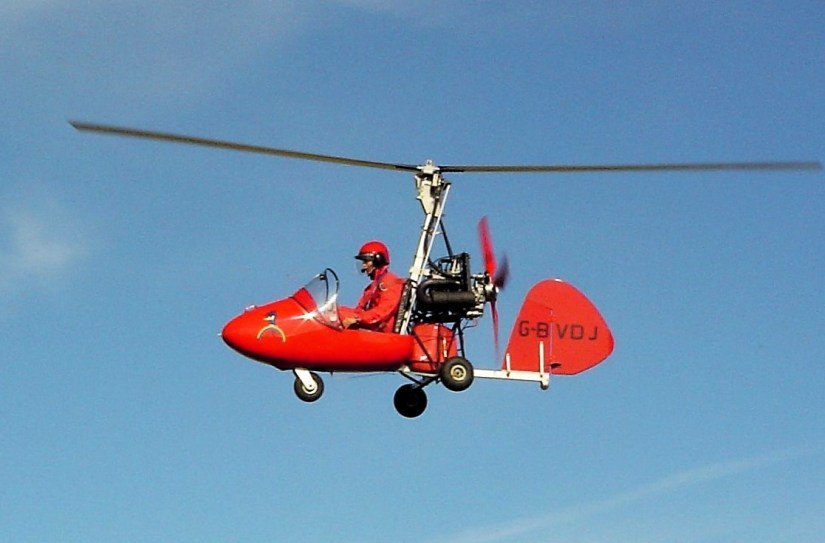
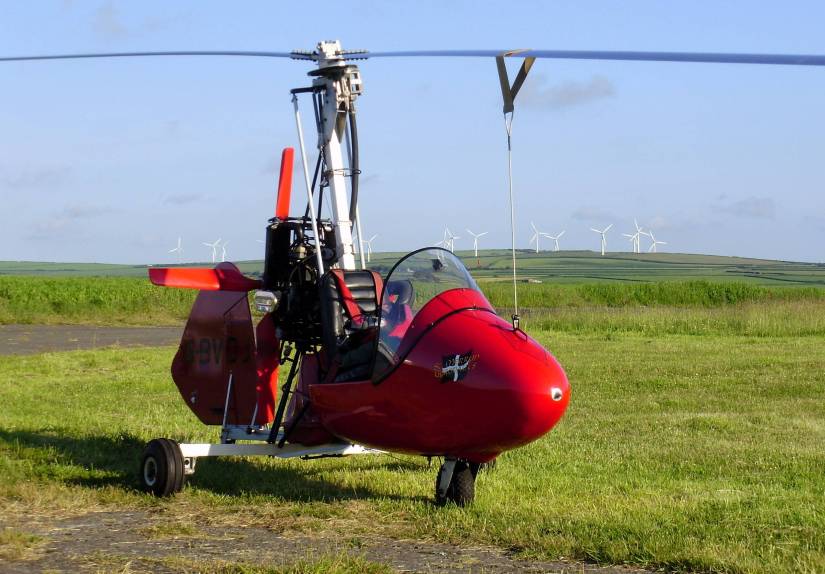
It’s hard to spot the faded windsock against the gathering dusk, but yes, the wind has veered to the west which means landing on the rough and tumble of the Short runway. We swing round to line up on the heading, keeping the power on just a bit longer as the wind is still quite feisty and I want some height in my pocket should the engine quit. Cross the old perimeter road and in over the parachute club’s portion of the airfield: they’re not active today, grounded by the same glorious wind that has been such a gift for a gyroplane. And now we’re home. 350 feet at the boundary fence with 50 mph on the clock, we drop swiftly, the wind having a last mischievous tug at us as we slip from its clutches back to earth. Gently check back on the stick and hold her there as the speed falls away to settle nicely on the main wheels, the rotors take the load with a jubilant whop! and stop us in our tracks. I wait a few seconds to lose some rotor speed before taxiing back to the hangar, tired, cold and stiff and utterly content. What a fantastic afternoon – happiness is an empty sky and a little red gyroplane!

May 2024: 30 years since Delta-J’s maiden flight at St. Merryn, 29/5/94

Still going strong!
So farewell 2019, and most enjoyable it was too. Highlights being the successful culmination of the Brookland Rotorcraft project: a rare Mosquito gyroplane preserved for posterity, and the place of Ernie Brooks now officially cemented in British autorotational history. Well done, Trevor and Peter! How do we top that…
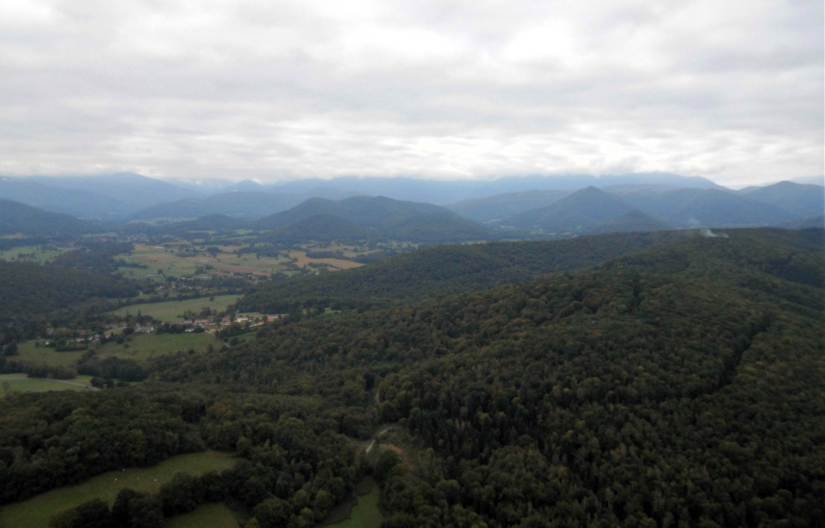
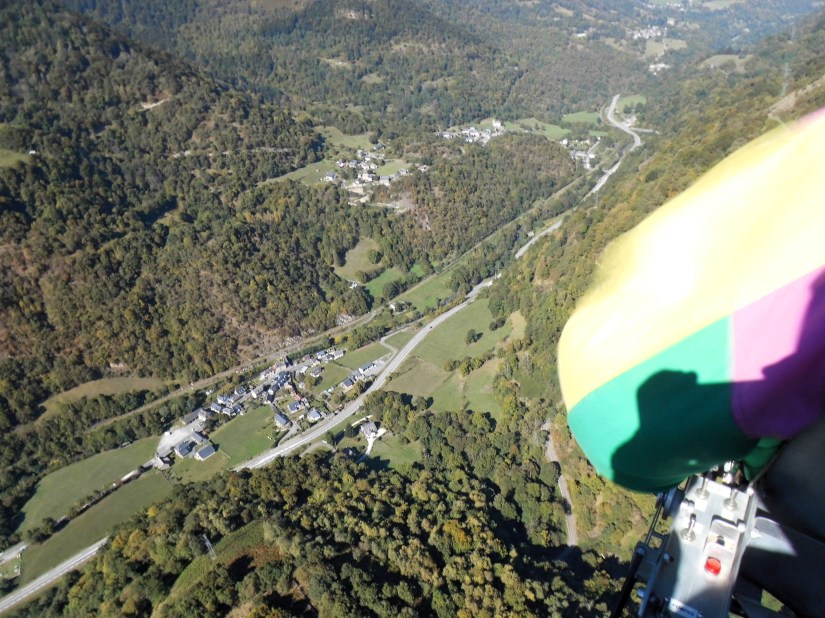
It goes without saying, two wonderful trips to Bois de la Pierre to reunite with my Delta-J and make sure the Pyrenees are still there. Helping out with another safe and successful annual Gyro Club rassemblement is an essential part of every year. We had all kinds of weather: dramatic thunderstorms, torrential rain and howling winds to searing heat and skies of clearest blue. Delicious flights over a panoramic landscape with the song of the rotor blades in my ears, made even more special when shared with friends. How did I get to be so lucky?
August saw the 20th anniversary of Thenac aerodrome, near Bergerac. It was a pleasure to be part of the celebrations, despite the relentless heat that flattened the two visiting Brits! A fun weekend of feasting and ultralight flying in great company. Congratulations to Marie and Martial, ably abetted by the Patrouille de Thenac.
It was during that weekend that I was treated to the wildest ride I’ve yet experienced in a gyroplane. Actually, I’m not sure it’s possible to get any wilder and still use the aircraft again afterwards. Ye gods, I enjoyed it thoroughly – afterwards – when my brain had caught up with the rest of me! Wow. Having flown with Patrick at Sainte Foy in 2012, I had an idea of what to expect, but that was a gentle stroll in comparison. He has an aversion to flying straight and level in his immaculate M16, and routinely pushes normal flight parameters.
Snug in the rear of the high-sided pod, clad only in T-shirt and shorts, headset and sunglasses (no crash helmet), I fastened the lap strap as tightly as it would go. It’s a big regret that I didn’t have time to grab my video camera, what a film that would’ve been. All that remains of that epic flight are the snap-shot images in my head, such as peering straight down at the ground barely a rotor’s length away, with the disc bisecting the horizon at ninety degrees! But what a ride.
The temperature was a stifling 32 degrees C, with barely a breath of air to ruffle the windsock: my little Cricket would have struggled horribly in such conditions. A powerful beast is that M16, and Patrick didn’t waste any time. Barely attaining 300 feet on climb out, he stood it on its tail and pivoted the big machine through a 180, powering back in a low pass along the runway to swing up over the field of sunflowers at the end. We went up, we went down, fast and fluid, our wheels seemingly inches above the dry earth as we blasted between the trees at impossible angles, accompanied by the heavy beat of hard-working rotor blades. No roller coaster could ever produce such a thrill. Supremely confident and smooth on the controls, Patrick was in his element as he handled the big Magni like a jet fighter, twisting round in his seat to give me a beaming thumps-up, which I was delighted to return.
Back over the sunflowers again, we roared down the runway at a matter of inches, using the momentum to swing up and stand the machine on its tail for the obligatory hammer head. Poised in mid air, nose to the sky, the airframe spun like a compass needle beneath the span of rotor disc to point back from whence we came, floating in for a gentle touch down as the rotors expended their energy in triumphant song. Hell yeah – that was absolutely awesome!
Flying as an ‘Ulmiste’ in the south of France is very different to being a gyronaut in the UK. Gyroplanes are a class apart under British regulations: a very special class, which automatically excludes them from any concession granted to other flavours of homebuilt aircraft – and always for a very good reason that no one can actually explain. They don’t understand us so they trap us in a time warp, unable to evolve and barely tolerated. Such a huge contrast in attitudes.
French gyroplanes fall into the microlight (ULM) category – even the big factory-built machines qualify. What a world of opportunity this presents! The freedom to investigate and explore: to try out ideas and improvements, to nip down the local hardware store and gather all you need without certificates, batch numbers etc, and the inflated aviation prices that come with them. It took a long time to get used this new approach after 20 years of negativity and heavy over-engineered 1960s gyroplane designs – I just couldn’t believe it was all so simple – surely there was a catch? But it never came.
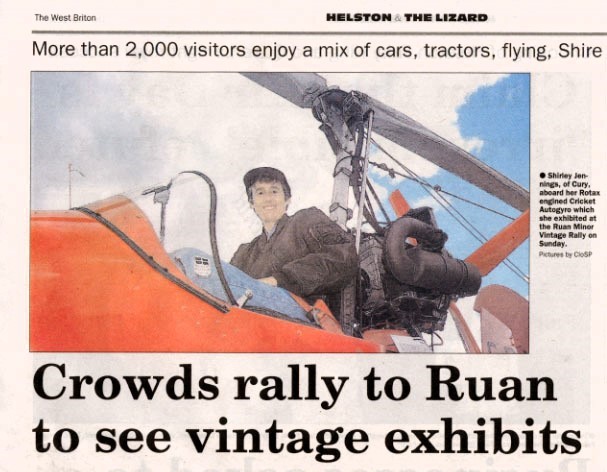
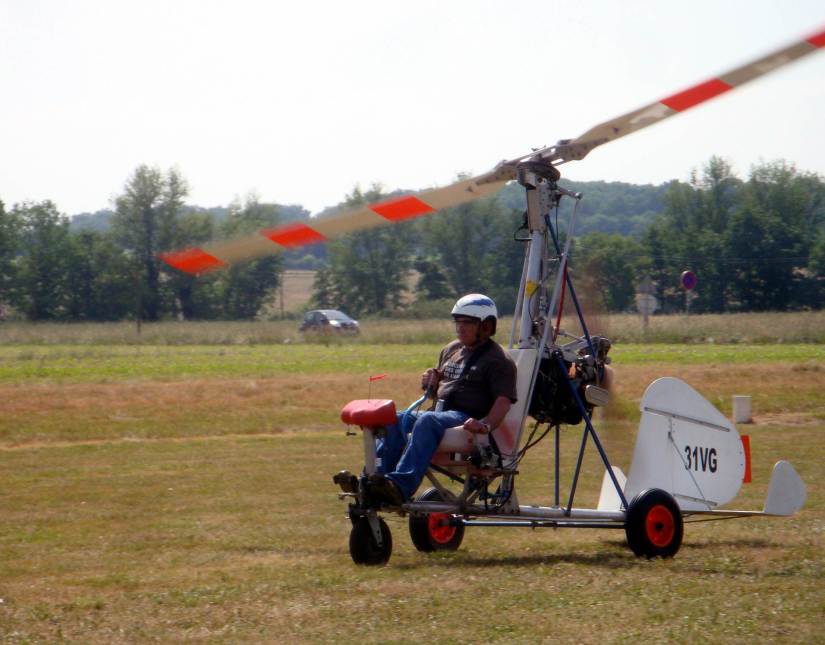
When I took my Cricket down there in 2009, it was the first time they had seen a British designed single-seater, and without fail she drew the same three reactions in exactly the same order. First impression, the exclamation invariably ‘How small and cute she is!’ (like her pilot. Ahem). The French machines are as half as big again, with tall masts to accommodate large propellers. A second glance, the glaring deficiency is all too obvious: ‘Why do you not have a stabiliser?’ Basically because our authorities are still in the dark ages where gyroplanes are concerned. I’ve yet to see a French autogire without one, and our distinct lack of tail feathers caused great consternation among our new friends, a fire which continued to burn unabated until I was later able to join them in the 21st century.
The third reaction without fail was total conviction that the British are quite insane. And who could argue? Fastened inside the pod of my machine – my tiny single-seat open cockpit flying machine as per British regulations – is a ‘No smoking’ sign. The hilarity was absolutely justified. They do not allow a horizontal stabiliser, yet you MUST have a No smoking sign??!! I couldn’t explain it either. (10 Years on, British gyronauts have now been permitted to bolt a cumbersome and inelegant flat plate to the tails of their Crickets. The ‘No smoking’ bit still applies.)
Flying down there is very different. I don’t pretend to know all the ins-and-outs, my understanding of the French language remains at a very basic level despite all efforts to improve. My friends credit me with far more intelligence than I actually possess, and regardless of attempts to understand pertinent ULM web sites, I still rely heavily on them to keep me on the straight and narrow. I’ve always hated radio and have struggled to cope with it ever since fixed-wing training. While the jargon poses no problem, the mental block to get the words out and broadcast to one and all across the frequency is an almost insurmountable challenge – a hang-up deeply rooted in my general inadequacy with verbal communication. I’m sure I was a mouse in a previous life (still got the teeth), preferring to remain hidden and not draw attention to myself, anony-mouse as it were, but it’s very frustrating at times.
During the week, the aerial prerogative over the plain belongs to the Armée de l’Air. I’m not too comfortable flying on a weekday! It’s not uncommon to be happily minding our own business at the club, only for the peace to be shattered by an unearthly roar and dark shapes ripping through the circuit, sometimes a fleeting glimpse of fiery jet pipe barely 200 feet above. And they’re always in pairs. The Patrouille de France take no prisoners either. Nine Alpha Jets blasting through the area at minimal height, at least two of them directly through our circuit. A hapless gyronaut would be chewed up and spat out before they even knew what hit them. Even their wake turbulence would be enough to ruin your day.
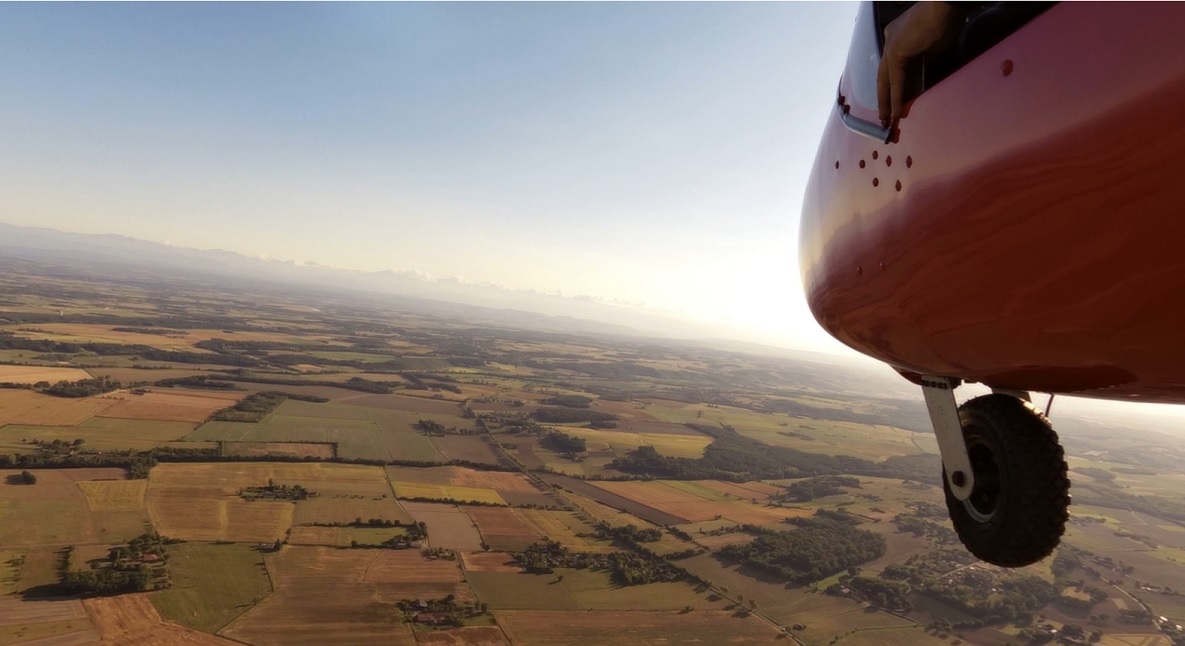
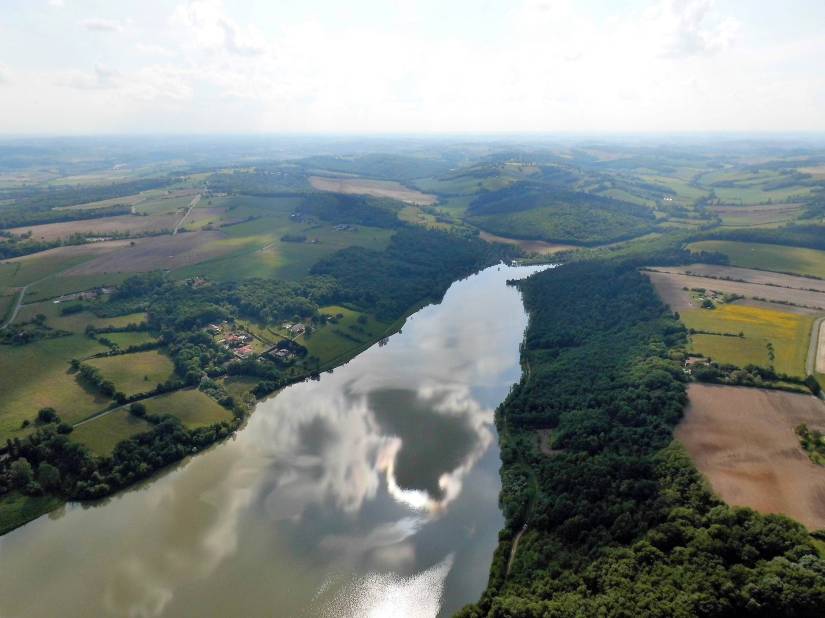
Don’t go too high, my friends warn after persuading me to partake of the week-day sky. They habitually fly around at 400-500 feet, which seems like hedge skimming as I look down from the relative safety of 800 feet. My flying opportunities are very limited being based some 700 road miles from my aircraft (depending how many detours the satnav finds), so confidence levels diminish accordingly with lack of hours. I prefer a decent bit of altitude beneath us, a few extra seconds of safety margin to compensate for my lack of practice should anything untoward occur.
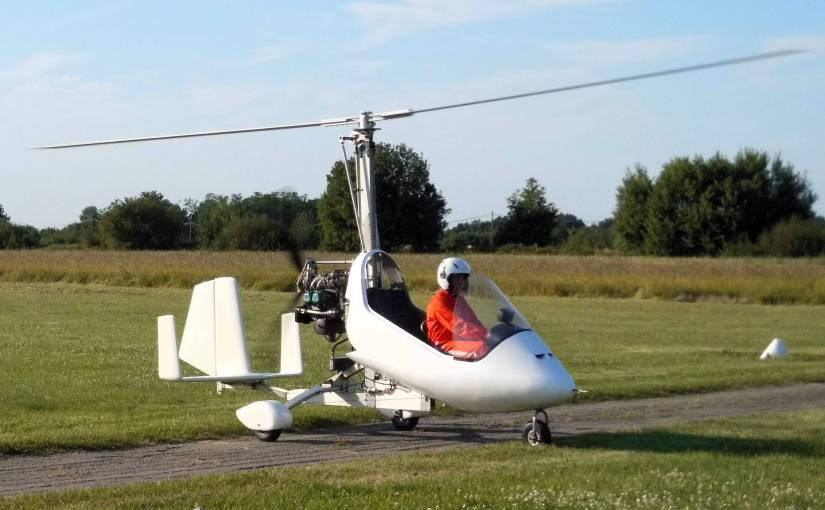
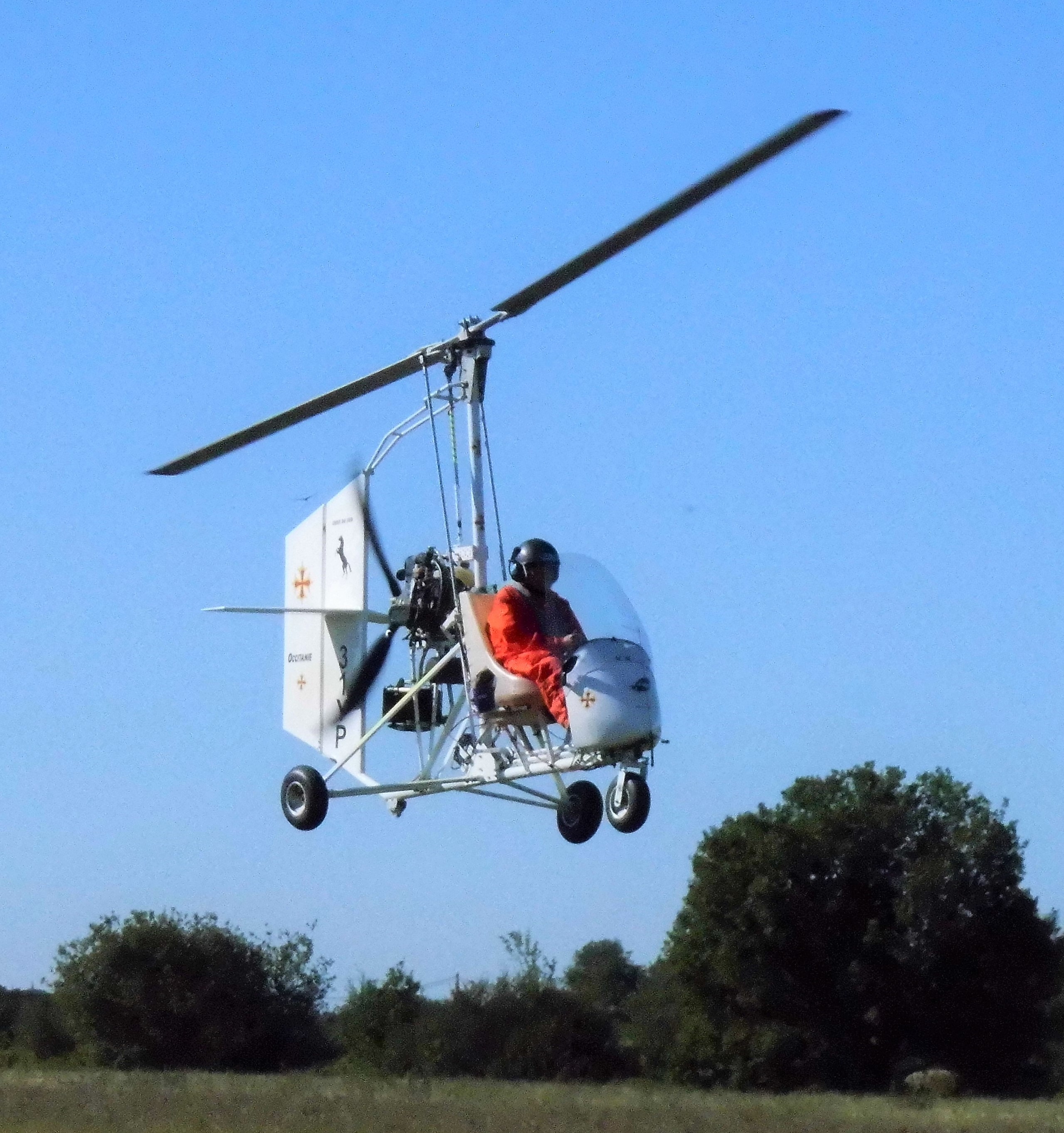
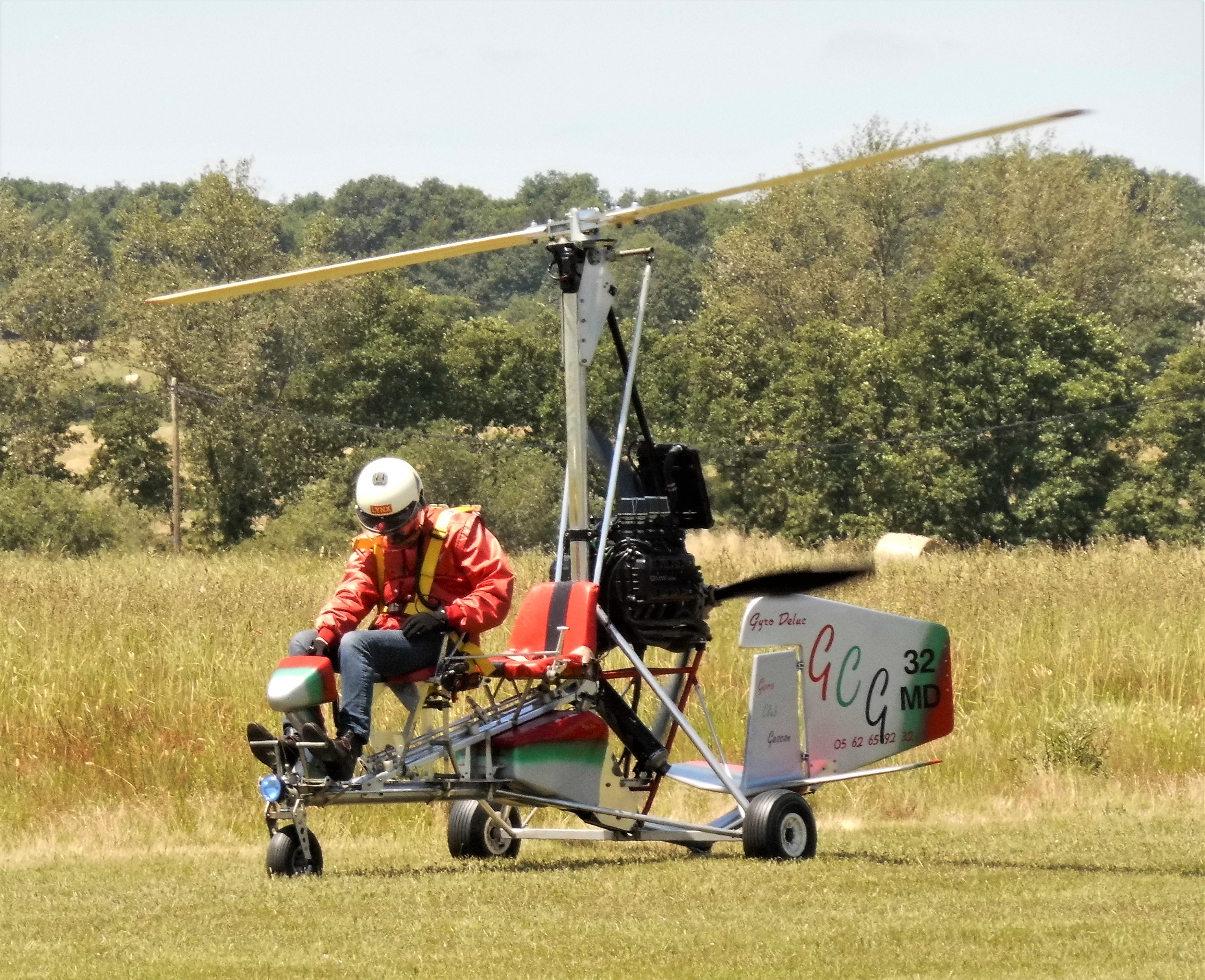
Although we wear the same Rotax 582 engine as several other single-seat machines at the club, they sport unique configurations able to accommodate much larger propellers and rotor blades. My gyro being based on a heavy 50 year-old design, only has room to wear a petite 52 inch propeller, which coupled with our lightweight 22 foot diameter rotors cannot hope to match the performance of our French companions. Only a complete restructure would solve it. Consequently they don’t understand my reluctance to fly in the high temperature and light wind conditions that persist from late May onwards – we just don’t have the same oomph! On squadron fly-outs, the others casually breeze past and disappear into the distance leaving us to flounder in their wake, my poor engine screaming in protest, temperature gauge nudging the red as we struggle for a morsel of lift in the tropical haze. So yes, I’m wary – it’s not a good feeling when your rotor blades have nothing to bite.


















































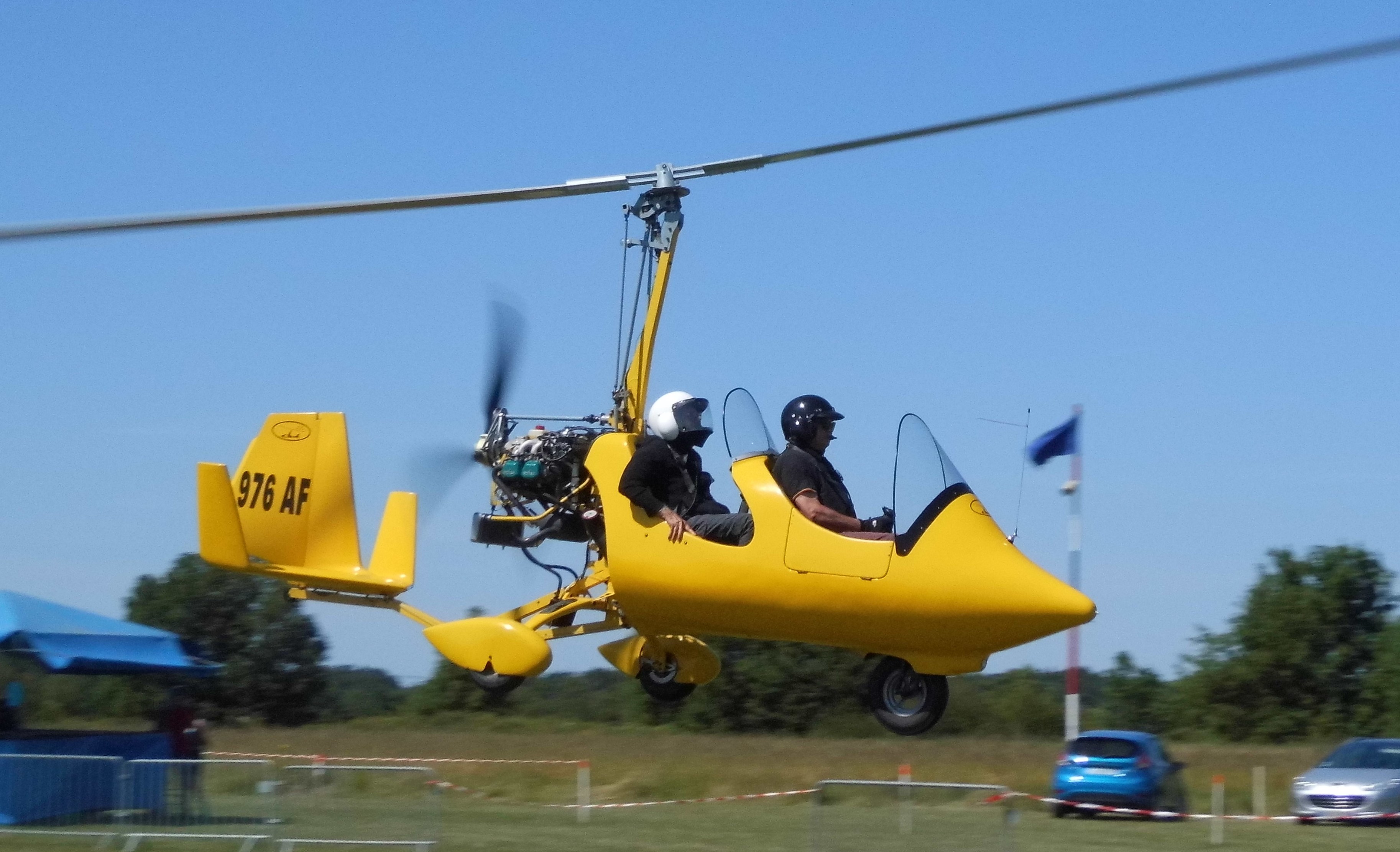


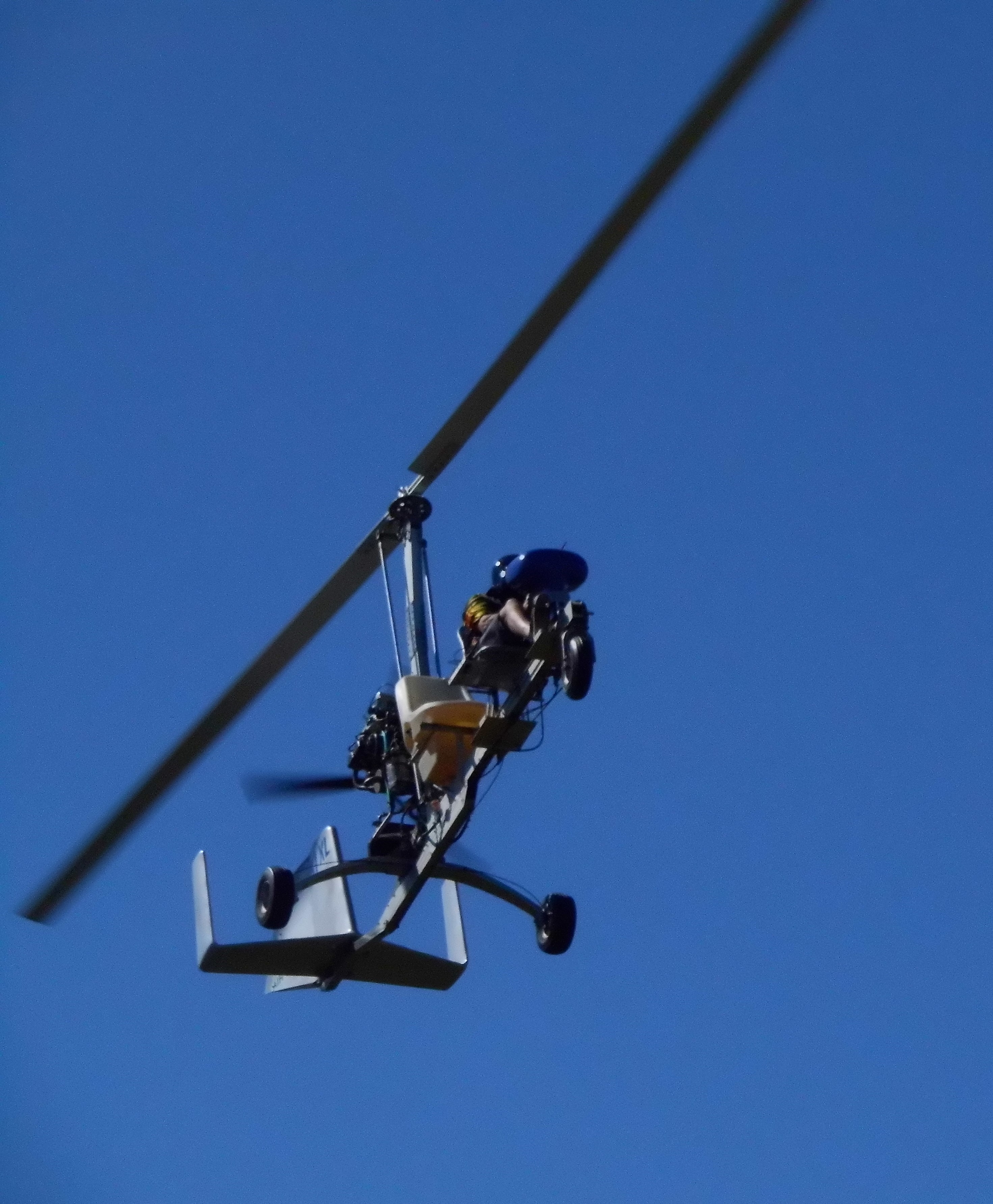


 Spinning on the Wind