Random ramblings

Enjoying the moment

Another one from the archives…

Sitting here on a deserted Cornish airfield, I feel totally at peace; deeply connected to those who have gone before, their echoes never leave. The sky above is deep blue, gently fading to paler shades towards the horizon, decorated by a few feathery wisps and blobs of cloud. The faded windsock barely stirs in the warm breath of air and hangs limply from its pole like a wilted flower. Directly overhead, the sun is briefly filtered by a passing cloud, a fierce white orb burning through the depths of downy fleece. All is quiet except for the drone of insects going about their business, the cheerful twitterings of skylarks feeding on the wing and crickets chirping in the grass. Hay bales dot the fields between the runways, silent sentinels waiting patiently for collection. Rabbits creep into vision from burrows deep inside the bramble thickets, cropping the sun-browned grass ever shorter. The brambles that shield their homes are heavy with ripening blackberries, almost covering the blockwork of the old air raid shelter in front of me.

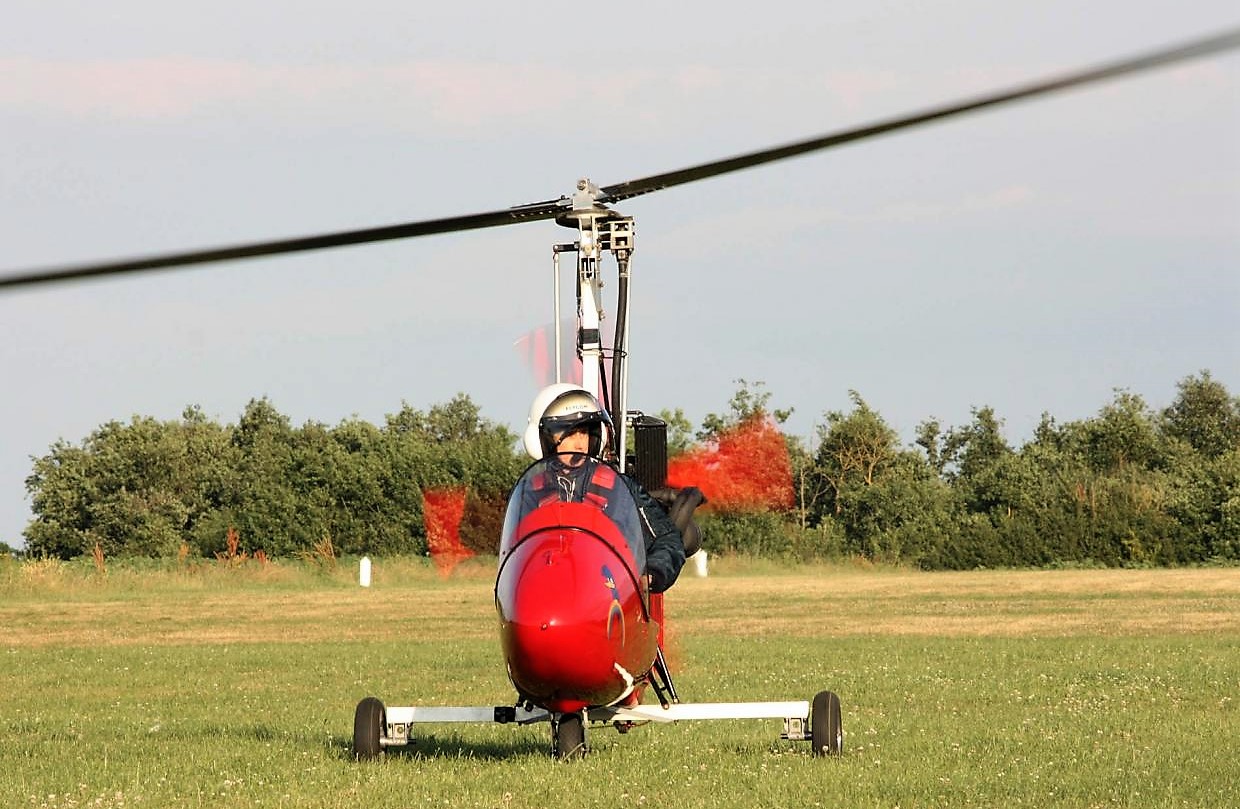
Delta-J is parked beside me, her bright red pod a splash of colour amid the late summers day. Her tank is full and she’s all checked out ready to go, but I’m in no rush to fly, happy just to be here in the place I love beyond all other, enjoying the solitude. The old tower building which houses our hangar stands tall behind me, empty sightless windows gazing out into the infinite blue. The wind turbines on the hill overlooking the airfield turn half heartedly like unwound clocks, each one pointing in a random direction as if uncertain of which way to go. The huge blades move lazily as if the effort of turning is all too much. St Eval church squats on the horizon to the right, the spider web of aerials marking St Merryn’s wartime twin. Fields of russet and green patchwork the land in between, rising up to meet the perfect blue of the sky. It’s too nice to spoil the moment with engine noise, I feel no need to break the spell. Let it be.

St. Merryn sky

French gyroplanes

A positive attitude makes all the difference

The French show us how it’s done!

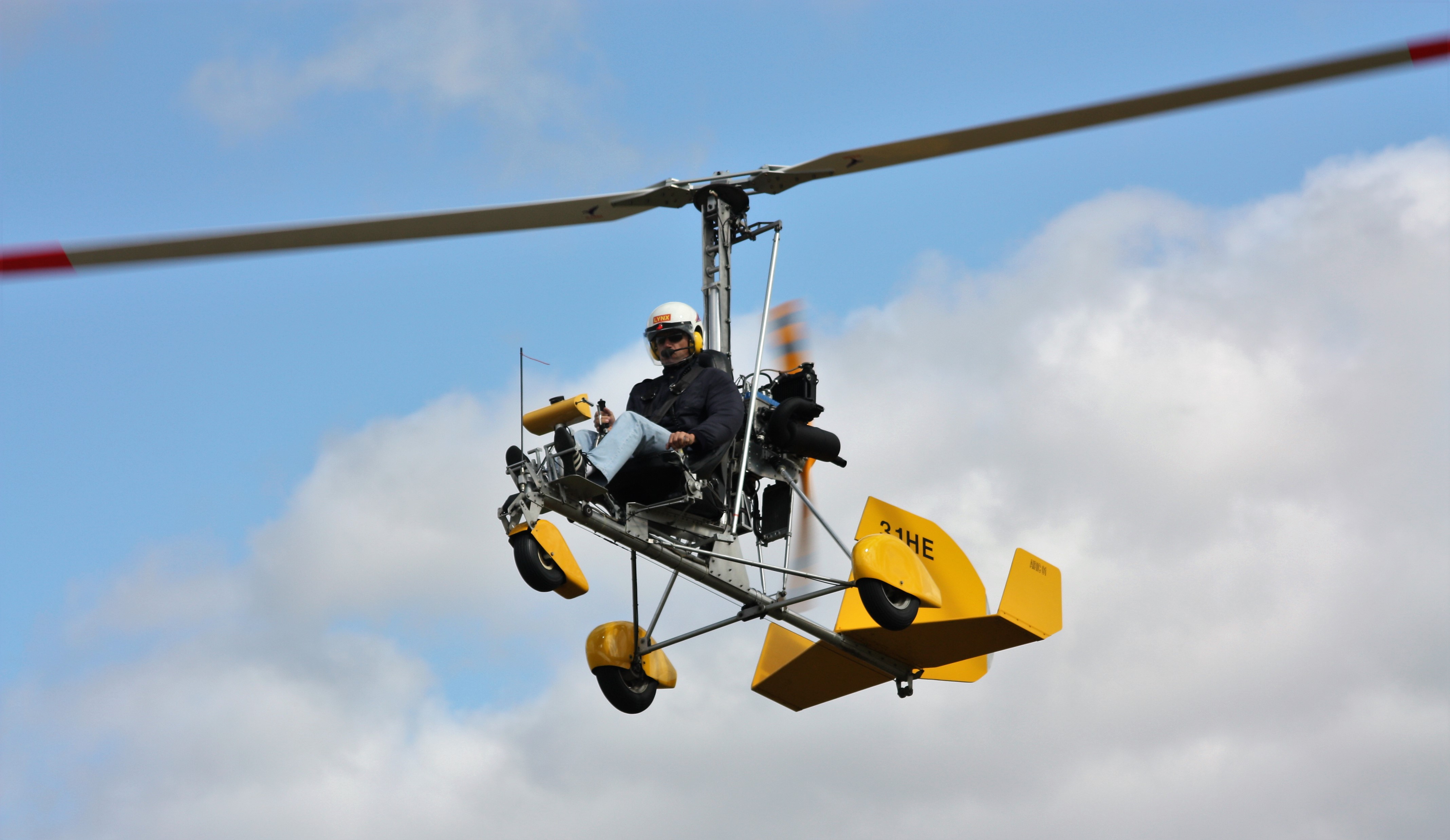
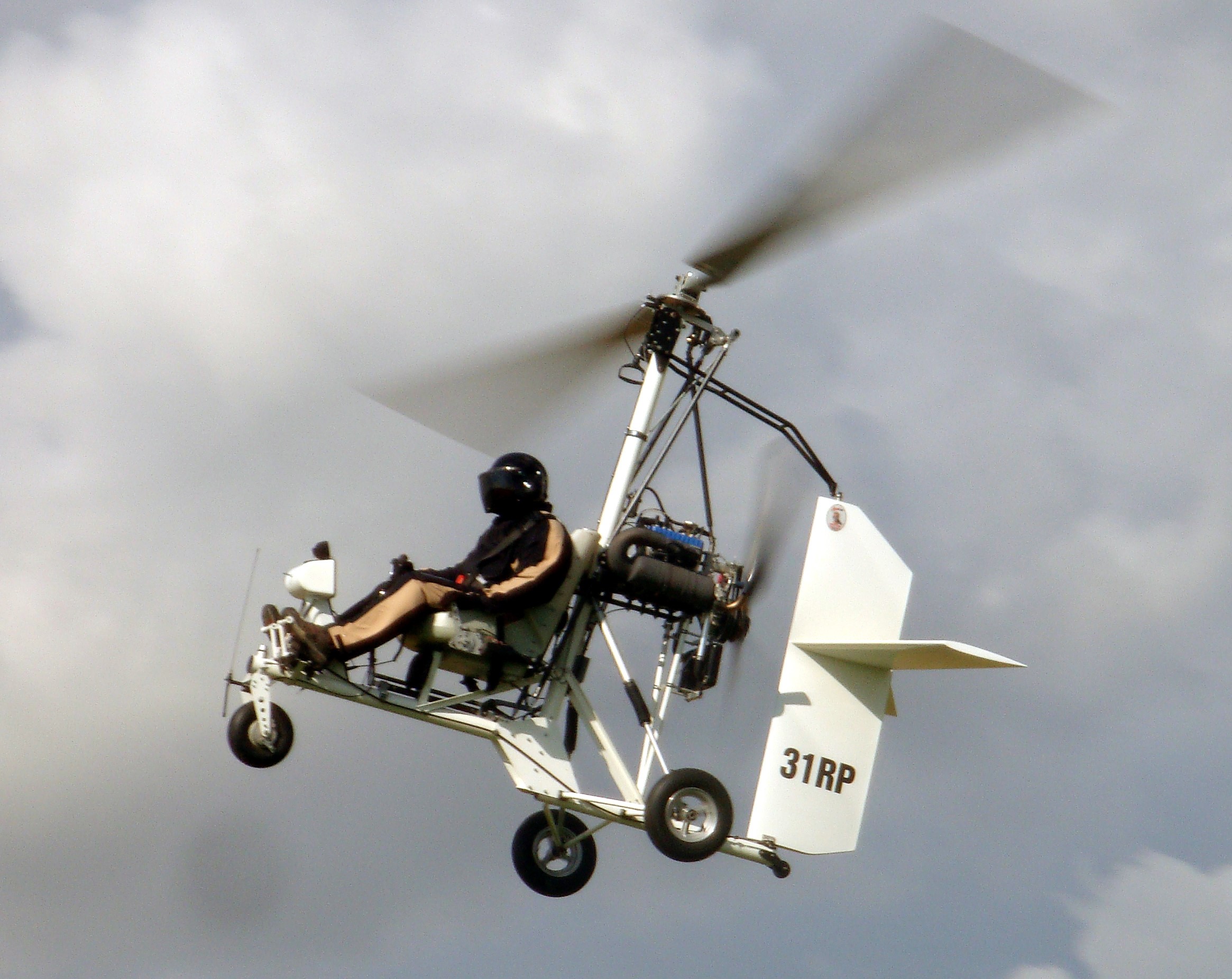
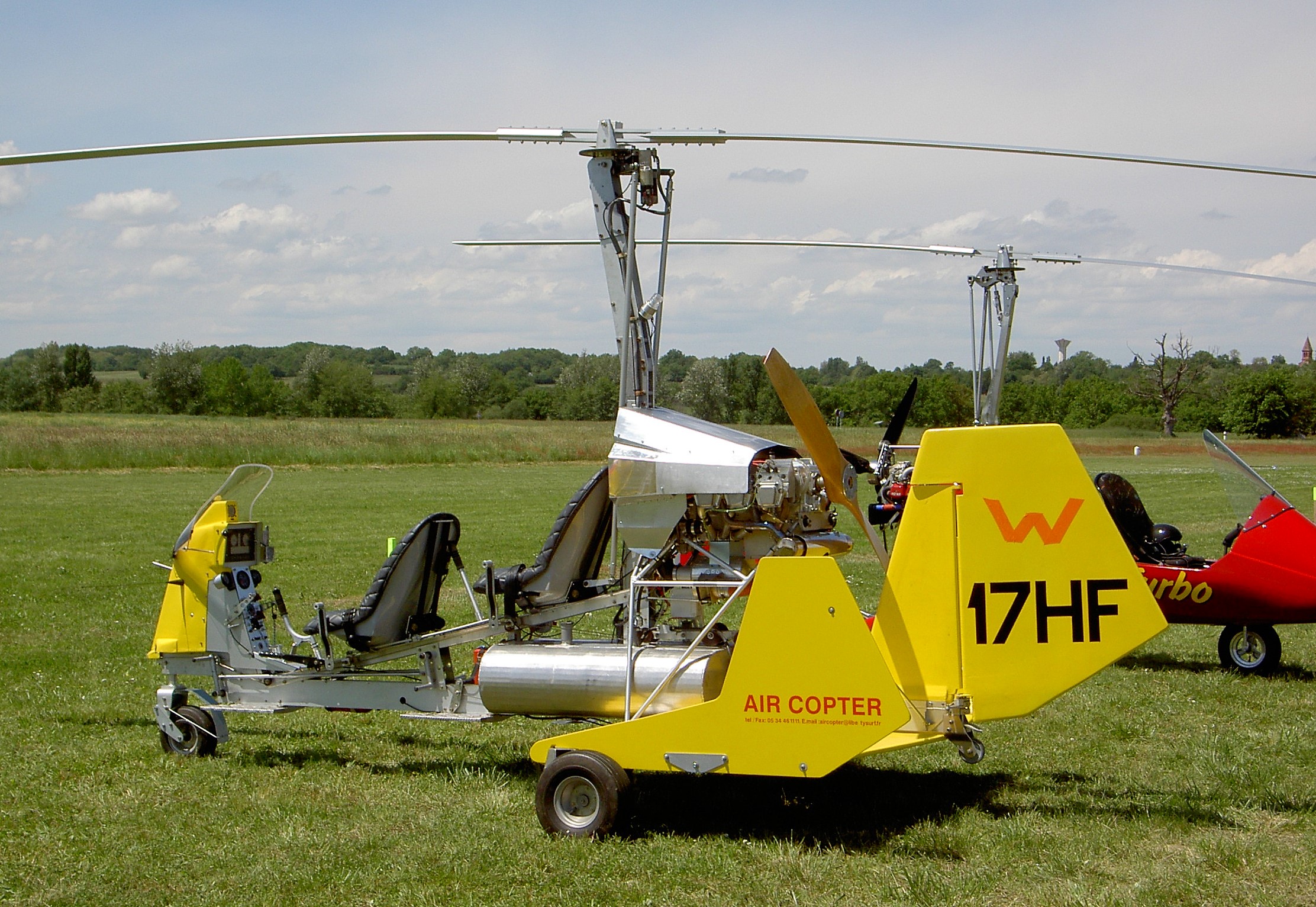
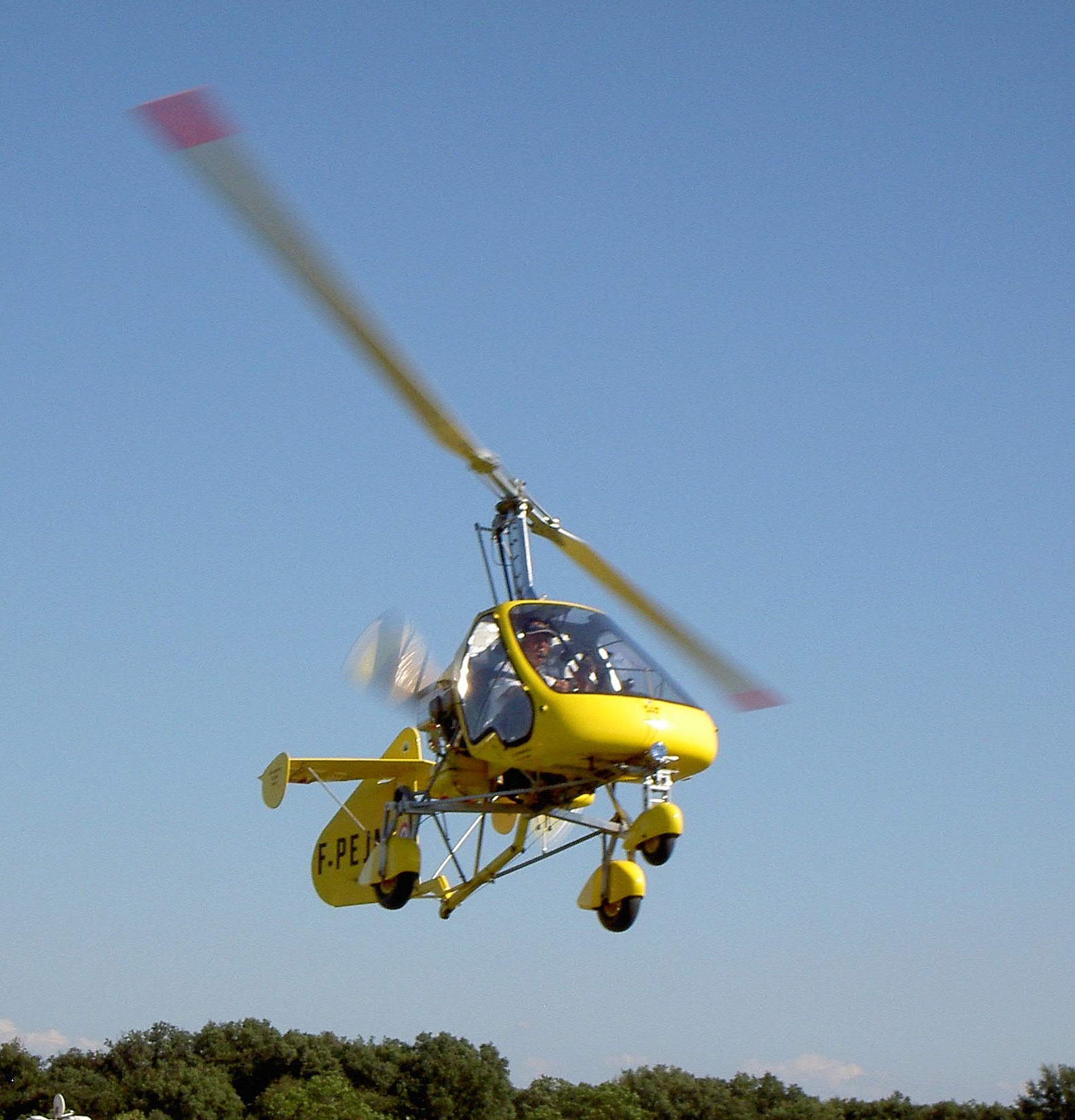
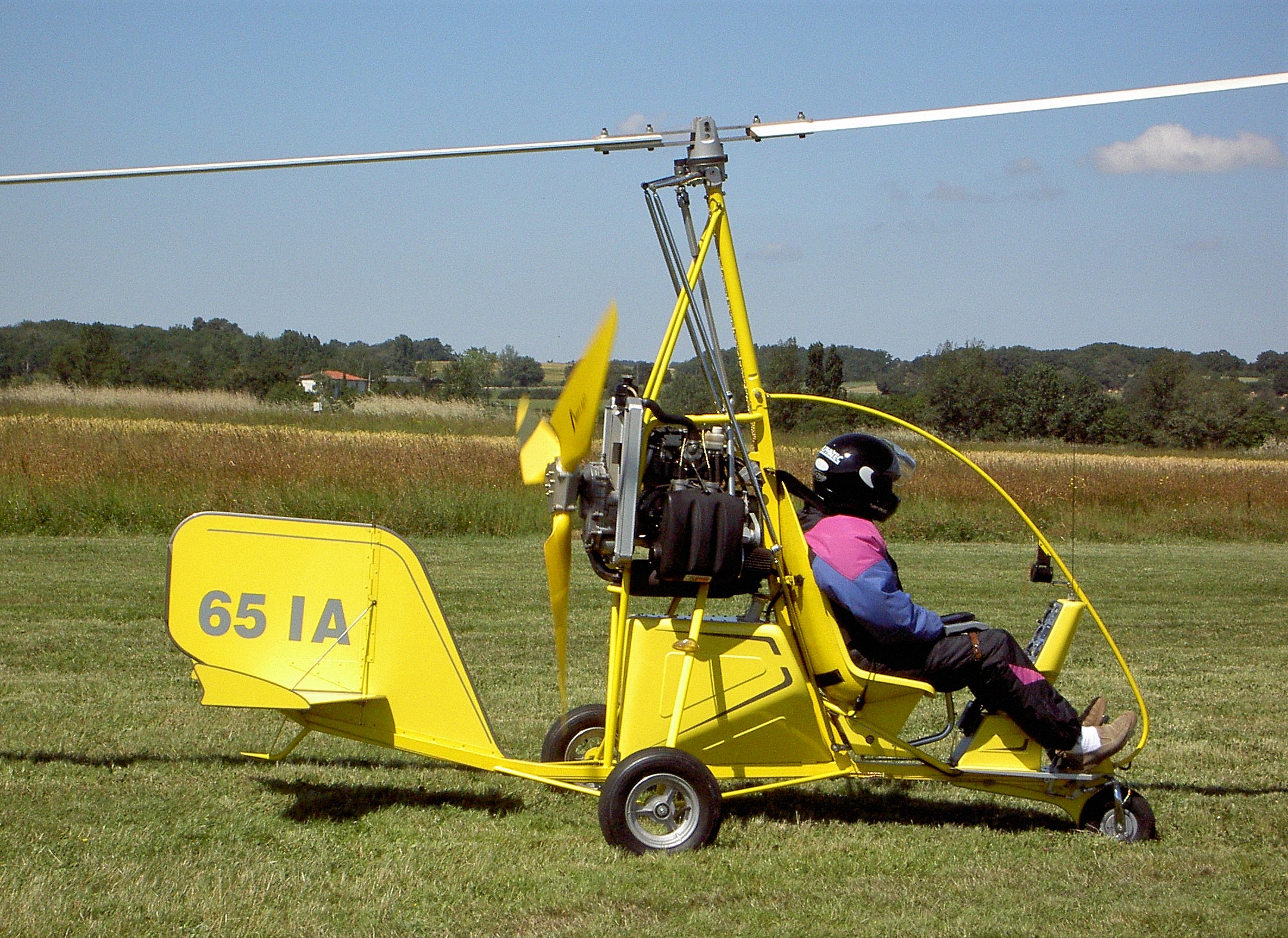
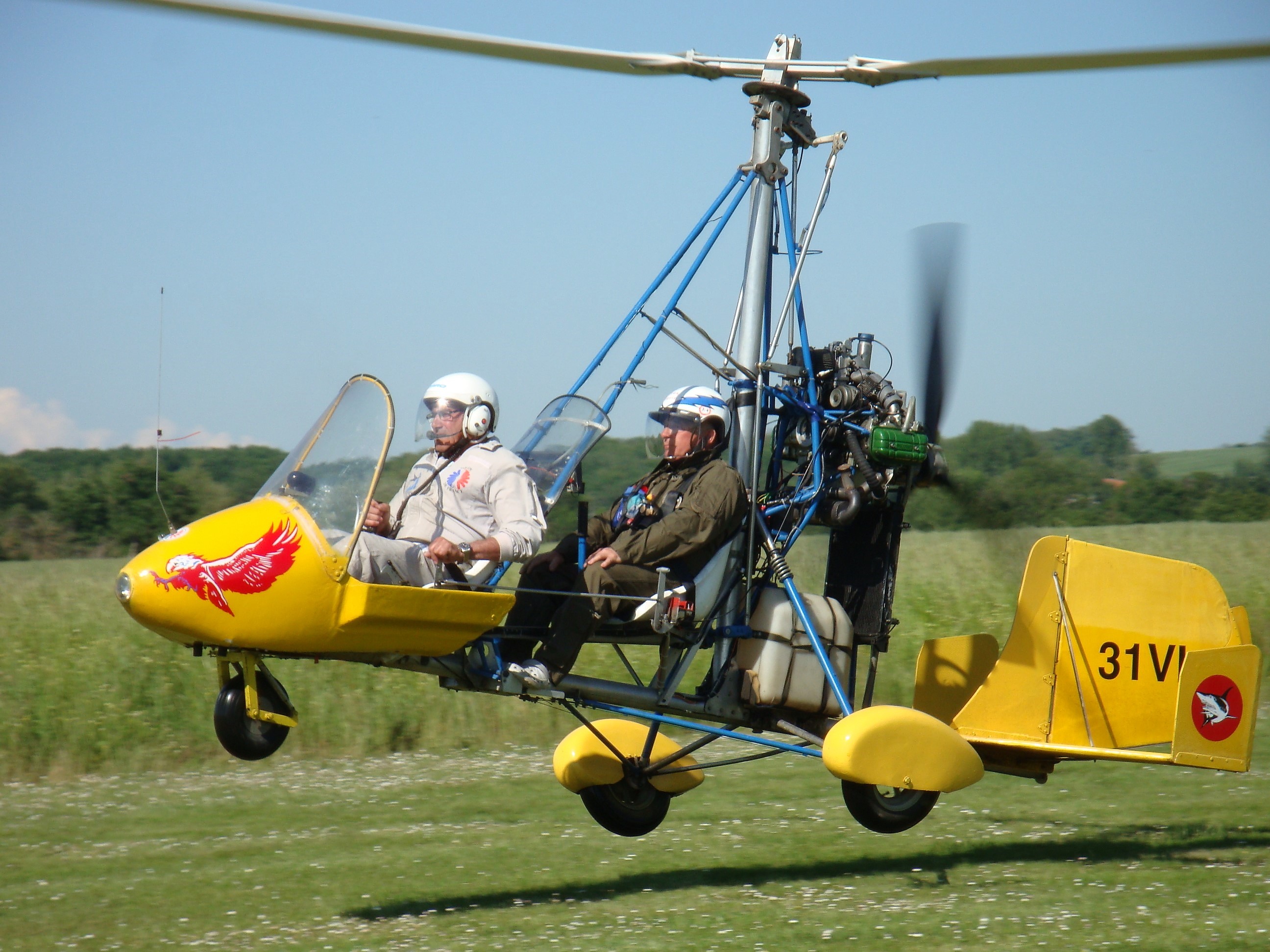
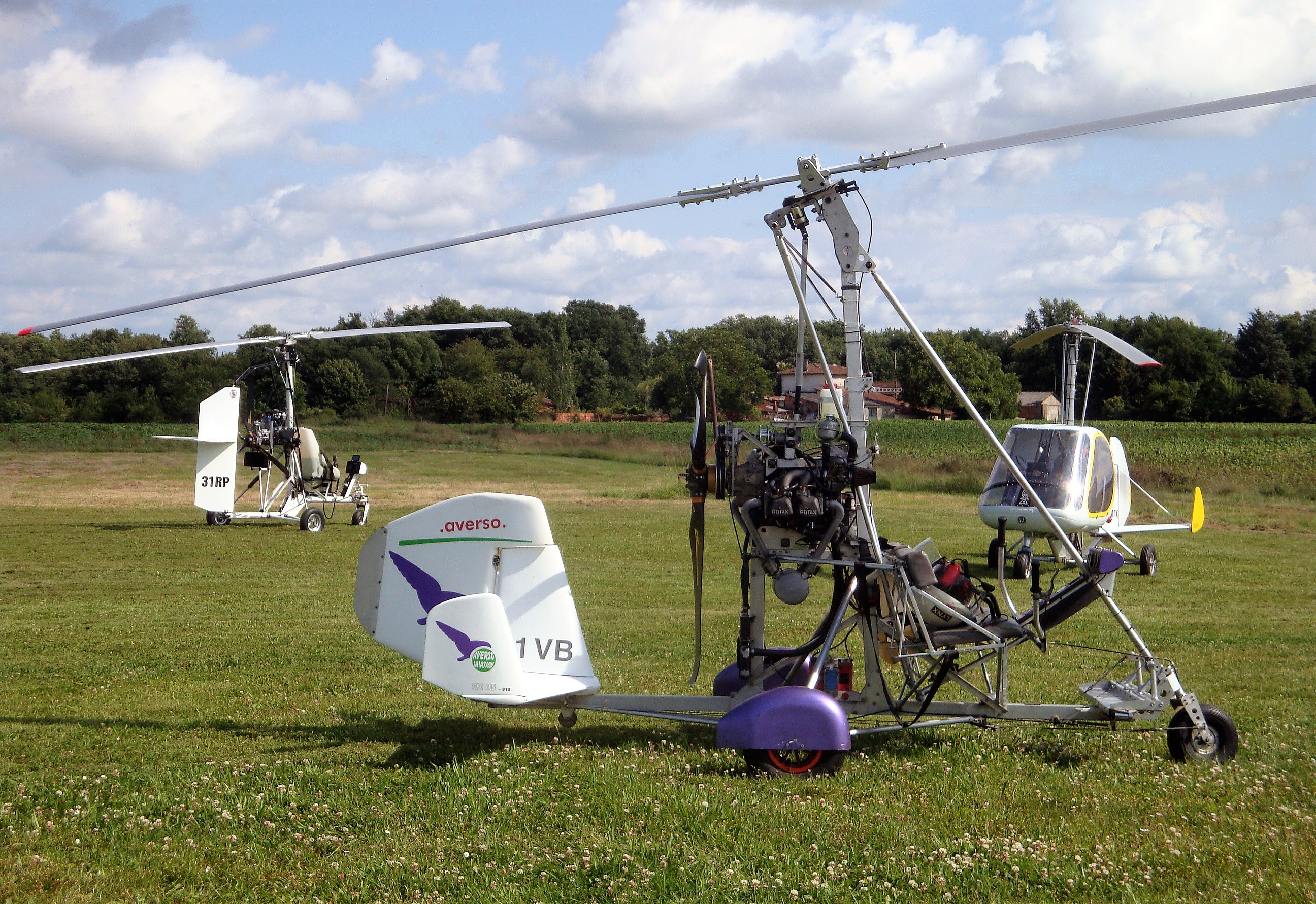
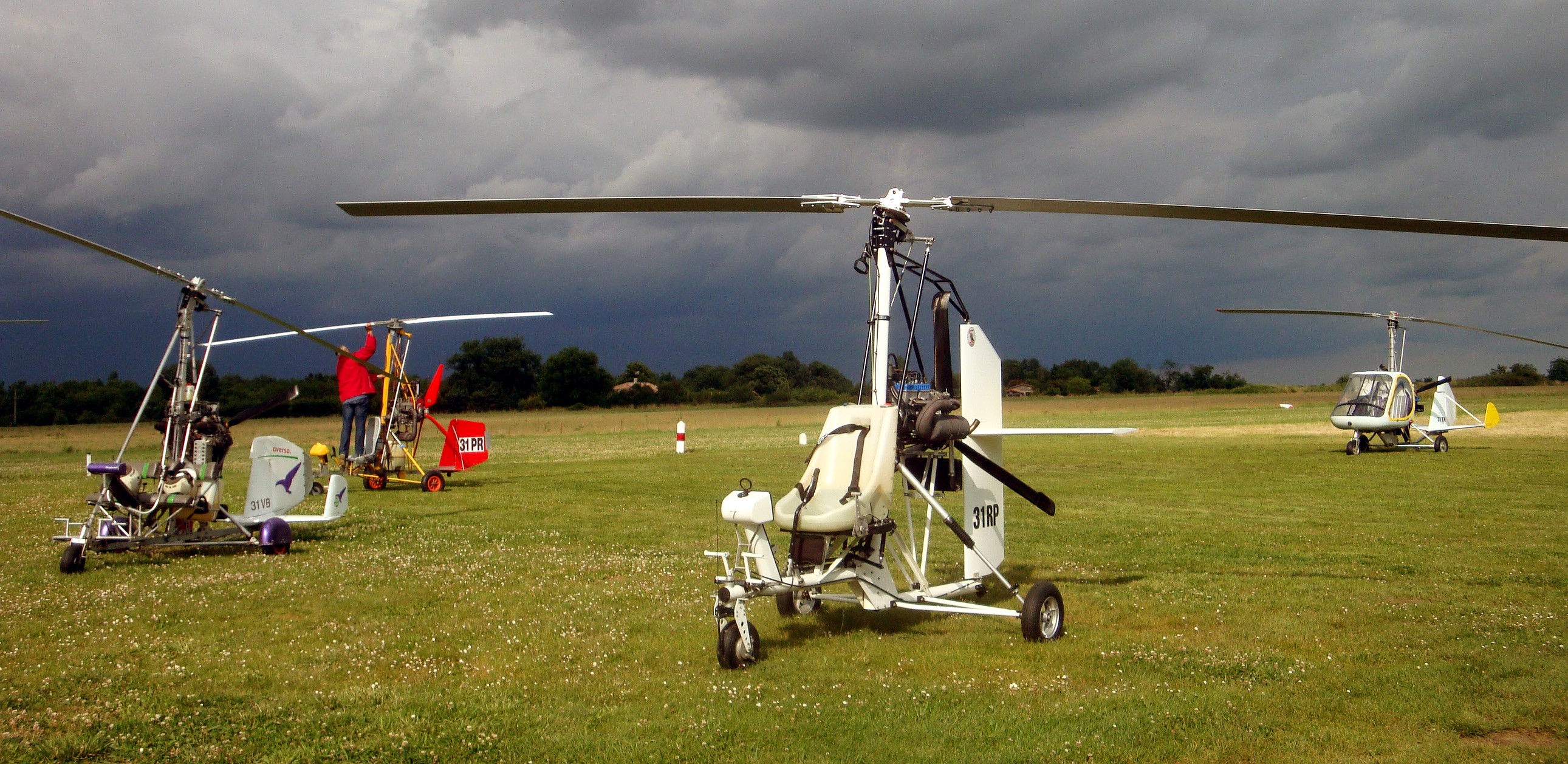
I’ve never seen a French gyroplane without tail feathers. Look at the variety and innovation, while us Brits have barely progressed from the Bensen. They’re having a wonderful time, yet none of these machines would get off the ground in the UK – except the little red one without a horizontal stabiliser…

http://www.gyroclub.fr Enjoy.

Gyro-glider & rotor handling

Old fashioned – Never!

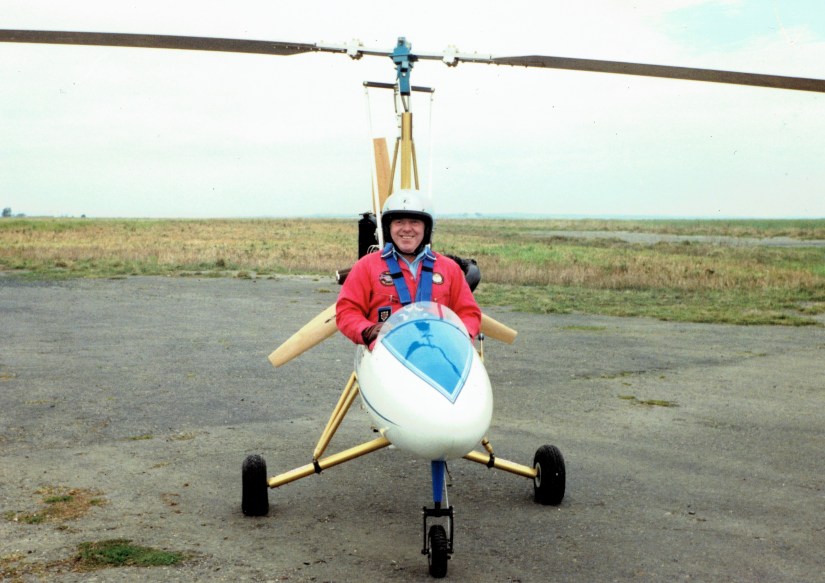
In 1993, my transformation from fixed-wing driver to gyronaut began with an old Bensen gyro-glider. For 19 wonderful years we were based at St. Merryn, a beautiful old wartime airfield on the North Cornish coast with 8 tarmac runways to play with – perfect for glider training. This is where I and many others learned about free-spinning rotor flight, courtesy of Chris Julian and Tony Philpotts. It was so much fun! Such painful irony that Chris, along with our friend Bob should’ve been killed flying another glider up-country, thanks to the stupidity of one particular individual who has never had the guts to say sorry.

Gyro-gliding should be mandatory for new gyronauts. Nothing else can match it for pure unadulterated rotor flight: no engine or instruments to worry about, all unnecessary distractions are removed – it’s just you and the rotor blades. Fly a gyro-glider and it will open your eyes to the sheer power of autorotation. You’ll learn to understand the rotors and their behaviour, how to read them without the need for instruments and discover the very heart of gyroplane flying. In the old days before the onset of two-seat machines, nearly every gyronaut began their training on a glider. Sadly, now that two-seat training is readily available, the glider has been largely forgotten by the ‘establishment.’ Considered an out-of-date-has-been by those with no clue, it still gives the best insight into rotor handling that no two-seater can match.

It’s a long time since I wrote the following piece, but what we did that day remains just as relevant to gyroplane training, and rotor handling in particular. In fact it’s even more relevant these days when newly qualified gyro pilots are so reliant on widgets and gizmos to tell them what they should really know by the seat of their pants.

12 Year old Ed: junior gyronaut

The 2nd of September 2007 was quite a special day for a young lad who first flew the glider with me when he was only 12 years old. Now aged 15 and tall enough to reach the steering bar, Ed Weaver returned to St. Merryn to have another go. We had a good strong wind for him, blowing about 15 knots just a few degrees off the nose of the main north/south runway. To recap on what we’d done all that time ago, I parked the glider into wind and after going through the preflight inspection together, Ed started the rotors by himself and spent half an hour practising feeding the wind into them, using the stick to regulate their speed by opening or closing the rotor disc to the airflow. The old RotorHawk blades were relatively tame and docile, but with quite a feisty wind coming in off the sea, Ed had his hands full to settle them down as random gusts blustered through, upsetting the blades and triggering flapping. He did very well and corrected the first kick of blade sail without any prompt from me – instantly shoving the stick fully forward to kill off the wind (a manoeuvre never to be performed in the air, by the way), letting the rotors stabilise before gently bringing the stick back, inch by inch to let them accelerate once more. Excellent handling practice.

Gyro kites…

Later we hitched up the 115 foot tow line and took the glider out to play on the main runway. The wind was slightly from the right, but no real problem. Ed brought the rotors up to speed, then followed through on the stick as we took off and flew down the runway about 10 feet high, settling down nicely at a respectful distance from the giant dung heap sprawled across the end. I showed him how to use the energy in the rotor disc to reverse the glider back and do a three point turn, as the tow car took up the slack in the line. Being towed back downwind is the worst part, bumping over ragged tufts of vegetation at 15 mph with no suspension on the glider – ouch! By the third take off, Ed was handling the stick on his own with only a few minor corrections from me, and 90% of the landings by the end of the first hour. For the second hour I was little more than animated ballast and if the wind had been more on the nose and not so gusty, Ed could have soloed if he wanted.

15 Year old Ed flying the gyro-glider – cool as you like!

As it was we had to wait for the following Sunday, as the wind had gone to the other extreme with Saturday being flat calm. It was also westerly, which meant the shortest runway with more lumps and bumps of foliage breaking through the aged tarmac. The wind was about 8 knots maximum but a steady mild breath this time, so Ed could open the rotors up relatively quickly without setting them flapping. We did another short static session with the glider to recap again, but he’d mastered the starting bit easily, so I set him up with my gyroplane to show him the contrasting behaviour of different blade profiles.

My bird wears Dragon Wing rotor blades which are much lighter in weight and have a more streamlined, efficient aerofoil section than the RotorHawks – and they’re absolute pigs to spin up by hand! With Ed in the seat controlling the stick, I pushed the rotors round as hard as I could to see if he could get them to catch the wind and accelerate. There’s no way I’d even bother attempting it normally, but the wind was docile and steady enough not to seriously upset them, so I thought it’d be a good demonstration – and it was. Try as we might, despite hurling my entire 8 stone bulk behind them, and with Ed’s careful coaxing on the stick – we could not get those rotor blades to show any interest in picking up at all – whereas the tame old RotorHawks had settled easily on the light breeze with little effort. You only get to know a true feeling for the rotors by learning to start them by hand: a machine relying on mechanical drive and tacho’s can’t give you the same insight. It’s like trying to ride a horse without an empathic understanding of the feel of its mouth against the reins.

With another lesson under his belt, we hitched up and took the glider out for Ed to try some tamer conditions. Light winds mean towing at a faster ground speed to compensate the lack of airspeed, which I don’t like doing as we’re forcing the machine to fly. Luckily both Ed and myself are lightweights so we didn’t have to drag the glider along at an excessively fast pace to keep it airborne – which was a good thing as we didn’t have much runway to work with in a westerly direction. With two of us onboard we were lifting off just before the intersection with the main runway (a particularly rough patch to accelerate over), and the car had to begin slowing almost immediately, being some 80 feet ahead of us. Ed flew well, doing everything himself except the three point turn at the end, and after several runs he felt happy enough to attempt it solo.

I strapped him into the middle of the seat and positioned the glider on the threshold, aiming for the smoothest possible take off path between the weeds. I explained what was going to happen and questioned Ed as to exactly what he was going to do, making sure we both understood who was doing what, and no one was going to scare the pants off the other. All he had to do was repeat what he’d been doing all morning (which he’d now find much easier sitting in the middle of the seat) and remember to ‘plant’ the machine firmly on the deck as soon as the main wheels touched down. I gave him the traditional St. Merryn salute, pretending to bite my fist in mock terror (just as Chris had done to me all those years ago) getting a broad grin in return. Perched backwards over the passenger seat of the tow car, I could see the rotors were turning as fast as possible with the glider stationary, and we began the tow with a steady acceleration, increasing by 5 mph at a time. The nosewheel lifted nicely and my youngest student became airborne, flying sedately to the end of the runway and settling down to a text book landing. I ran back to join a relieved fledgling gyronaut on the seat, giving in to the obligatory high-5 (well, he’d earned it!) before reversing the glider round for the run back to the hangar. Ed’s beaming face told me all I needed to know.

What a great feeling it is when someone clicks with the machine like that – be it glider or powered gyroplane – and suddenly realises what it’s all about. Ed can be proud of himself: he has a skill that very few do these days. When new people come in to the sport, no matter what kind of gyro they choose to fly, they need and deserve to be taught the essential basics of rotor handling. And for that, you can’t beat a gyro-glider.

(Thanks to Ben Mullet for the photos)

Autorotational musings

Salute to the past.

I wrote this in 2015, after an idyllic afternoon with my gyroplane on a special day. It was only meant as a private musing but it’s from the heart, so I’ll put it here in tribute to those who have been part of our autorotational journey.

G-BVDJ is 21 years old today. It was exactly 21 years ago on a Sunday afternoon at St. Merryn, when Chris Julian took her into the air for the very first time. The pile of metal we had carefully cut, shaped and bolted together now transformed, the process of creation hadn’t been in vain. I still remember how elated I was, how pretty she looked in the sky – how impossibly tiny. There were teething troubles naturally, little niggles to be ironed out over the following months, but now I owned a real flying machine. How cool was that!

Never in my wildest dreams did I imagine that 21 years later (29th May 2015 to be exact) we would be in the south of France, stirring the air together under the imperious gaze of the Pyrenees. Back then I had rarely left British shores and certainly had never ventured abroad by myself. To actually drive alone, some 800 miles on the wrong side of the road in a language I can barely speak, not to mention towing the most important part of my life behind on a trailer – nah, don’t be daft! Yet here we are, and it’s all because of gyroplanes.

21 years. That little red machine changed my life completely. With the encouragement of the late, great Ken Wallis, I left my home and moved 200 miles to be near our beloved airfield at St. Merryn, where a small group of veteran gyronauts patiently kept me the right way up as they shared their wisdom with the neophyte. ‘She won’t fly’ said the critics, ‘girls don‘t fly gyros.’ ‘She flies’ said my mentors, ‘like a bit of silk.’ And thanks to them and the gyro-glider, I did. They’re all gone now, the gurus whose autorotational roots traced back to the 1960’s, but the memories we made together and the skill they gave me to survive lives on, encapsulated in Delta-J. The little red machine they helped me to create and to master exists because of Chris Julian and Tony Philpotts. Along with Bob Partridge and Les Cload, their knowledge and friendship remains a vital part of the fabric that made me a gyronaut. They fly with us always.

As does the man who has done (and continues to do) more for the ordinary British gyronaut than any other – the unassuming and unsung hero that is Tony Melody. He took this gyro-glider fledgling who some said would never fly, and defied expectations by moulding a bundle of nerves into a qualified gyro pilot. A female one at that. Whatever next! And not forgetting Mark Hayward, who with his yellow Bensen lead us on many adventures, helping to build this new gyronaut’s confidence in straying from the local patch. Tony and Mark, to share your experience and great sense of fun has been an honour and a pleasure. You too will always be part of us.

That little red machine changed my life. Cursed with shyness, it’s almost impossible for me to make friends. People don’t notice you when you’re shy, normally I’m invisible. Delta-J defines me: with her, I become someone. People see who I really am and want to talk – ‘What is it? How does it work? Do you fly it?’ Since I took my first step on the autorotational path in 1990, all the friends I have are the direct result of becoming a gyronaut. People all over the world – many of whom I have never met – but brought together by the love of my little red flying machine. There are people who have travelled many miles to trust me with their lives, learning vital skills while enchanted with the magic of the gyro-glider; even now they keep in touch. I’m truly privileged.

The pioneering spirit that infused St. Merryn no longer survives in Britain these days. Any sign of enthusiasm for the homebuilt gyro is immediately crushed by the ignorant, and with it dies the innovation and curiosity to evolve. My veterans would be saddened by what we’ve become. Individuality is frowned upon and commercial clones have no soul. Even the basic skills are gone, the essential now re-labelled ‘old fashioned’ by those with no clue. But cross the English Channel and a whole new world of possibility opens up, and it’s here that Delta-J and me have rediscovered what we thought irretrievably lost.

21 years of memories, the strong roots that hold us firm as we begin our new incarnation with the friends who have become as important to me now as those of old. On this beautiful grass airstrip of Bois de la Pierre, the Gyro Club Toulouse has embraced our lost soul and given us new purpose. A positive attitude does wonders, innovation and ingenuity are alive and flourishing. The spirit of adventure and shared passion for gyro flight binds us in a strong community that’s joyful to be part of. The few commercially built machines co-exist in harmony with the homebuilts, just as it should be. If only the Brits could be so open minded.

So it’s nicely fitting that Delta-J should commemorate her 21st birthday with a flight from Bois de la Pierre today. A very different landscape from that where we began: huge open countryside with no sparkle of ocean on the horizon, just a colossal barrier of snow capped mountains to the south. It was an emotive flight through an overcast sky as we celebrated her coming of age and remembered all those who had made it possible. She’s more than just a machine, you see, every part of her holds a memory.

Sometimes I just can’t believe how lucky I am – and it all stems from Delta-J. I can’t imagine where life would’ve led me if I hadn’t discovered gyroplanes, but I’m sure it wouldn’t be a patch on this!

Uncategorized

Just when you think it’s safe…

So you put in years of effort slaving over a hot keyboard, trying to decipher pages of hastily scribbled notes on what seemed like good ideas at the time – if only you could remember the context. Seasons pass by unheeded as disjointed paragraphs are battered into submission, rounded up and herded into chapters that begin to form something vaguely resembling a manuscript. Life is confined to the margins of the page, scrutinising endless lines of type for elusive errors until the familiar pink elephants begin their march across the screen, trampling the remains of your sanity and failing eye sight.

But you hung in there and now it’s done! The elephants have packed their trunks and the pigs have taken wing, performing joyful aerobatics in celebration. Sacrifice a large chunk of the bank balance for the cause, and the moment has finally arrived when all the labour pains and swearing produces the small wad of tightly bound paper wrapped in a crisp new cover, clutched proudly in your hot little hand.

Do you become the author’s equivalent of a baby bore? Can’t resist touching it, admiring it from all angles, bombarding family and friends with photos of your name on the cover, and regaling them for the umpteenth time how you cleverly resolved Chapter No-One-Cares after weeks of suffering from a particularly obstinate writer’s block. Nah.

Or were you somewhat disappointed that the end result wasn’t as perfectly formed as you had hoped? An important part of your cover design compromised to meet a deadline; the photographs not arranged to their best advantage, another compromise dictated by time constraints. So it wasn’t love at first sight, unfortunately.

The overwhelming sentiment in my case was relief that it was all over. Two months since publication, I still can’t bring myself to look at my modest tome for fear of finding yet another defect slipped between the pages beneath the radar. Post-publication stress disorder – is that a thing? There were times when I feared the book would never be ready, heartily sick of reading and re-reading my own words to catch unexpected mistakes that weren’t even mine, introduced at various stages of the publishing process.

When the first of the several ‘final’ drafts was sent for my approval, completely devoid of any caption to describe the twenty-nine photos, I was pretty much at the end of my tether (quite an exceptionally long and unflappable tether too, I might add). The buffers were comprehensively slammed in to when the amended ‘final’ final draft was returned with captions randomly inserted, bearing no relation to the photos that were in the wrong order anyway. Presumably I got the short straw.

But what the hell, the deed is done. I’ve written the thing and there it is warts and all, filling several boxes that represent a large portion of my life savings. Now what? Simply persuade the unsuspecting public that this unique and brilliantly written tale is worth parting with a few pounds to enrich their lives with. Advice on how to do such a thing is plentiful, and for those – let’s face it – vast majority of writers who aren’t hampered with chronic shyness, all perfectly feasible suggestions. Yeah, no problem! Bring on the book signings, line up those interviews, preen and pose for photo shoots and splash them liberally over social media. Me, I don’t even have my name on the cover.

So what’s left for the introverted author who communicates better on paper than in person? Interviews are not for me: I’m most uncomfortable being placed in the spotlight like some strange specimen to be gawked at until something more interesting comes along (which wouldn’t take much, to be honest!). Who cares what I might think, I can’t take myself that seriously. Having suffered a few such meetings for the autorotational cause when first qualified as a gyroplane pilot, I view journalists with extreme suspicion. Why bother to ask questions, take notes, or even talk to me at all when the resulting articles bare no resemblance to anything that actually happened. One report by a regional rag stated that I liked to ‘land in a field and go for a walk.’ Utter fictitious twaddle! Walking can be done anytime anywhere, whereas every airborne moment with my gyro is a rare and precious gift not to be squandered. And as if I’d leave my little bird parked alone in some random field. Honestly.

Invest in a professional photographic portrait for promotional purposes. Yep, can’t think of a better way to scare people off. What a challenge for Photoshop! Airbrush all the character that is now perceived as imperfection from my ugly mug and there’d be nothing left. My face isn’t a pristine show home, it’s been lived in for 57 years and the cracks are showing. Imagine the waiting audience deceived by this glossily polished creature displayed on the poster – and then I turn up – they’d all want a refund! No, HD wasn’t made for faces like mine; it frightens horses and the hens stop laying. I feel stupid signing books anyway, never know what to write and why deface a nice crisp new copy with my scribble. Next…

Inevitably there’s no escaping the ubiquitous F word: the dreaded Facebook. I don’t want to put myself out there. I guard my privacy and fail to understand the relentless urge to publicly broadcast every mundane mortal moment of existence to people who have no idea who they’re reading about, and care even less. Anti social media, that’s me. But authors MUST have a website! It’s a fact, engineered into genetic code and carved in tablets of stone. An online presence to promote themselves and their scribblings, somewhere to be followed, linked, shared and connected to by other unknown forces floating in cyber space. The lesser of two evils (possibly), only time will tell. So here we are, albeit warily in truth: reluctantly dipping a digital toe into the ether, poised to flee at the first hint of approach.

Sorted. But wait, there’s a catch! Not only must you promote yourself, your book and further scribblings – now you have a website, dear unsuspecting little author – you have to promote that as well! Where does it end? Do I need another website to promote this website to promote the book, ad infinitum etc. etc.

Oh dear. The pigs are on finals…