Uncategorized

After darkness comes the light

And so begins another year of uncertainty. The less said about 2020, the better: two friends gone and my old dad as well, none of them remotely connected to Covid. Gotta love the irony.

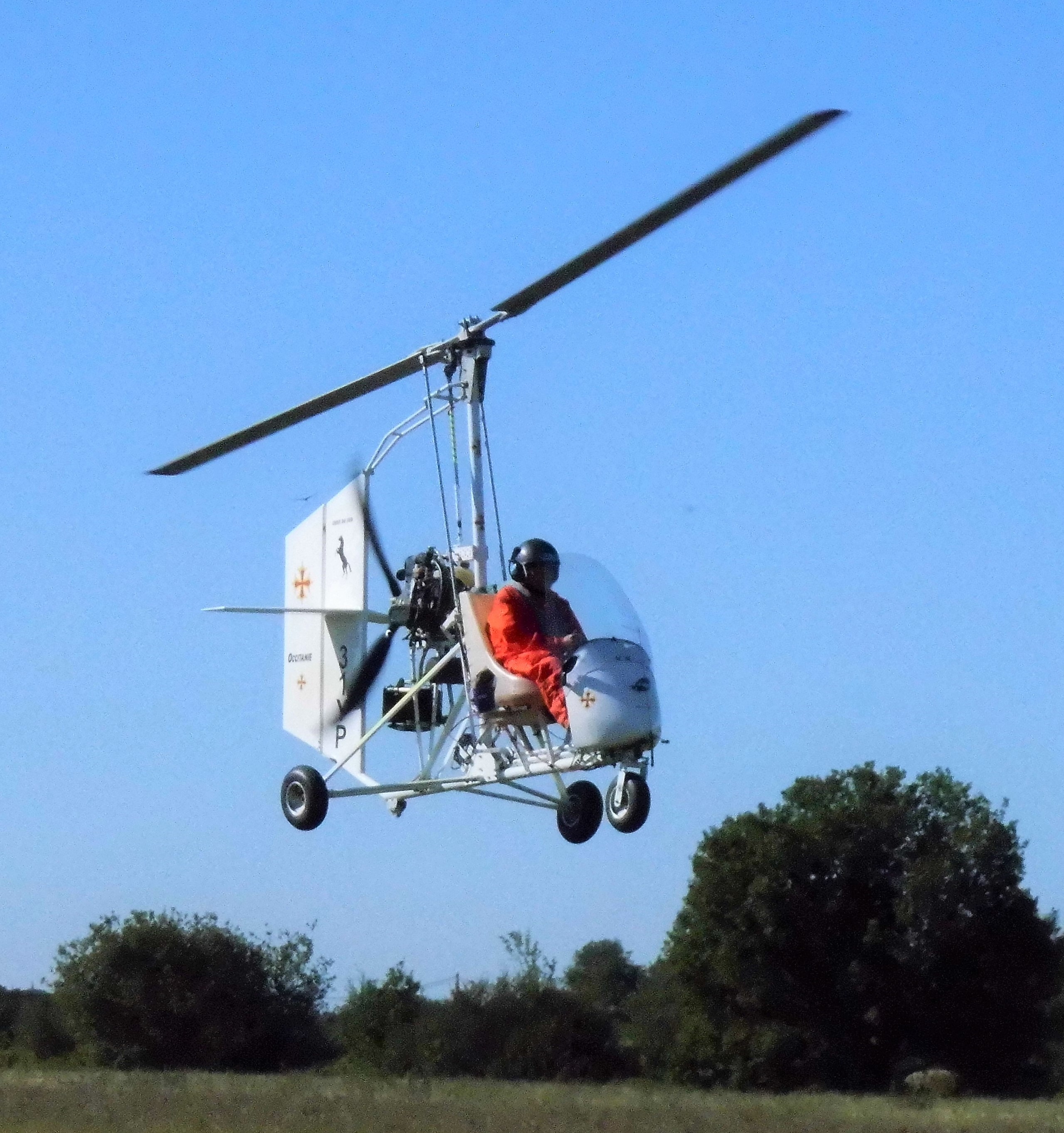
No travel to France to fly Delta-J with my friends, no music of the wind through the rotor blades – how I miss their song! But they will sing again. It may not be this year, it maybe the next, but as soon as the chance arises we will spin on the wind together once more, I’m determined of that. Many people have far more serious concerns, and I have nothing to complain about.

This site grows more slowly now, my aerial adventures being herded into a possible ebook instead of just padding out these pages. But the site remains active and always monitored: there’s plenty here to read of autorotation past and present, still much to do and people to help. Positive vibes, adapt and overcome.

Be it on the ground or in the air, stay safe and continue to make the best of things. There’s always a bright side – you just have to find it.

Uncategorized

Not so different after all…

There’s been a recent effort to twist gyroplane history to suit an agenda and blame the pioneers of the sixties and seventies for the current attitude of British authorities towards our fabulous rotorcraft. The claim is that there’s no parallel with the early days of the aeroplane when isolated people had to find things out by trial and error just the same, with all the peril that entails.

I found this forgotten copy of an essay tucked in the back of a book. Written by J. Courtenay Thomas, it records a talk he had with one such enthusiast from the early days of homebuilt aircraft. It captures beautifully the keen adapt and overcome attitude which resonates with striking familiarity through the early days of the homebuilt gyroplane.

It’s an echo from a lost era so I copy it here in tribute to the spirit of all those like Ray, who helped to lay the foundations for all of us who love to fly. The story takes place in Cornwall, at the bottom south west tip of the British isles.

Ray Bullock, the Flying Man of Fraddon.
The story of a Cornishman who built, flew and crashed his own aeroplanes
by J. Courtenay Thomas.

It was early in the 1930s when it all began, the older residents of Fraddon may still remember Ray’s flying escapades, long before the sight of aircraft in the sky was commonplace! It was almost half a century later when Ray asked me if he could make one more flight in an open cockpit aircraft. He was then a cheerful elderly gentleman, born and bred in the Fraddon locality, with a delightful sense of humour and optimism. I was fortunate enough to take him up in an old Tiger Moth and afterwards he told me of his flying experiences, relating them in his natural Cornish accent.

All day long my lorry had kept me busy carrying grass cuttings for the Highways division of the county council. That evening, I settled myself in my favourite armchair alongside the kitchen range. Somehow I had got hold of an old magazine on DIY flying and in it was an article on the Flying Flea. It suddenly occurred to me that I could build one in the shed at the bottom of the garden. The more I thought about it the more I like the idea, and then plucked up enough courage to ask Mother what she thought about it all.

‘Don’t be daft Father’ she said, ‘what are you going to do with a flying machine, you have never been up in the air, and I don’t think you have ever seen one close up let alone talk about putting the contraption together.’

A few weeks later I made up my mind to go ahead. The advertisement read ‘Send us a postal order for £3.3s.0d and you will soon be in the air.’ The plans were not difficult for me to understand as there was nothing I loved more than putting bits and pieces together. Most of my evenings were spent in the garden shed, making parts and very soon my new creation was ready for its firing up. After wheeling the machine out of the garden I was on top of the world when it started first time. My biggest problem was now getting it into the air. At the time I knew nothing about flying technique, but I felt certain I could handle things.

Very early next morning, I hoisted the Flying Flea onto my lorry and drove the half a mile along the main road running from Indian Queens to Bodmin. Traffic was non existent in those early mornings, so it never occurred to me that I might upset anyone. After all I was paying enough in rates for the upkeep of the road. Swinging the propeller, I started the engine and lowered myself into the cockpit. For a time I taxied up and down the roadway, the noise of the spluttering engine and fresh morning breeze made everything well worthwhile. After a few hopskip and jumps to see how she behaved, I then made a momentous decision. Turning the machine around so that there was a clear stretch of roadway ahead, I pushed the throttle fully open and made up my mind that I would soon find out what the flying business was all about.

The Flying Flea clattered down the roadway, increasing speed all the time and then, on my giving the stick a mighty yank, the wheels left the ground. It never occurred to me that the machine would fly itself, because I was convinced that you needed to move the stick violently back and forth in order to keep her up, just like working the village pump. The wheels kept whacking the ground again and again until, at last, the bottom of the cockpit dropped out, leaving my legs dangling in mid air. I put the parts back in the lorry and it was not long before I was flying again.

This time, I did not pump the stick and found she flew quite smoothly, straight and level. After a few minutes, I decided to turn around and go back home. Making flat turns to the right, skidding all over the place, I finally got the machine facing in the opposite direction, but the roadway was completely out of sight! In the distance I could see a zigzag of black smoke and realised that this was coming from my engine on the way out [this refers to a steam traction engine, not the aircraft!]. Heading for the road I soon found Indian Queens, closed the throttle and pulled back the stick. The machine bounced a few times, causing a noisy crunching on the stone roadway and then settled down, just like a broody hen on her nest!

One day, Mother said ‘I don’t think that it is fair on the milkman, he comes out early and there you are flitting up and down, frightening the horse something terrible!’
It had already occurred to me that the fellow might be a bit nervous, because every time I taxied and flew by him, he would jump down from the cart, run up to the horse’s head and hold on like grim death. Anyway, I went straight away to see the farmer who owned the land at the bottom of my garden and he gave me permission to use his steep meadow, providing that I did not use the meadow when his cows were in feeding and to take care not to frighten them. From now on I used the meadow instead of the main road, always taking off downhill and landing uphill. I was asked by someone what I did about the wind, but told him that you don’t take no notice of that new fangled notion, always take off downhill and land coming up, but never forget the sheep and the cows!

The postman arrived one morning with a very official looking buff coloured envelope marked ‘Air Ministry: Civil Aviation Division.’ The letter read something like this: It has come to our notice up here in London that you have been operating a flying machine in the Fraddon locality and it concerns us that you do not have a licence for such carryings on. Will you therefore present yourself at your earliest convenience to the examiner at Plymouth Airport, so that the necessary formalities can be attended to.

Early next day I took off for Plymouth. Below me I could see the airfield and commenced my approach and landing. This was a corkscrew, spiral operation. What you do is this. Have a good look around and pick a spot to put her down on; keep looking at the spot, never allowing your eye to wander, make tight turns and cut your throttle. When you think you are going to hit the ground, straighten up proper like, and heave back on the stick. Everything when ‘fitty like’ and I put her down exactly where I wanted. Waiting for me was an ambulance, a fire engine and about six officials with anxious looks on their faces.
The senior officer approached and questioned me as to what I thought I was doing, coming in like that! I explained that it was the only landing I knew of and, as he could see nothing was hurt I then addressed the officials and explained that I had come up from Fraddon in Cornwall on the written orders from their superiors in London and that, in my pocket, I had a signed document ordering them to give me a testing. Fishing the letter out of my overall pocket, I handed it over to their chief. The poor man seemed completely flummoxed and told me to stand by my machine and await further instructions.
Rushing back to his office, the official examiner collected all the text books he could find on pilot’s notes, navigation, meteorology etc, and staggered back to the aircraft. They were handed over and he instructed me to return home to Cornwall and that he did not want to see me again until I knew everything that was written in the books. I thanked the gentleman for his kind attention and guidance, at the same time piling the books on my seat, which meant I would be sitting a little higher in the cockpit. Bidding them all farewell, I added ‘Today is Friday, so I will be back here for this testing on Monday morning.’ With that, I headed south to Fraddon. Many months later I returned to Plymouth Airport and got my licence to fly ‘all types of land planes.’

My Flying Flea had a very strong will of its own and one day suffered considerable damage. I don’t think that we ever ‘hit it off’ all that well.

My second construction was a BAC Drone, a far more friendly aircraft, built from made up parts and odd pieces of the Flying Flea. It was a delight to fly and one day I decided to go to the Scilly Isles. The only thing which niggled me was the 2/6 landing fee I had to pay [2 shillings and sixpence]! Unfortunately, the Drone also had a rather short life and was broken up on landing.

Another machine had to be made and this time I decided on a Parnell Pixie, Tom-Tit. This was a high wing monoplane made from parts retrieved from the old machines, coupled with items made up in my shed. The petrol tank was fitted high over the cockpit. In order to ‘top her up’ during the flight, I would stand up in the cockpit, hold on to the control stick with my knees and then, by bending over, extract one of the petrol cans which made up my seat. After unscrewing the cap, I inserted a funnel into the tank and poured the petrol, just like I did for the lorry. The can was then replaced, so that the seat was just right for seeing out of the cockpit. Only about half of the petrol went into the tank, but the rest was very useful for washing down the aircraft.
Sadly, one day I loaded too much petrol on board, making the machine excessively heavy. When I crash landed at Colan, it cost me a broken arm and a leg with the Pixie on top of me. My flying activities were certainly not over and while my limbs were mending I started to build another machine in the shed. The outbreak of war stopped my flying antics for the time being. I suppose the neighbours must have thought me crazy but, if I was a younger man, I would be building another machine today!

‘Did not have a licence for such carryings on’ – what a wonderfully Cornish turn of phrase!

Incidentally, it was the stories of Ray Bullock’s exploits that caught the imagination of a young local tearaway. Later, Ray would help to mentor his developing interest in homebuilt aircraft – that young tearaway was Chris Julian.

Autorotational musings

And that was that

So farewell 2019, and most enjoyable it was too. Highlights being the successful culmination of the Brookland Rotorcraft project: a rare Mosquito gyroplane preserved for posterity, and the place of Ernie Brooks now officially cemented in British autorotational history. Well done, Trevor and Peter! How do we top that…

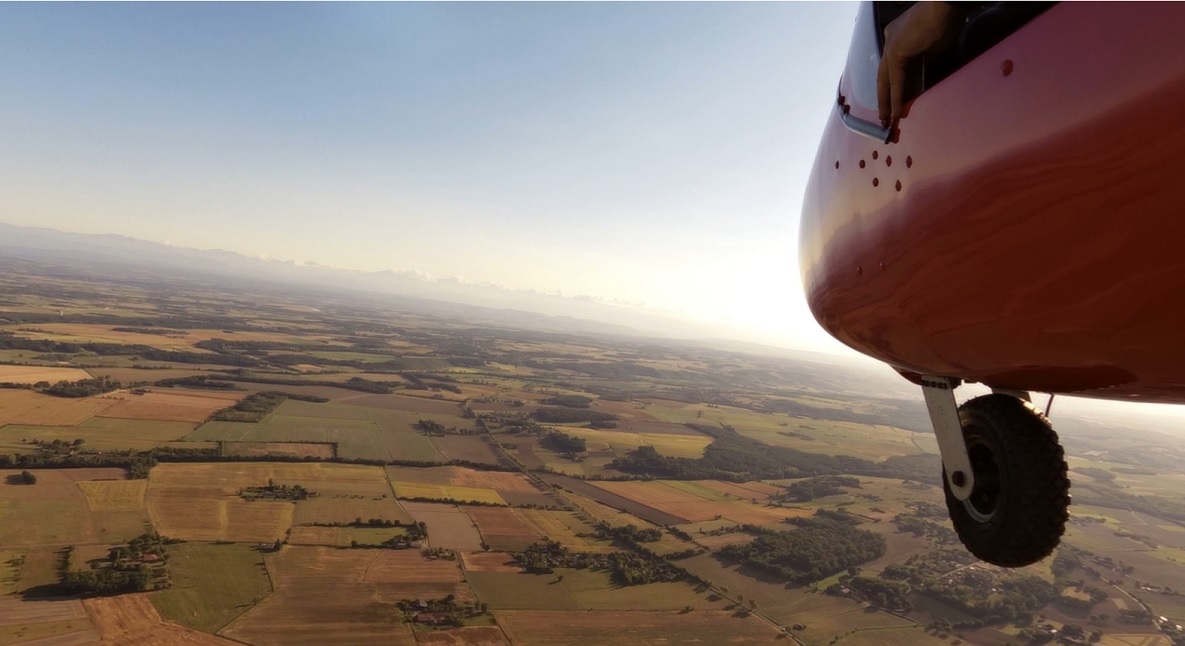
It goes without saying, two wonderful trips to Bois de la Pierre to reunite with my Delta-J and make sure the Pyrenees are still there. Helping out with another safe and successful annual Gyro Club rassemblement is an essential part of every year. We had all kinds of weather: dramatic thunderstorms, torrential rain and howling winds to searing heat and skies of clearest blue. Delicious flights over a panoramic landscape with the song of the rotor blades in my ears, made even more special when shared with friends. How did I get to be so lucky?

August saw the 20th anniversary of Thenac aerodrome, near Bergerac. It was a pleasure to be part of the celebrations, despite the relentless heat that flattened the two visiting Brits! A fun weekend of feasting and ultralight flying in great company. Congratulations to Marie and Martial, ably abetted by the Patrouille de Thenac.

It was during that weekend that I was treated to the wildest ride I’ve yet experienced in a gyroplane. Actually, I’m not sure it’s possible to get any wilder and still use the aircraft again afterwards. Ye gods, I enjoyed it thoroughly – afterwards – when my brain had caught up with the rest of me! Wow. Having flown with Patrick at Sainte Foy in 2012, I had an idea of what to expect, but that was a gentle stroll in comparison. He has an aversion to flying straight and level in his immaculate M16, and routinely pushes normal flight parameters.

Snug in the rear of the high-sided pod, clad only in T-shirt and shorts, headset and sunglasses (no crash helmet), I fastened the lap strap as tightly as it would go. It’s a big regret that I didn’t have time to grab my video camera, what a film that would’ve been. All that remains of that epic flight are the snap-shot images in my head, such as peering straight down at the ground barely a rotor’s length away, with the disc bisecting the horizon at ninety degrees! But what a ride.

The temperature was a stifling 32 degrees C, with barely a breath of air to ruffle the windsock: my little Cricket would have struggled horribly in such conditions. A powerful beast is that M16, and Patrick didn’t waste any time. Barely attaining 300 feet on climb out, he stood it on its tail and pivoted the big machine through a 180, powering back in a low pass along the runway to swing up over the field of sunflowers at the end. We went up, we went down, fast and fluid, our wheels seemingly inches above the dry earth as we blasted between the trees at impossible angles, accompanied by the heavy beat of hard-working rotor blades. No roller coaster could ever produce such a thrill. Supremely confident and smooth on the controls, Patrick was in his element as he handled the big Magni like a jet fighter, twisting round in his seat to give me a beaming thumps-up, which I was delighted to return.

Back over the sunflowers again, we roared down the runway at a matter of inches, using the momentum to swing up and stand the machine on its tail for the obligatory hammer head. Poised in mid air, nose to the sky, the airframe spun like a compass needle beneath the span of rotor disc to point back from whence we came, floating in for a gentle touch down as the rotors expended their energy in triumphant song. Hell yeah – that was absolutely awesome!

French gyroplanes

The learning never stops!

Flying as an ‘Ulmiste’ in the south of France is very different to being a gyronaut in the UK. Gyroplanes are a class apart under British regulations: a very special class, which automatically excludes them from any concession granted to other flavours of homebuilt aircraft – and always for a very good reason that no one can actually explain. They don’t understand us so they trap us in a time warp, unable to evolve and barely tolerated. Such a huge contrast in attitudes.

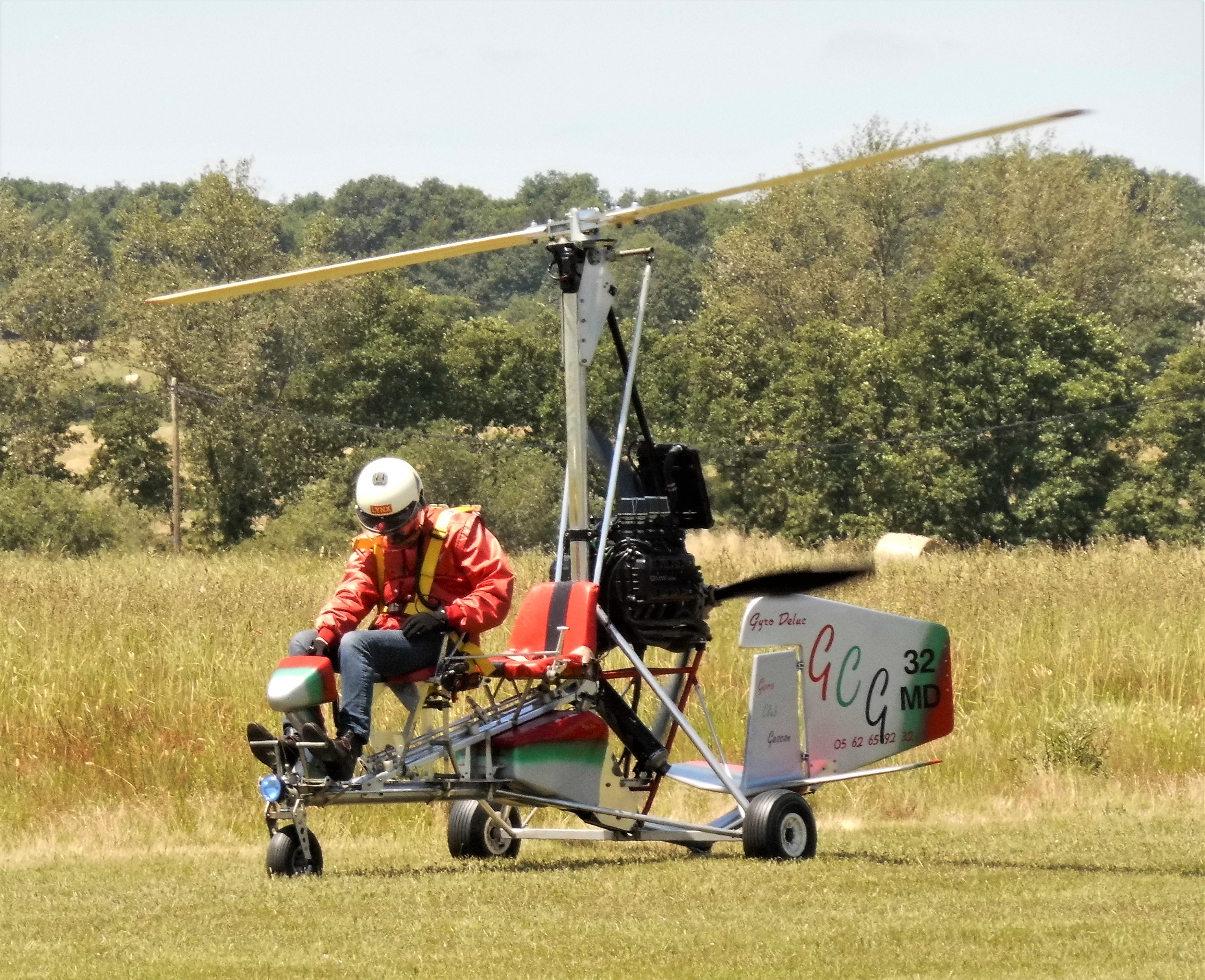
French gyroplanes fall into the microlight (ULM) category – even the big factory-built machines qualify. What a world of opportunity this presents! The freedom to investigate and explore: to try out ideas and improvements, to nip down the local hardware store and gather all you need without certificates, batch numbers etc, and the inflated aviation prices that come with them. It took a long time to get used this new approach after 20 years of negativity and heavy over-engineered 1960s gyroplane designs – I just couldn’t believe it was all so simple – surely there was a catch? But it never came.

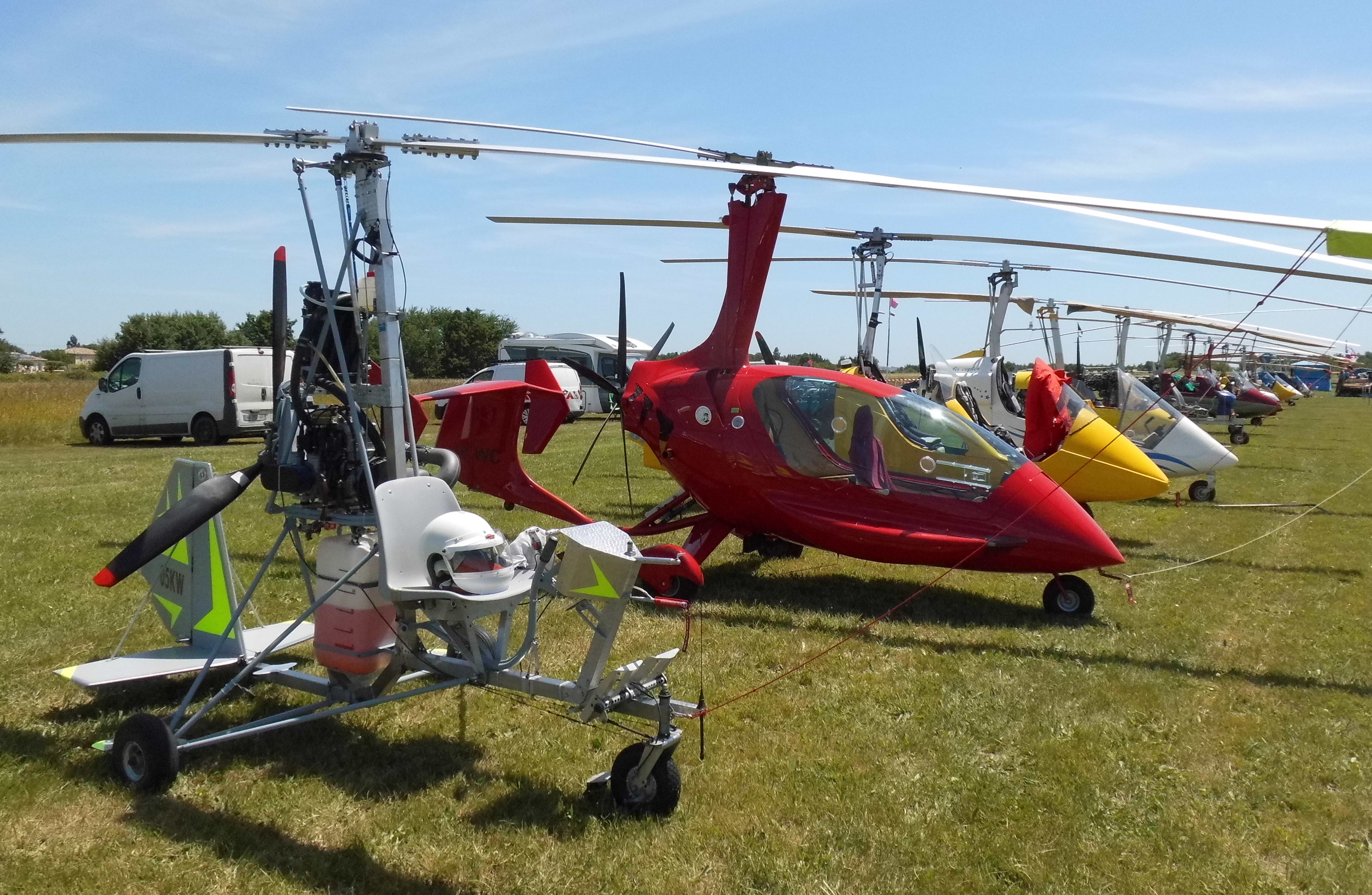
When I took my Cricket down there in 2009, it was the first time they had seen a British designed single-seater, and without fail she drew the same three reactions in exactly the same order. First impression, the exclamation invariably ‘How small and cute she is!’ (like her pilot. Ahem). The French machines are as half as big again, with tall masts to accommodate large propellers. A second glance, the glaring deficiency is all too obvious: ‘Why do you not have a stabiliser?’ Basically because our authorities are still in the dark ages where gyroplanes are concerned. I’ve yet to see a French autogire without one, and our distinct lack of tail feathers caused great consternation among our new friends, a fire which continued to burn unabated until I was later able to join them in the 21st century.

The third reaction without fail was total conviction that the British are quite insane. And who could argue? Fastened inside the pod of my machine – my tiny single-seat open cockpit flying machine as per British regulations – is a ‘No smoking’ sign. The hilarity was absolutely justified. They do not allow a horizontal stabiliser, yet you MUST have a No smoking sign??!! I couldn’t explain it either. (10 Years on, British gyronauts have now been permitted to bolt a cumbersome and inelegant flat plate to the tails of their Crickets. The ‘No smoking’ bit still applies.)

Flying down there is very different. I don’t pretend to know all the ins-and-outs, my understanding of the French language remains at a very basic level despite all efforts to improve. My friends credit me with far more intelligence than I actually possess, and regardless of attempts to understand pertinent ULM web sites, I still rely heavily on them to keep me on the straight and narrow. I’ve always hated radio and have struggled to cope with it ever since fixed-wing training. While the jargon poses no problem, the mental block to get the words out and broadcast to one and all across the frequency is an almost insurmountable challenge – a hang-up deeply rooted in my general inadequacy with verbal communication. I’m sure I was a mouse in a previous life (still got the teeth), preferring to remain hidden and not draw attention to myself, anony-mouse as it were, but it’s very frustrating at times.

During the week, the aerial prerogative over the plain belongs to the Armée de l’Air. I’m not too comfortable flying on a weekday! It’s not uncommon to be happily minding our own business at the club, only for the peace to be shattered by an unearthly roar and dark shapes ripping through the circuit, sometimes a fleeting glimpse of fiery jet pipe barely 200 feet above. And they’re always in pairs. The Patrouille de France take no prisoners either. Nine Alpha Jets blasting through the area at minimal height, at least two of them directly through our circuit. A hapless gyronaut would be chewed up and spat out before they even knew what hit them. Even their wake turbulence would be enough to ruin your day.

Over the plain: Pyrenees on the nose

Don’t go too high, my friends warn after persuading me to partake of the week-day sky. They habitually fly around at 400-500 feet, which seems like hedge skimming as I look down from the relative safety of 800 feet. My flying opportunities are very limited being based some 700 road miles from my aircraft (depending how many detours the satnav finds), so confidence levels diminish accordingly with lack of hours. I prefer a decent bit of altitude beneath us, a few extra seconds of safety margin to compensate for my lack of practice should anything untoward occur.

Although we wear the same Rotax 582 engine as several other single-seat machines at the club, they sport unique configurations able to accommodate much larger propellers and rotor blades. My gyro being based on a heavy 50 year-old design, only has room to wear a petite 52 inch propeller, which coupled with our lightweight 22 foot diameter rotors cannot hope to match the performance of our French companions. Only a complete restructure would solve it. Consequently they don’t understand my reluctance to fly in the high temperature and light wind conditions that persist from late May onwards – we just don’t have the same oomph! On squadron fly-outs, the others casually breeze past and disappear into the distance leaving us to flounder in their wake, my poor engine screaming in protest, temperature gauge nudging the red as we struggle for a morsel of lift in the tropical haze. So yes, I’m wary – it’s not a good feeling when your rotor blades have nothing to bite.

Random ramblings

Vive la différence

Driving down through the back roads of France, I never fail to be struck by just how massive a country it is. You can go for miles (or kilomètres) and not see a soul. Tiny communities appear without warning, widely scattered in the vast rural countryside. Narrow streets deserted, tightly bordered by higgledy-piggledy houses with windows invariably shuttered to the outside world. Fields stretch as far as the eye can see, a rich palette of colours packed full with nature’s bounty. The bright scarlet of wild poppies enhance pale golden swathes of cereal, a timeless memorial to the blood spilled for this now peaceful land. The vine-covered slopes display every verdant hue, and the vibrant yellow of hemp and sunflower adds a joyous touch against a wide canvas of the bluest sky. And everywhere you look, be it growing or grazing – there’s food. How different to my tiny sceptred isle, bursting at the seams with a population it can no longer sustain. It’s said that any society is only a few meals away from anarchy, but while the proud and volatile French never shy from protesting their rights, they have no fear of starvation in this abundant land.

So when a scrawny 48 kilo anglais arrives in their midst, chaos naturally ensues. Not programmed to eat multiple-course meals at set hours, I (like many Brits) graze on the hoof when prompted by a demanding stomach. Not hungry, don’t eat. This causes total bewilderment to my French friends (and I love them dearly!), but when time is as limited as mine always is down there, I don’t want to waste it sitting around eating, especially if I’m still stuffed to the gills from the previous meal. There’s no such thing as a quick snack!

This is actual heresy. Twice I was rounded up from the flight line where I was happily filling my camera with unique and wonderful rotorcraft, and herded protesting to the dining table to fill my poor tum instead. Five courses halfway through the day when temperatures were hovering around the high end of the twenties was more than I could – er – stomach. Consequently when corralled for the evening meal, I just couldn’t manage another morsel. Quelle horreur! This was beyond all comprehension bless them, they just didn’t understand. Was I ill? Did I not like what was on offer? Would I prefer to have something else cooked? Some cheese then? Perhaps a slice of apple tart? I absolutely know they meant well, but it was relentless. It was mealtime – how could I possibly not want to eat?

The last day of my stay before heading north coincided with a large family function, a feast to which I was also kindly invited. Not wishing to intrude and having been under their feet for two weeks already, I thought to slip away early and leave them in peace while I spent the precious final day with my gyroplane. Caught in the act of escape that morning, I was actually pursued down the length of the driveway by a frowning countenance scolding me not only for missing breakfast, but declining to take half the contents of the fridge with me for lunch! Munching a snack with one hand while engaging in something more useful with the other is a totally alien concept to my friends, and I – their only experience of a captive anglais – am disturbingly alien at times.

I never hoped to find the same camaraderie and grass roots gyroplane enthusiasm again after St Merryn was stolen, but the lovely folk of Bois de la Pierre have accepted us unconditionally which I find extremely touching. It’s an absolute privilege to be with them.

And never fear – they always get their own back!

Autorotational musings

G-YROX goes global

Norman Surplus is a very brave man. Having overcome a life-theatening battle with bowel cancer, he went out and learned to fly a gyroplane, shortly after which, in 2010 he promptly set out to fly it around the world. After many setbacks that would have thwarted a lesser individual, Norman and G-YROX returned safely to the playing field in Larne, Northern Ireland, from where they had taken off on their epic adventure, five years earlier.

Photo, Larne RFC

I will never forget being glued to the little dot that represented Norman’s GPS tracker, watching it cross from the American continent to Greenland, all the way down the coast of that inhospitable terrain and over the dangerous waters of the North Atlantic, willing it on to the relative safety of Iceland. I was at my desk (supposedly at work) flicking rapidly between the multiple databases of military logistics and Norman’s website, unable to tear myself away from the magnetic pull of his progress. Then the long awaited final stretch, down from Iceland to Scotland and back across to Larne, triumphant!

All alone around the world. A microscopic dot above the heartless expanse of oceans, mountains and tundra, wholly dependant on a single engine in an open cockpit machine with the gliding ability of a house brick. To say that Norman Surplus is a very brave man, doesn’t do him justice.

It was hell of a trip that he made, setting several world records in the process, but due to political and bureaucratic complications, pieces of the puzzle were missing. There were unavoidable gaps in his achievement. But not anymore. Accompanied by another gyroplane pilot who is trying to emulate their success, Norman and G-YROX have crossed the vast expanse of Russia and this week they have reached the Pacific coast. Fantastic effort! And they’re not done yet.

Norman is raising money and awareness for his cancer charity. Please support him and give a donation to the cause.

http://g-yroxtimeline.yolasite.com

https://www.facebook.com/GyroxGoesGlobal-143540602375581

Gyroplanes of yesteryear

Remembering a legend

Chris Julian was killed on the morning of May 17th 1997.

Sunday the 18th of May 1997 was a beautiful day, bright and sunny with blue sky. As usual, I went outside and sat on the wall to look at the weather and the wonderful view of Cornwall stretching away into the distance, watching the windmills turning through the tears in my eyes. The familiar scene gave no clue to the tragic events of the previous day, the only difference was that Chris Julian didn’t come out to join me as he often did. We would watch his two dogs playing in the field, while waiting for our new friend Bob Bond to arrive on his motorbike from Exeter. After the obligatory cup of tea, we would all pile into Chris’s old car – me in the back buried under three lots of flight gear, tools and crash helmets – and hurtle off to St. Merryn laughing and joking all the way and often completely on the wrong side of the road. It was very quiet on Sunday the 18th of May.

Chris was a legend in the British gyroplane world. Many of us gyronauts survive because he taught us how to do so. It’s sad that so few remember him now, or even know who he was. I’ll add to this in time, but tomorrow is May 17th, a particularly poignant day to remember Chris Julian, and also Bob Bond who died beside him when the rotor assembly detached in flight.

Everyone knew Chris back then, or knew of him. Larger than life and always laughing, he was a proper character – and helluva gyroplane pilot. Partnered by Tony Philpotts in the tow car, Chris tutored many hundreds of student gyronauts in the art of autorotation, patiently hauling back and forth on the gyro-glider over and over again and loving every minute of it. Learn rotor handling first and everything else will fall into place. I wonder what he would make of it all now.

I was watching some of the self-styled ‘new generation’ in action recently: hammering the pre-rotator until the last moment, even though there was a cracking bit of wind right down the runway, then flogging the poor machine to climb out on the back of the power curve. What’s all that about? As for the chap with the navy blue Cavalon, turning the propeller while stood right inside the prop arc with his arms draped around the blades – that doesn’t bear thinking about. Chris would have put them all straight, in no uncertain terms.

Chris: on a diet

The picture above means a lot to me, and Chris loved it too. We made a poster of it which he pinned to the wall in our hut at St. Merryn. By sad coincidence it turned out to be our last flight together. It was a beautiful Easter Monday, a quiet day at the gyro’s nest for once, just the pair of us out to play. We spent a leisurely couple of hours in the sunshine, cleaning and checking over our gyroplanes, happy just to be there doing what we loved. Later we flew across to Bodmin to enjoy an excellent lunch, sat outside the clubhouse chatting about everything and nothing and watching the flying on that lovely grass airfield. It was a lazy sort of day, the colours bold, green grass, blue sky, bright sun. Chris wanted to treat me to an ice cream but I was too full to manage any more, so he bumbled off to order one for himself. Returning to our table, he realised his head was sunburnt: I fished a duster from the pocket of my gyroplane and he fastened it around his head with the two miniature bungees that he used to attach his radio in flight, thus Lawrence of Bodmin was born. When his ‘bocker-nocker-lorry’ arrived (he couldn’t pronounce knickerbocker glory!), the image was complete. I had to get a photo, never dreaming how poignant it would become. As he drove us home later that evening, he looked across at me and said reflectively ‘You some dear little gyrocopter pilot really, Shirley.’ – and reached over to squeeze my hand – after wiping his nose in his palm!

So who was Chris Julian? Rosy of face and cheerful demeanour, his bald head framed by a shock of unruly white hair, this dumpy figure clad in open-necked shirt and corduroy trousers could easily be dismissed as a quintessential yokel – the country bumpkin persona thrice enhanced by his broad Cornish accent. But Chris was a virtuoso of the free-spinning rotor blade: there was nothing he couldn’t do within parameters and even a few things beyond. Back in the 1960s, he learned his skills from the first two gyroplane pilots in Cornwall, Charlie Force and David Bazeley, and for the next three decades he passed those skills on to people like me. The Wombat Gyrocopter was his pièce de résistance, and in the skies above St. Merryn he made her sing. Poetry in motion, they were a joy to watch – from a suitably sheltered vantage point where you couldn’t be dive-bombed! He was a terror for that, the old devil.

But when in instructor mode, student safety was paramount and his concern was absolutely genuine. He taught me everything about rotor handling, and our only instrument was a piece of string. It never lies: the batteries never fail, the readout never goes blank. Learn rotor handling first – proper manual hand-start rotor handling – and everything else will fall into place. 26 Years of flying with a bit of string and yet to ding a rotor blade, thanks to Chris Julian, faithfully assisted on the glider by Tony Philpotts.

Tony Philpotts’ tribute to Chris Julian, quietly left pinned to the wall of our hut.

Postscript. I also pay tribute here to Robin Morton, who sadly succumbed to illness earlier this year: a very clever man who had many an aviation string to his bow, including those of gyroplane inspector and enthusiast. At the 1997 PFA rally, stunned British gyronauts gathered from around the country still reeling in shock, two months after the double fatality at Kemble. We were all in denial. No one could believe it: not Chris – not in a gyro-glider. The latest issue of Rotor Gazette International had been dedicated to him, featuring my unpolished outpouring. I don’t remember much about that weekend, but I’ve never forgotten how an emotional Robin approached me that day and clasped both my hands in his. ‘You must write, my dear’ he implored, eyes bright with tears. Holding me close in mutual sorrow, he repeated softly ‘You must write.’

I did, Robin. Thanks to you. I did.

Gyro-glider & rotor handling

Grinning on the wind!

An excerpt from the original Short Hops, now resurrected in This Way Up. A most exceptional day at St. Merryn, playing with a pair of gyro-gliders in a wind so powerful that we were pulling the tow cars instead of the other way around. I’ve never known anything like it.

It was a cracking autumnal day of October 1995; an ice-white sun glaring in the pale sky and a howling wind from the south west that snatched the breath from our lungs. Perfect kiting weather! Normally the glider needs to be towed forward to gain lift, but with a wind speed like that it could be tethered and flown from a stationary point. No one would dream of flying in such conditions in the fixed-wing world, and as a newly qualified convert in the art of autorotation, I have to admit that I would’ve thought twice had our veterans, Chris Julian and Tony Philpotts not been with us.

With five of us eager to play, we dusted off Tony’s old gyro-glider and Chris Shilling settled into the seat as we hitched up to the car. With Old Faithful tied onto my car and Derek installed at the wheel, I hopped onboard clutching my video camera and strapped in alongside Chris Julian, as Derek began to drag us out into the teeth of the gale. Away from the shelter of the hangar it was difficult to move upwind, and even more difficult to stop going downwind – I was almost taken off my feet! Our ears were blasted by a seething tide of air, plucking the speech from our mouths and scattering words like paper in the wind.

Derek went to help Chris-S spin up, while I hung onto the stick ready for the difficult task of trying to coax the rotor blades into life as Chris began to push them round. It wasn’t easy. Chris and Derek were pushing like crazy, striving to give the blades enough rotation to cope with all that oncoming airspeed, while Chris-S and me grimly nursed the bucking control sticks, trying to stabilise the rotors long enough to form a disc in the relentless 35-40 mph wind. Perseverance eventually paid off, Chris-S being the first to lift with his lighter weight. Chris had joined me on the seat to help hold us down until the rotors had settled, and now I gingerly slid off and fought my way over to the centreline to do some filming, as Chris fastened himself into the middle of the seat. When he was ready he let the stick come back and freed the furiously spinning blades to the wind. The glider immediately sat back on the tailwheel, straining against the rope until Chris closed the disc a fraction to kill off the drag, and rose rapidly into the air. Synchronised kiting – you don’t see that every day!

The wind was shoving me in the back, threatening to bowl me over like a tumbleweed as I struggled to hold the camera steady and keep a pair of delighted Chrisses inside the viewfinder as they bobbed gleefully on the roaring torrent of air. Derek scrambled onboard with Chris-S when a brief lull settled the machines gently back to earth, but the extra weight proved too much and they couldn’t rise more than 5 feet, while Chris on Old Faithful waved mockingly from above, casually swinging his hands and feet. He yelled at me to come back, and planted the glider firmly on the deck for me to climb on. Our machine had longer rotors than Tony’s, so although our combined weight probably wasn’t far from that of Derek and Chris-S, the extra bit of rotor disc made all the difference and we rose easily.

Once into clean air, freed from the restraining influence of the ground, the glider went up like a lift as the wind blew even stronger – awesome! Chris let it climb to the full extent of the tow rope then handed over to me. The stick bucked in my hand and the airframe pulsed as the rotors fought against the constraint of the tow rope. Chris made a game of testing me, seeing how accurately I could position the glider where he wanted, being careful not to jerk the rope with visions of my car coming up to meet us, so powerful was the pull of the rotor disc above our heads. What terrific fun! Chris-S was happily floating alongside, so I gave control back to Chris and picked up my camcorder to do some air to air shots as Derek and Tony began to tow us very slowly down the runway, adding to the entertainment.

Chris-S crossed our path with some enthusiastic wide turns and steep banks as I tried to keep him in camera range from my own soaring perch that throbbed with the beat of the rotor blades. They were a rough fibreglass set of doubtful integrity that bounced enthusiatically at the best of times, and now they were spinning furiously. The cars crept down the runway in first gear, straining against the enormous drag of the rotor discs. When at last they reached the end of the line, instead of turning around to take us back to the start as with a normal gyro-glider run, Derek and Tony switched off their engines and surrendered to the forces of nature. It was brilliant! We opened the rotors to the wind and flew the gliders backwards through the air, pulling our cars along with us, how good was that! We played our new game for hours: kiting, then creeping forwards, kiting again before reversing back up the runway to kite once more, I remember it like yesterday – such brilliant fun!

I swapped over after a while to fly with Chris-S and take some film of Chris from Tony’s machine. That one had a shorter tow boom and tended to fly tipped back on its tail, so we had to hold the stick forward all the time. It also wore a rough set of home-made plastic blades, which unfortunately didn’t improve the precious recording of a memorable day – but at least it captured the spirit. The autumn chill began to make its presence known after several hours of riotous autorotation, creeping inside collars and cuffs through gaps in flight suits, numbing cold feet and fingers until we reluctantly called a halt and returned to the hangar, tired and stiff and absolutely elated. That was without doubt, the best gyro-gliding day ever!